
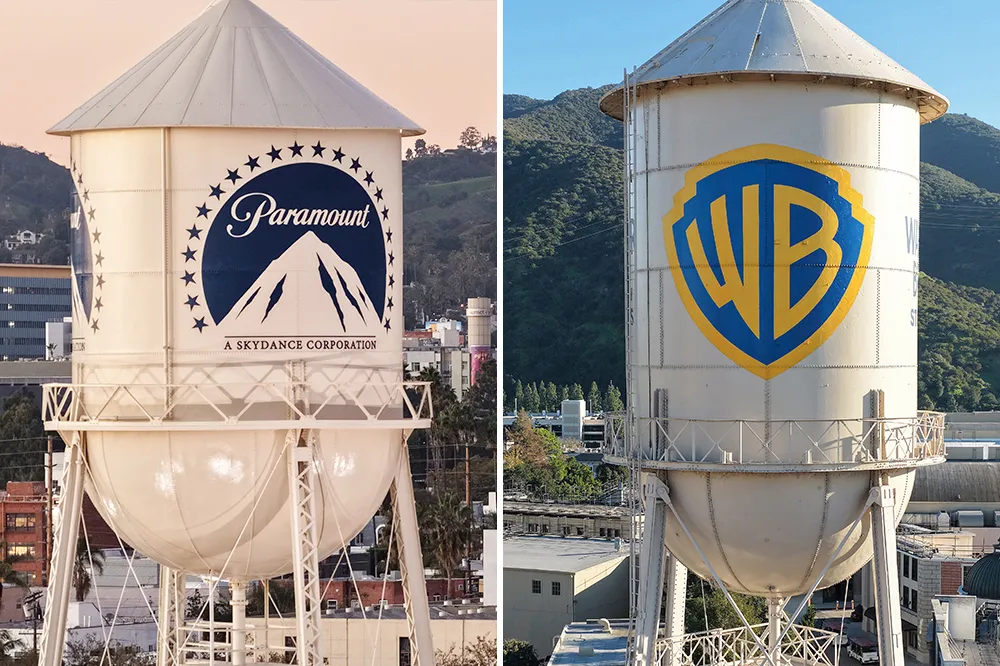
The Federal Communications Commission has cleared a key ownership request tied to Paramount’s planned Warner Bros. Discovery deal, approving Paramount’s petition to allow 49.5% of its equity to be held by foreign entities once the transaction is completed.
The approval matters because Paramount owns 28 TV stations, requiring FCC sign-off for foreign ownership above 25%. The proposed acquisition of WBD is backed by three Gulf state sovereign wealth funds from Saudi Arabia, Qatar and Abu Dhabi.
In its decision, the FCC addressed objections involving national security and potential improper influence, pointing to the structure of the investment: the foreign funds will not hold voting stock.
“We are persuaded by Paramount’s argument that the Foreign Investors therefore will not be able to wield any influence, let alone control, over decisions involving the Licensees,” the commission’s decision states.
A Paramount spokesperson said Thursday that the company appreciates the FCC’s review and emphasized that the Ellison family and RedBird Capital Partners will own 100% of the voting stock in the combined company.
“At a time when the media industry faces unprecedented competitive pressure from dominant big tech companies, a combined Paramount-WBD will have the scale and resources necessary to compete, invest, innovate, and deliver premium content to audiences worldwide,” the spokesperson said.
Opposition focused on sovereign wealth fund influence
The FCC’s approval came despite criticism from Free Press, a media advocacy organization that opposed Paramount’s request. The group argued that foreign investors may ultimately hold a majority of the company’s equity.
“Control over for-profit, commercial domestic news media by any government is an extraordinary situation that would surely strike most Americans as unseemly, precisely because of the utility of the news media as a propaganda tool for those governments,” Free Press wrote in its opposition.
A handful of Democratic senators also raised concerns about the ownership structure. In May, Sen. Maria Cantwell and others wrote that the FCC had not previously approved a significant ownership stake in an American broadcaster by a sovereign wealth fund, describing such a fund as “an investment entity controlled by a foreign government.”
“The plain text of the Communications Act prohibits ownership by ‘a foreign government or representative’ without regard to voting rights,” the senators wrote. “And the FCC’s prior approval of foreign ownership of equity in broadcasters has been limited to entities based in allied NATO, Five Eyes, or friendly neighboring countries.”
Anna Gomez, the Democratic FCC commissioner, echoed those concerns Thursday in a post on X.
“The FCC just let some of the most repressive governments in the world indirectly control nearly all of a combined Paramount-Warner Bros,” Gomez wrote. “An investment this large in one of America’s biggest media companies doesn’t just buy equity, it secures influence over what gets said and made.”
The deal still faces another major hurdle
The FCC approval does not mean the Paramount-WBD transaction is complete. The merger remains on hold pending the outcome of an antitrust suit filed in July by California and 11 other states. A trial is scheduled to begin next March.
Paramount also sought broader FCC permission than the 49.5% equity stake expected when and if the merger goes through. The company requested approval for the foreign funds to own up to 100% of the equity, citing the potential need for future investment. The commission approved that request, while requiring Paramount to seek additional approval if the foreign entities are to own voting shares.