
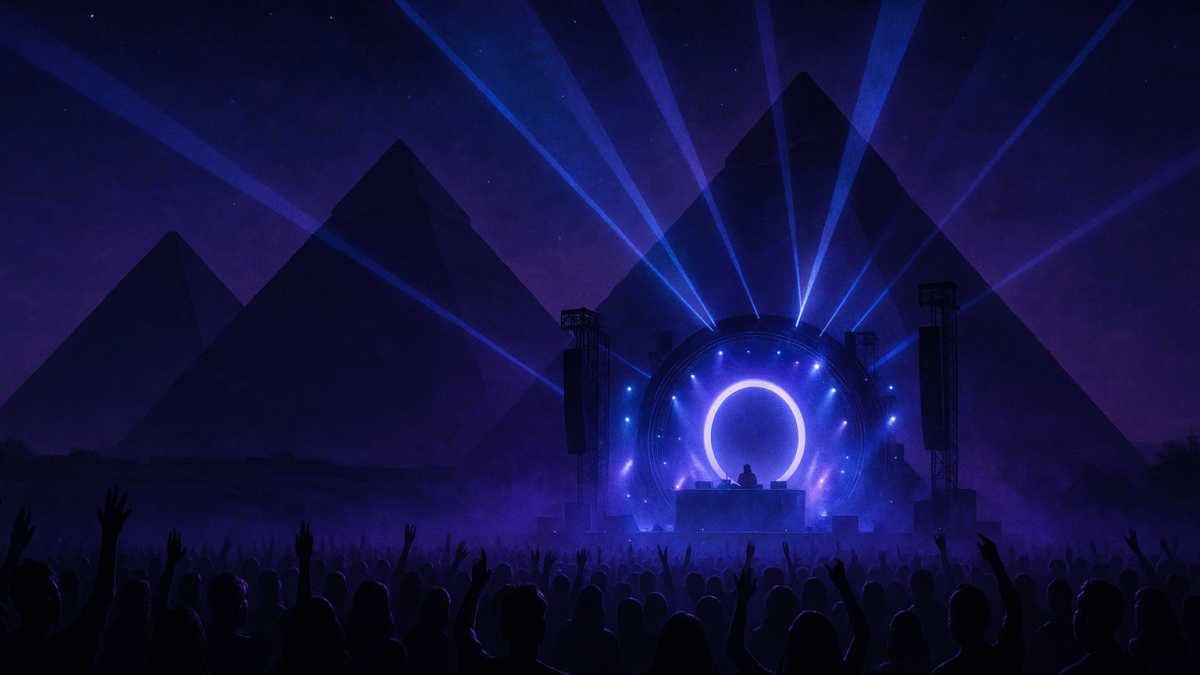
The Great Pyramids of Giza provided the setting for the sold-out debut of Starlight Festival, a new electronic music event staged in Egypt on Oct. 9 and 10 by EXIT and P+US, Venture Lifestyle’s electronic music platform.
The inaugural edition brought more than 60 international and regional artists together across multiple stages, drawing attendees from 114 countries. Organizers described Starlight as the first multi-day, multi-stage electronic music festival held at Giza and the largest electronic event at the historic site since French pioneer Jean-Michel Jarre performed there in 1999.
Charlotte de Witte made her Egyptian debut during the festival. The wider lineup included Michael Bibi, Adriatique, Indira Paganotto, Enrico Sangiuliano, Vintage Culture, Pete Tong and WhoMadeWho.
EXIT also brought its No Sleep stage to the event, with Charlie Sparks, BIIA, Layla Benitez, Paolo Ferrara and Olympe appearing there. Satori and Giolì & Assia delivered live performances, expanding the weekend beyond its DJ sets.
A Festival Built Around Its Setting
Starlight’s production was designed to incorporate the pyramids without allowing the landmark location to overshadow the music. Multimedia studio Sila Sveta created the visual presentation, using lighting and optical illusions to make the pyramids appear to float above the stage.
EXIT founder and CEO Dušan Kovačević said the destination needed to strengthen the event rather than function as its only attraction.
“An extraordinary location should deepen the experience, rather than become a substitute for it,” Kovačević said, stressing that electronic music and club culture would remain at the center of Starlight’s identity.
The launch also highlighted the increasing role of music tourism, as audiences travel for events combining performances, culture and a distinctive destination. Venture Lifestyle founder and CEO Rabih Mokbel said the partnership demonstrated Egypt’s ability to participate in the international festival market.
“It shows that Egypt has the potential to host world-class festivals that can compete on an international level, not just because of the artists or production, but because of the destination itself,” Mokbel said.
Regional representation was another priority for the organizers. Mokbel emphasized the importance of placing local and regional performers on bills with established international artists, giving that talent access to broader audiences.
“If we want the regional music industry to continue growing, we need to create more opportunities like this, where local talent can be part of the global conversation rather than watching it from the sidelines,” he said.
Starlight Closes EXIT’s International Tour
The Giza festival was the eighth and final event on EXIT’s international tour, which moved the Serbian festival across Europe before reaching Egypt. The tour followed EXIT being forced to leave its longtime home after publicly supporting student-led protests in Serbia.
Kovačević addressed that backdrop while reflecting on the significance of completing the tour at the pyramids.
“In the year we could not gather at home, we found ourselves bringing people together in front of the greatest wonder of the ancient world,” he said.
For EXIT, Starlight’s longer-term ambition is not limited to selling tickets or attracting international attention. Kovačević said the goal is to develop a recurring cultural event that generates lasting opportunities for Egyptian artists, production professionals and the country’s wider creative economy.
ShowBiz Take
Starlight’s debut matters because its scale went beyond a one-night destination concert. The combination of multiple stages, more than 60 artists and an audience representing 114 countries gave organizers a foundation for presenting Giza as a repeat stop on the international electronic music circuit.
Just as importantly, the event’s stated mission includes regional talent and local production workers. That means the festival’s success will ultimately be measured not only by its globally recognized setting and major international lineup, but also by whether it can create sustained value for the creative community hosting it.
What Happens Next?
Organizers have confirmed that Starlight Festival will return on Nov. 5 and 6, 2027. While its debut is now complete, the broader objective remains to turn the event into a regular gathering that audiences will travel to Egypt specifically to attend.
“Becoming an annual gathering that people travel to Egypt specifically to experience, and that brings real value to the people hosting it, would be a success worth building on,” Kovačević said.