
This post was originally published on this site.
Trending on Billboard
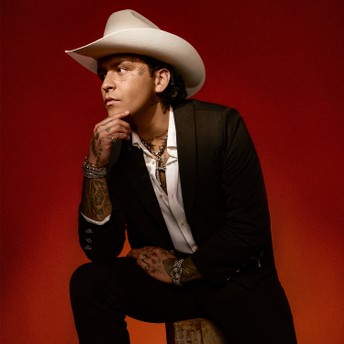
Mexican rapper Dharius surprised his fans by venturing into regional Mexican music on his new studio album, Directo Hasta Arriba Vol. 2, which is set to release Thursday (June 4) at 8 p.m. ET.
Accompanied by mariachi, an introduction of guitar melodies and the collaboration with Christian Nodal, the song “Ey Mezcal” breaks norms by showcasing Dharius in a romantic light, using language very different from what he typically employs in his songs.
“This is the first album where I dared to experiment with other genres. I used to be very closed off, only wanting to make rap,” says the artist, who was a member of the iconic group Cartel de Santa years ago.
The 14-track album includes titles such as “Top Top,” “El Cumbión,” “Cuando Te Toca” and “Bien Perro,” and also features collaborations with other prominent Mexican rap artists, including C-Kan, La Santa Grifa, Kami Mami, MC Davo and Gera MX — all of them representatives of the new generation of that musical genre that has significantly grown in Mexico in recent years.
Born in Monterrey, the cradle of norteño music, Dharius (real name Alan Alejandro Maldonado) started rapping at the age of nine, setting himself apart from his schoolmates. “I remember my classmates would go to school festivals wearing boots and cowboy hats, while I showed up with baggy pants,” says the 41-year-old artist, who now supports young rappers through his own record label, El Clan Records.
Between 1999 and 2013, he was part of Cartel de Santa, one of the most prominent groups in the rap scene in Mexico, and in 2014 he debuted as a solo artist with the album Directo Hasta Arriba, which featured songs like “Te Gustan Malos,” “Hey Morra” and “La Durango.” Directo Hasta Arriba Vol. 2 marks his fifth solo album.
In an interview with Billboard Español, Dharius delves into his career, explains why he’s venturing now into regional Mexican music and reveals that Nodal actually “raps and does it well.”
How hard was it to be a rapper in a place like Monterrey?
It definitely wasn’t easy in a place traditionally known for norteño music. However, we have to give credit to Control Machete, who turned rap into a phenomenon here; it was the band that paved the way for the rest of us. They gave us hope that we could make a good living doing this.
You were part of another very important group in the genre. Was it difficult to build a solo career?
I made five studio albums with Cartel de Santa, I was with them since I was 17. And yes, when I started working on ideas for my own compositions, it was tough at first, but little by little, I found my rhythm. Today, I’m on my fifth solo album.
How does it feel to now be a reference point for the new generation of the genre?
Since they started, I’ve been following them and their careers; I respect them a lot. C-Kan is from Guadalajara, MC Davo and Gera MX are from Monterrey like me, but there’s also my friend Santa Fe Klan from Guanajuato. This shows how much rap and hip-hop have opened up in Mexico. There’s still a lot of work to do, but I think this is a great moment for the genre.
What made you decide to venture into regional Mexican music on this album?
This is the first album where I dared to experiment with other genres. I used to be very closed off, only wanting to make rap. That has changed because we need to adapt. In Monterrey, there’s a strong culture of cumbia and vallenato, and that influences you. Plus, my aunt is a mariachi singer, so I’ve been exposed to that kind of music since I was little.
How did the collaboration with Christian Nodal happen? Was it through Gera MX, with whom he recorded “Botella Tras Botella”?
The first time we talked, yes, it was through Gera MX. He [Nodal] had a rap track he wanted me to record — you should know he raps and does it well; in fact, he has the title of one of my albums, Mala Fama, Buena Vidha, tattooed on him —but time passed, and it didn’t happen. “Ey Mezcal” is a song I wrote about two years ago. I had the chance to show it to Christian in Monterrey and he liked it, but we hadn’t been able to coordinate to record it. Finally, it happened: he called me, we went to the studio and we made it happen. Honestly, I’m very happy with the results.
How do you see the landscape for women in Mexican rap?
I think it’s very promising. There are many talented women. In fact, Kami Mami is featured on this album. She’s from Guadalajara and sings, writes and raps excellently. I also have two female rappers signed to my label, El Clan Records, who are about to finish their albums. I think we’re 20 years behind the United States in that regard, but streaming platforms are helping the growth of Mexican rap.