
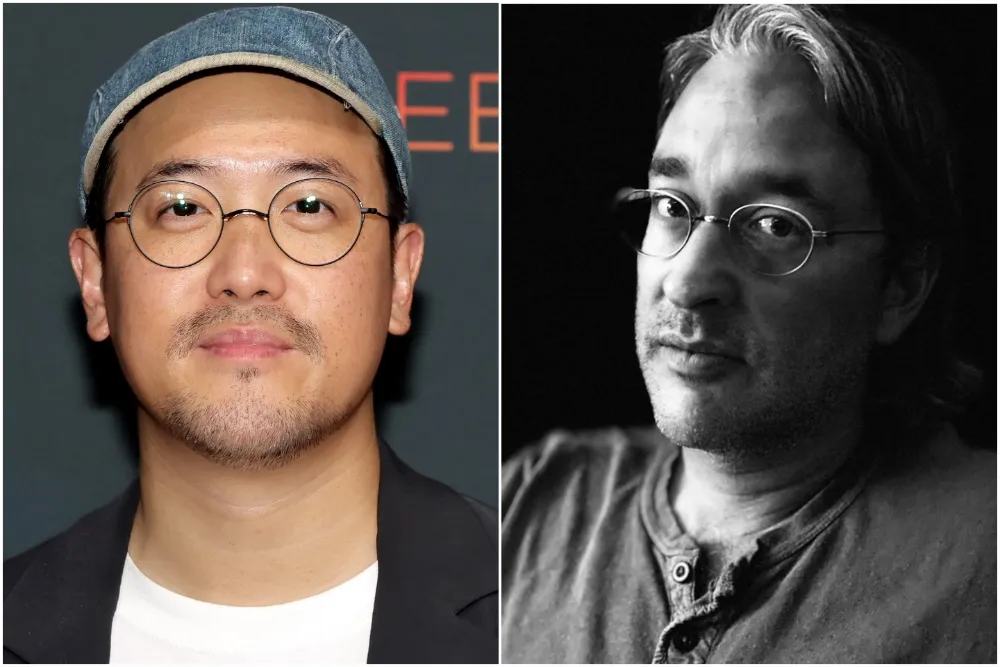
Derek Tsang is attached to direct and executive produce “Group 41,” a 10-episode true-crime drama centered on the first Asian-American squad at the U.S. Drug Enforcement Administration.
The filmmaker behind “3 Body Problem” and “Better Days” joins the project after seven years of development. Produced through Jonah Greenberg’s Salty Pictures, the series is being presented at the Taiwan Creative Content Fest in Taipei as its team explores production, financing and distribution opportunities.
Each planned episode will run 45 minutes, with the story beginning in New York in 1986. At a time when the DEA is focused on Colombian cocaine cartels and the Mafia’s “Five Families,” a group of Asian-American agents joins forces with an aggressive Irish prosecutor known as “The Dragon Lady.”
Their unit, DEA Group 41, begins pursuing the No. 4 heroin entering the United States through a network that had received little attention. Over the following decade, the initially underfunded squad develops into an elite international task force.
An International Crime Story
“Group 41” will follow major targets including Johnny Kon, a Hong Kong boss whose billion-dollar triad reaches across five continents, and Johnny “Onionhead” Eng, described as a brutal Chinatown gangster. The story also encompasses Khun Sa, a Golden Triangle warlord backed by a 20,000-strong narco-army.
Greenberg said the period gives the series a different kind of danger from contemporary law-enforcement stories, in which surveillance technology can provide investigators with an advantage.
“Back in the 1980s when you went undercover, you went deep. And all the bad guys carry guns, and the danger to cops and informants is real,” Greenberg said.
Beyond the investigations, the drama will examine immigration, prejudice and the cost of the American Dream, telling stories from both sides of the law. Greenberg said the cases and the agents responsible for solving them were largely overlooked at the time, when neither media coverage nor the DEA itself made Asian cases a priority.
“It simply wasn’t considered as sexy to work Chinese cases in the 1980s,” he said, pointing to the attention then given to “Miami Vice” and Rudy Giuliani’s convictions of Italian mobsters.
Greenberg characterized the project as an underdog story and “literally the war on drugs we actually won but which no one knows about.” He believes the decade-long timeline could support several seasons, with Khun Sa positioned as a final, overarching target.
From Nonfiction Book to Television
The series draws from the 180-page nonfiction book “The Incredible Story of D.E.A. Group 41 & The Rise and Fall of the Asian Heroin Trade,” which is scheduled to be published next year. Greenberg wrote the book with Marc Iserlis and Aidan Swift, both of whom are also producers and writers on the television adaptation.
Greenberg, a former managing director of CAA’s China office whose producing credits include Zhang Yimou’s “Shadow,” said the creative team has earned the trust and cooperation of the real people involved in the story.
Taiwan’s Each Other Films is participating as a co-production partner. The company was co-founded by “Group 41” co-producer Tiffany Yu-chia Chen. Adam Berkowitz, the former co-head of CAA TV, is serving as an executive producer through Lenore Entertainment Group.
Greenberg said his commitment to the project stems from an interest in people motivated by purpose. He cited Cathy Palmer and the Group 41 agents who dismantled a heroin pipeline stretching from Southeast Asia to the United States.
He also described “Serpico” as a foundational film for him, saying its central figure’s commitment to a personal code reflects the kind of character that interests him.
ShowBiz Take
“Group 41” stands out by shifting the focus of a large-scale drug-enforcement story toward agents and cases that, according to Greenberg, did not receive comparable attention during the era in which they operated. The combination of a decade-long narrative, international targets and cooperation from the real people involved gives the proposed series a substantial nonfiction foundation.
Tsang’s attachment provides the developing project with a director and executive producer as the producers prepare to take it to potential platforms. But the series is still assembling its core package, with a writer-showrunner yet to be found and casting only a possibility before pitches begin.
What Happens Next?
At TCCF, the team is examining how incentives in Taiwan and elsewhere in the region might help offset the production budget. It is also exploring Asian distribution, with the aim of arranging production, financing and potentially distribution before approaching U.S. platforms.
The next formal steps are to secure a writer-showrunner and possibly attach cast members ahead of pitching the project to platforms next year. TCCF, organized by the Taiwan Creative Content Agency, runs Nov. 6-9 at the Taipei Nangang Exhibition Center.