
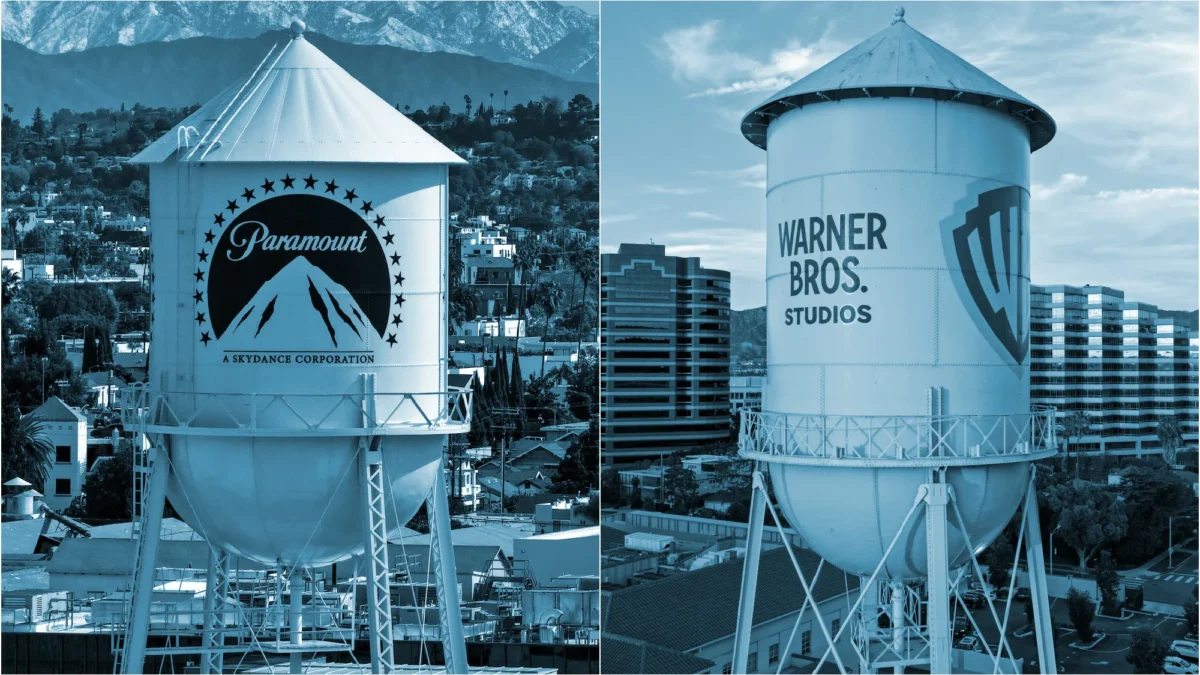
Paramount’s effort to secure approval for its $111 billion deal for Warner Bros. Discovery may be moving toward a potential settlement framework, with the company and state attorneys general spending the weekend discussing possible terms.
Reports from The Wall Street Journal, Bloomberg and other outlets indicate that the talks have touched nearly every major pressure point surrounding the transaction, including cable ownership, film production, studio operations, California investment and CNN’s editorial independence. None of the reported proposals amount to a final agreement, and divisions among the states — along with possible opposition from the WGA — could still complicate any resolution.
California Attorney General Rob Bonta is leading the coalition of states involved in the discussions. Even if Paramount and that coalition reach a preliminary accord, individual states that reject the terms could continue to create obstacles.
Cable and Film Remedies Under Discussion
One possible structural remedy would involve Paramount selling some cable channels, thereby reducing the combined company’s share of the pay-TV market and addressing the cable portion of the antitrust suit. One source identified Comedy Central as a possible candidate because of the channel’s wide reach, although no sale has been confirmed.
The film business is another central part of the negotiations. Paramount CEO David Ellison has promised that the combined operation would produce 30 films annually, and the sides could seek an enforceable mechanism designed to hold the company to that commitment.
Bloomberg reported that the mechanism under discussion could include a penalty of $30 million per film. The negotiations may also require the film studios to remain separate inside the combined company, potentially retaining their own development, marketing and distribution teams.
Production commitments are likely to be a major component of any settlement. Potential terms include maintaining both studio lots in Los Angeles and providing guarantees around future production spending. The Wall Street Journal put one possible California investment figure at $1.5 billion.
It remains uncertain whether those production assurances would apply specifically to California, operate across the United States or use some combination of state and national commitments. That distinction could be contentious for attorneys general from states such as New York and New Jersey, who may be less inclined to support provisions focused on preserving California jobs.
Paramount has threatened to leave California if the antitrust case proceeds to trial. Ellison has privately indicated that the company might need to begin working through those logistics in October.
CNN Emerges as a Key Sticking Point
The future governance of CNN is also looming over the settlement talks. Executives from inside and outside the company, including Ari Emanuel, have floated the creation of an oversight board intended to protect the cable news channel’s editorial independence.
Such a board could prove difficult to structure. Its authority, membership and operating details would all need to be resolved before the parties could find common ground.
CNN is said to be a particular concern for New York Attorney General Letitia James, given the network’s significant presence in New York City. Connecticut Attorney General William Tong has also identified CNN as a sticking point.
The emerging picture is therefore less a single concession than a package of possible remedies: cable divestitures, enforceable film-output promises, separate studio operations, production and investment guarantees, continued operation of the Los Angeles lots and protections for CNN’s editorial independence. Whether those pieces can satisfy all interested parties remains unclear.
What Happens Next?
The discussions may or may not advance Monday because of the Yom Kippur holiday. Even if negotiations produce preliminary terms, the agreement would still need to hold together across the state coalition.
States unwilling to accept the proposed settlement could disrupt the process, while the WGA could also challenge or oppose the outcome. For now, the talks are defining what Paramount may have to surrender, guarantee or restructure to move its $111 billion Warner Bros. Discovery deal closer to the finish line.