
Why This Matters
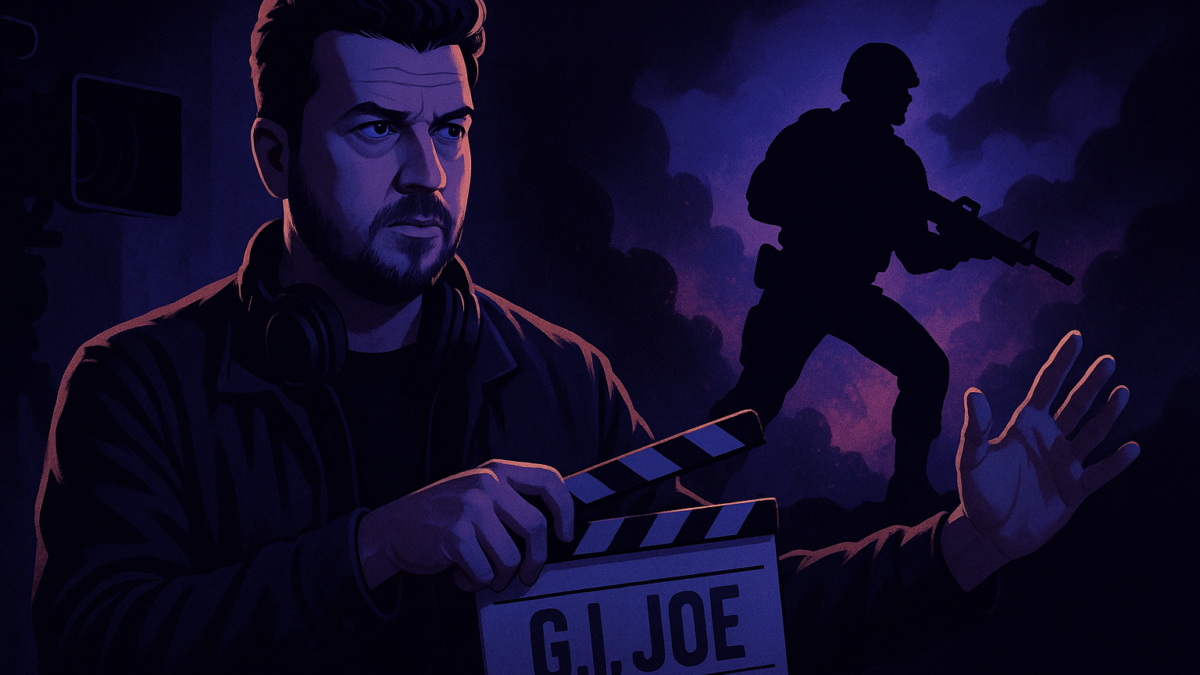
Paramount is taking an unexpected swing with one of its most recognizable action brands, tapping Danny McBride to direct the next film in the “G.I. Joe” universe. The move gives the long-running Hasbro property a filmmaker whose public persona is rooted in comedy, but whose creative résumé points to a broader understanding of genre, tone and audience expectations.
McBride, best known for his work in “Eastbound & Down,” “Vice Principals” and “The Righteous Gemstones,” has built a career around abrasive antiheroes, sharp ensemble writing and stories that balance outrageous behavior with surprisingly disciplined character work. While casual moviegoers may associate him primarily with comedy, Hollywood has seen him become an increasingly valuable creative force behind the camera, particularly as a writer and producer.
His involvement is notable because he is not simply stepping in as a hired director. McBride also wrote the screenplay for the currently untitled project, giving him a substantial creative stake in how Paramount reintroduces the military-action franchise to audiences. Plot details are being kept under wraps, but the studio’s commitment to the brand suggests this is being positioned as more than a one-off experiment.
For Paramount, the choice signals a desire to shake up familiar IP rather than rely solely on conventional franchise machinery. “G.I. Joe” has name recognition, a deep character bench and decades of mythology, but its film identity has never been as clearly defined as other toy-based or comic-derived properties. Bringing in McBride could be a way to inject personality into a franchise that has often depended on spectacle first.
The decision also reflects a wider industry appetite for filmmakers who can bring a distinct sensibility to established brands. Audiences have become increasingly savvy about franchise storytelling, and a recognizable logo is no longer enough to guarantee excitement. Studios are looking for voices that can make known properties feel specific, surprising and contemporary. McBride’s hiring suggests Paramount believes “G.I. Joe” needs a point of view as much as it needs action set pieces.
Industry Context
The “G.I. Joe” brand has been part of American pop culture since the 1960s, beginning as an action figure line before evolving into a major animated and merchandising force in the 1980s. Characters such as Duke, Snake Eyes, Storm Shadow, Scarlett and Cobra Commander became fixtures for a generation of fans, supported by comics, cartoons, toys and decades of reinvention.
On the big screen, however, the franchise has had a more complicated history. Paramount previously released “G.I. Joe: The Rise of Cobra” in 2009 and “G.I. Joe: Retaliation” in 2013, both of which leaned into large-scale action and ensemble spectacle. The studio later attempted a more character-focused approach with “Snake Eyes” in 2021, centered on one of the property’s most iconic figures. That film struggled to relaunch the brand in a meaningful way, leaving the future of the franchise open to a fresh creative approach.
Hasbro-based properties remain important assets across the entertainment business, even as studios reassess how aggressively to mine legacy brands. “Transformers” has been the most commercially durable example of Hasbro’s movie potential, while other toy and game-based projects have experienced mixed results. The challenge for “G.I. Joe” is different: the property has a large mythology, but it also carries military, geopolitical and tonal questions that require careful recalibration for modern audiences.
That is where McBride becomes an intriguing choice. His previous work is not defined by polished heroism; it often explores ego, rivalry, loyalty and dysfunction. Those themes could translate surprisingly well to a team-based action franchise if handled with the right scale. A “G.I. Joe” movie does not need to become a comedy to benefit from a writer-director who understands character conflict and group dynamics.
McBride also has genre credibility that may be easy to overlook. He co-wrote the 2018 “Halloween” revival and subsequent installments with David Gordon Green and collaborators, helping reframe a classic horror property for a new era. That experience matters because it shows he has worked inside valuable legacy IP, balancing fan expectations with contemporary studio storytelling. Moving from horror revival to action franchise is a significant leap, but the underlying challenge is similar: respect the brand without embalming it.
For Paramount, the project arrives at a time when franchise clarity is critical. The studio continues to lean on major brands across film and streaming, from “Mission: Impossible” to “Sonic the Hedgehog” and “Transformers.” “G.I. Joe” remains a potentially valuable pillar because it can support theatrical releases, merchandising, animation, games and broader cross-platform storytelling. But first, the film side needs a compelling reason to exist again.
What Happens Next?
With McBride attached as both writer and director, the immediate focus will likely shift to development momentum, casting and tonal positioning. Paramount has not revealed the story, the characters involved or whether the movie will connect to previous “G.I. Joe” films. That secrecy may be strategic, especially if the studio is planning a reinvention rather than a straightforward continuation.
The next major signal will be casting. “G.I. Joe” depends heavily on its ensemble, and the right mix of stars, rising actors and character performers could determine how fresh the film feels. The franchise also has a built-in hero-villain structure through the battle between the Joes and Cobra, but the most successful version will need more than familiar names and costumes. It will need a clear emotional engine.
Production timing will also be closely watched. A studio-scale action film based on a major toy property requires significant prep, especially if Paramount intends to build a foundation for future installments. McBride’s transition into directing a feature of this size will place him under a new level of scrutiny, but it also gives him an opportunity to surprise an industry that increasingly rewards bold matches between filmmaker and material.
If the gamble works, the project could reposition “G.I. Joe” as a viable theatrical brand rather than a dormant title with nostalgic value. If it stumbles, it may reinforce the difficulty of reviving legacy properties that have name recognition but lack a unified modern identity. For now, the most interesting thing about the film is the creative choice at its center: Paramount is betting that the path back to “G.I. Joe” runs through a storyteller known for personality, risk and characters who rarely behave the way audiences expect.