
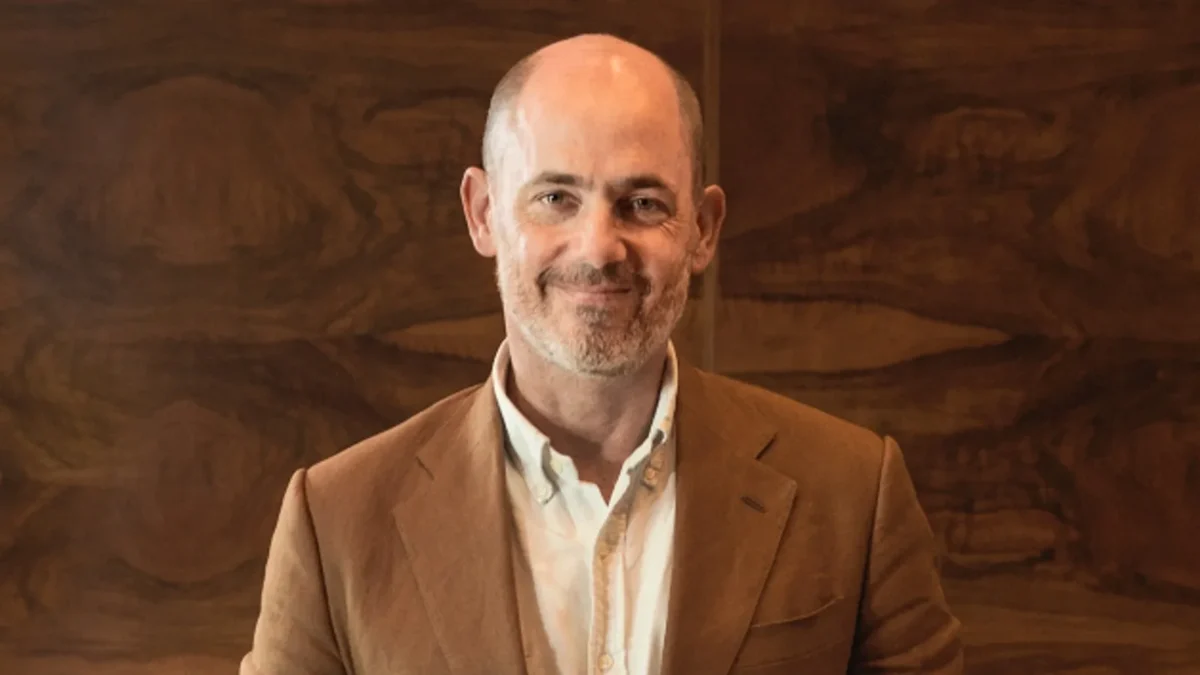
Edward Berger sees no need for filmmakers to choose sides in the debate between streaming and movie theaters.
Speaking Monday during a fireside chat at the MIA Market in Rome, the director and producer behind All Quiet on the Western Front and Conclave argued that both distribution models can serve movies, depending on the project.
“I think there’s no right or wrong. Each film will find their place. All these outlets are additive,” Berger said.
He also credited major streaming services with pushing a film business that needed new ideas and audiences following the pandemic era. Netflix, in particular, played the role of industry agitator in Berger’s view.
“The movie industry needed Netflix to wake up. They were a real disruptor,” he said.
Berger suggested that the exchange of influence now runs in both directions, with Netflix also taking inspiration from the movie industry as box office business rebounds for major Hollywood studios and streamers.
Failure helped shape Berger’s approach
Beyond the streaming-versus-theaters discussion, Berger used his Rome appearance to reflect on the professional doubts and creative setbacks that influenced his career.
“The thing that taught me the most was failure,” he said.
Berger pointed to his second movie, World War Z, a collaboration with Brad Pitt, as a project that left him questioning where his career was going. He said that period reinforced a more personal standard for deciding which films to pursue.
“It’s all about yourself. Only make a movie when it comes from the inside. When there’s something about you, that you really want to say, then you make it,” Berger said.
He recalled finding his footing again alongside screenwriter Nele Mueller-Stoefen on Jack, a low-budget 2014 film centered on two lost and neglected brothers in Berlin.
Berger, who worked with Good Machine after leaving university, also acknowledged the Hollywood figures who watched Jack and recognized his potential. Good Machine made films by Todd Haynes and Ang Lee.
“The people who showed up were the foreigners, not the Germans: Film Four, BBC Films, the Americans,” Berger said. “Everyone in America saw the movie, in Hollywood. It’s a small movie, but they’re so interested in seeing the next movie, finding the next voice. They’re hungry for movies.”
That attention helped clear a path to Conclave, Berger’s Vatican-set film, which was shot mostly in Rome at the historic Cinecittà Studios.
“It’s a great place to make a movie. You feel Fellini walking around, It’s very inspiring,” he said.
The English-language debut earned $127 million at the global box office. It received eight Academy Award nominations, including best screenplay and best picture, and won four Oscars.
A career spanning Netflix and immersive filmmaking
Berger’s own recent projects reflect the range of outlets he defended in Rome. His latest film, Ballad of a Small Player, was released by Netflix last year and starred Colin Farrell.
Farrell played a down-on-his-luck gambler with ambitions of becoming a major player. The character works the baccarat tables of Macau while attempting to address a mountain of debt tied to both his present and his past.
Berger also wrote and directed Submerged, the first original scripted film shot in Apple Immersive Video. The project was designed to be viewed through the Apple Vision Pro mixed-reality device.
His work with Netflix is continuing through Helo, a police-helicopter action thriller now in development at the streaming service. Berger is producing the project through his Nine Hours banner with Luke Rivett, while Andrés Baiz is set to direct.
Berger said remaining creatively energized requires keeping several possibilities in motion, even though not all of them will ultimately move forward.
“I want to have three or four things that are always there,” he said. “Some will fall away because you can’t raise the family. The script doesn’t get there.”
He also emphasized the importance of listening to collaborators rather than assuming the director always has the correct answer.
“So many times I was wrong, and I was just trying to find the truth on the day,” Berger said. “I’m human. You’re human. We all make mistakes. Let’s find the truth together.”
ShowBiz Take
Berger’s position stands out because he is not treating cinemas, established movie companies, streaming services and immersive technology as mutually exclusive paths. His comments instead frame each format as another possible home for a film, with the project itself determining where it belongs.
His slate gives that argument practical weight: Conclave delivered a substantial global box office result, Ballad of a Small Player went to Netflix, and Submerged explored Apple’s immersive format. Rather than declaring one model the future, Berger is embracing a business in which several models can operate at once.
What Happens Next?
Helo remains in development at Netflix with Baiz directing and Berger producing alongside Rivett. Berger’s wider strategy is to keep three or four potential projects active, while accepting that family demands or scripts that do not reach the necessary level may cause some of them to fall away.