
Why This Matters
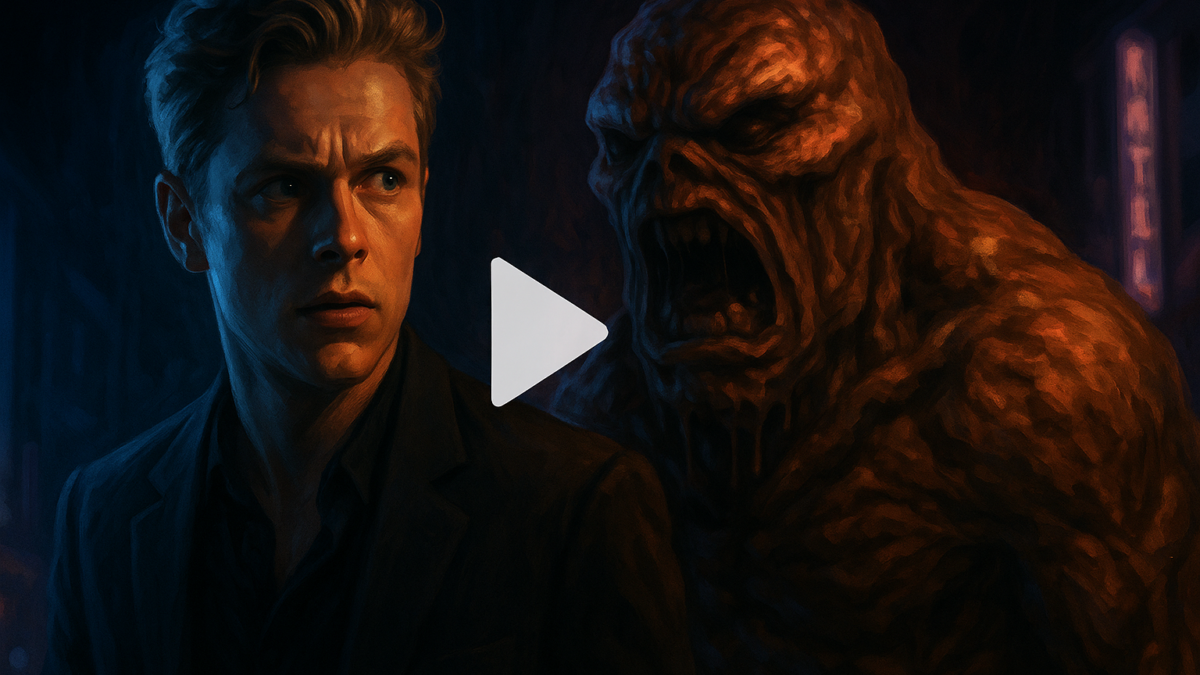
DC Studios and Warner Bros. have unveiled the first trailer for Clayface, offering the clearest look yet at one of the studio’s boldest swings since the relaunch of its interconnected screen universe. Rather than positioning the Gotham-set story as another traditional superhero outing, the footage leans into horror, psychological damage and body transformation — a tonal pivot that helps explain why the film is carrying an R rating.
At the center of the film is Tom Rhys Harries as Matt Hagen, a character whose journey begins far from the usual comic-book power fantasy. According to the studio’s synopsis, Hagen rises from a Gotham street kid to a Hollywood leading man before his life is violently derailed by a local crime boss. Left disfigured, abandoned by the very people who helped build his career and desperate for a way back, Matt’s search for a cure appears to push him into increasingly nightmarish territory.
That premise gives Clayface an unusually intimate entry point for a DC feature. The character has often been defined by his physical mutations and shape-shifting abilities, but the trailer suggests this version is just as interested in the emotional horror of losing one’s identity. For a studio looking to reintroduce familiar mythology with sharper creative distinctions, that matters. This is not simply another villain origin story; it is being framed as a tragic transformation tale with movie-star vanity, class mobility, body horror and Gotham criminality all colliding.
The R rating is also significant because it signals that DC Studios is willing to segment its audience when the material calls for it. In an era when comic-book films are often engineered for the broadest possible four-quadrant appeal, an adult-skewing horror-thriller represents a different calculation. It tells audiences that not every DC title will arrive in the same tonal package, and it tells filmmakers there may be room within the brand for more aggressive genre choices.
Industry Context
Directed by James Watkins, whose previous work has demonstrated a strong command of tension and survival storytelling, Clayface arrives at a time when studios are searching for ways to make comic-book intellectual property feel less predictable. After years of sprawling multiverse narratives, post-credit teases and escalating spectacle, the marketplace has shown signs of fatigue. Viewers are still willing to show up for superhero-adjacent stories, but increasingly they need a specific reason to believe a film is offering something they have not already seen.
Horror has become one of the most reliable answers to that problem. The genre remains comparatively cost-efficient, culturally elastic and capable of generating conversation with a single unsettling trailer moment. By placing a Gotham character inside a horror-thriller framework, DC Studios is not abandoning its core mythology; it is repackaging part of that mythology through a genre that continues to perform theatrically and generate strong digital attention.
The strategy also reflects a broader shift in franchise management. Major studios are no longer relying solely on uniformity. Instead, they are trying to build worlds that can support different tones, budgets and ratings. A prestige-style crime drama, a cosmic adventure, a family-facing superhero film and an R-rated horror story can, in theory, all exist under the same banner if the brand architecture is clear enough. That flexibility is especially important for DC, which has spent the past several years working to reset audience expectations.
Clayface also has the advantage of being tied to Gotham without necessarily requiring Batman to be the center of the story. That is a valuable piece of real estate. Gotham remains one of the most recognizable fictional cities in pop culture, but its rogues gallery offers far more than caped confrontations. A character like Matt Hagen allows the studio to explore the city’s entertainment industry, criminal underworld and culture of image-making from a different angle.
For Harries, the role represents a major showcase. Playing Clayface requires more than simply embodying a recognizable comic-book name; it demands a performance that can track ambition, humiliation, rage and physical disintegration. If the film works, it could elevate him within the genre space while giving DC a new kind of tragic figure — one who is frightening not because he wants power, but because he cannot survive what has been taken from him.
What Happens Next?
The trailer’s release now puts the focus on how Warner Bros. will market a DC film that is explicitly not being sold as standard superhero fare. Expect the campaign to emphasize atmosphere, practical or tactile horror imagery, and the psychological unraveling of Matt Hagen rather than leaning too heavily on traditional comic-book iconography. The studio will likely want audiences to understand that the R rating is not a gimmick, but a reflection of the story’s darker creative lane.
The next major test will be audience reaction beyond the core DC fan base. Genre fans who may not follow superhero continuity could become a crucial constituency if the marketing convinces them that Clayface functions as a standalone horror-thriller. At the same time, longtime comic readers will be watching closely to see how faithfully the film captures the character’s tragedy and grotesque theatricality.
If Clayface connects, it could open the door for DC Studios to take more character-specific risks, particularly with villains and morally complicated figures who do not fit neatly into PG-13 blockbuster formulas. If it stumbles, the lesson may be more complicated: not that adult-oriented comic-book films are unworkable, but that the balance between brand, genre and audience expectation must be carefully managed.
For now, the first look positions Clayface as one of DC’s most intriguing upcoming releases — a grim, character-driven experiment that could expand what a studio superhero label is allowed to contain. The transformation has begun; the industry will be watching to see whether audiences are ready to follow it into darker territory.