
Why This Matters
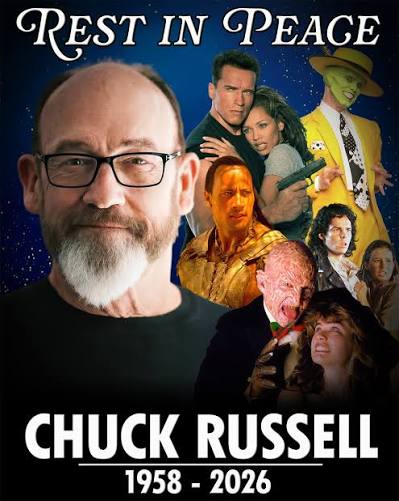
Chuck Russell’s death marks the loss of a filmmaker whose work helped define several very different corners of popular cinema, from franchise horror to broad studio comedy to muscular action spectacle. Russell, born Charles Raymond Russell, died July 22 at age 74, according to his wife, actress Ania Zeyne, who confirmed the news to The Hollywood Reporter. Zeyne said she found him unresponsive at their San Diego home. A cause of death has not been disclosed.
For many moviegoers, Russell’s name is inseparable from a run of genre titles that became durable favorites long after their original theatrical releases. He directed A Nightmare on Elm Street 3: Dream Warriors, a pivotal entry in the Freddy Krueger series that is widely credited with reinvigorating the franchise by leaning into surreal set pieces, teen ensemble dynamics and a bigger mythology. He followed with The Blob, the 1988 remake that earned a reputation among horror fans for its practical effects, vicious pacing and willingness to treat a familiar creature-feature premise with genuine bite.
Russell’s most commercially famous achievement came with The Mask, the 1994 New Line hit that supercharged Jim Carrey’s rise as a movie star and introduced Cameron Diaz to audiences in a breakout screen debut. The film’s blend of live-action performance, cartoon logic and early visual-effects bravado made it one of the defining comedies of the decade. At a moment when studios were still learning how digital tools could reshape mainstream filmmaking, Russell delivered a movie that felt kinetic, accessible and unmistakably theatrical.
His career mattered because he occupied a space Hollywood often depends on but does not always celebrate loudly enough: the director who can move between tones, budgets and audience expectations without losing command of the screen. Russell was not confined to one lane. He could handle nightmares, wisecracks, monsters, mythology and explosions, often with an emphasis on spectacle built around character rather than spectacle for its own sake.
Industry Context
Russell emerged during an era when genre filmmaking was a proving ground for directors with strong visual instincts and an appetite for practical problem-solving. Horror in the 1980s was both a commercial engine and a creative laboratory, particularly for companies like New Line Cinema, which built major business around fan-driven franchises. Dream Warriors arrived at a crucial point for A Nightmare on Elm Street, expanding the series beyond slasher mechanics and helping turn Freddy Krueger into a full-fledged pop-culture figure.
That film’s legacy has only grown with time. Horror fans frequently cite it as one of the best sequels in the genre, not merely because of its elaborate deaths or memorable imagery, but because it understood the emotional vulnerability of its young characters. Russell’s direction gave the film a comic-book energy without fully abandoning fear, a balance that would become a hallmark of many successful franchise entries in the decades that followed.
With The Blob, Russell also became part of the late-’80s wave of filmmakers reinterpreting midcentury genre properties for audiences raised on sharper effects and darker sensibilities. Though the film was not a blockbuster on release, it became a cult touchstone, admired by makeup-effects enthusiasts and horror filmmakers for its tactile menace. In an industry now dominated by reboots, remakes and brand extensions, Russell’s work on The Blob remains an example of how a familiar title can be refreshed through craft and conviction rather than nostalgia alone.
Then came The Mask, which positioned Russell at the center of one of the 1990s’ major shifts: the marriage of star comedy and visual effects. The film’s success helped confirm Carrey as a box-office force after Ace Ventura: Pet Detective and before Dumb and Dumber, while Diaz’s performance launched a long screen career. Russell’s role in shaping that alchemy was significant. He had to make a heightened, effects-heavy world feel responsive to Carrey’s physical comedy, not overwhelmed by it.
Russell later worked on larger action-adventure fare, including Eraser with Arnold Schwarzenegger and The Scorpion King, which gave Dwayne Johnson one of his first major starring vehicles. Those films reflected a studio system that prized directors capable of delivering broad, exportable entertainment. While critical response varied across his filmography, Russell’s projects often found life with audiences through cable, home video, streaming and fandom, the places where genre reputations are frequently made and remade.
What Happens Next?
In the immediate term, tributes are likely to focus on Russell’s unusually wide reach across fan communities. Horror devotees will remember the dream logic and emotional stakes of Dream Warriors; cult-cinema audiences will point to the ruthless invention of The Blob; comedy fans will return to The Mask as a reminder of how carefully controlled chaos can become a mainstream phenomenon.
Because no cause of death has been disclosed, the public record around Russell’s final days remains limited to the confirmation from his wife and the detail that he was found unresponsive at their San Diego home. Zeyne’s comment — “He was such a wonderful guy. He meant everything to me” — underscored the personal loss behind a career that many viewers encountered through big, noisy, crowd-pleasing movies.
Studios, collaborators and genre institutions may also revisit Russell’s contributions as part of broader conversations about the directors who helped build modern franchise entertainment before the current era of cinematic universes. His films sit at a crossroads between analog ingenuity and digital transformation, between the scrappy energy of 1980s horror and the effects-driven studio hits that would dominate the 1990s and 2000s.
For younger audiences discovering his work through streaming and repertory screenings, Russell’s filmography offers a concise lesson in commercial imagination. His best-known films did not all belong to the same genre, but they shared a belief that popular movies could be bold, strange and highly entertaining at once. That sensibility is why his death will resonate beyond a single fan base.
As the entertainment community absorbs the news, attention will turn to remembrances from actors, producers, craftspeople and fellow filmmakers who worked with Russell across four decades. His legacy will continue in the films that made audiences laugh, flinch and cheer — and in the careers he helped accelerate along the way.