
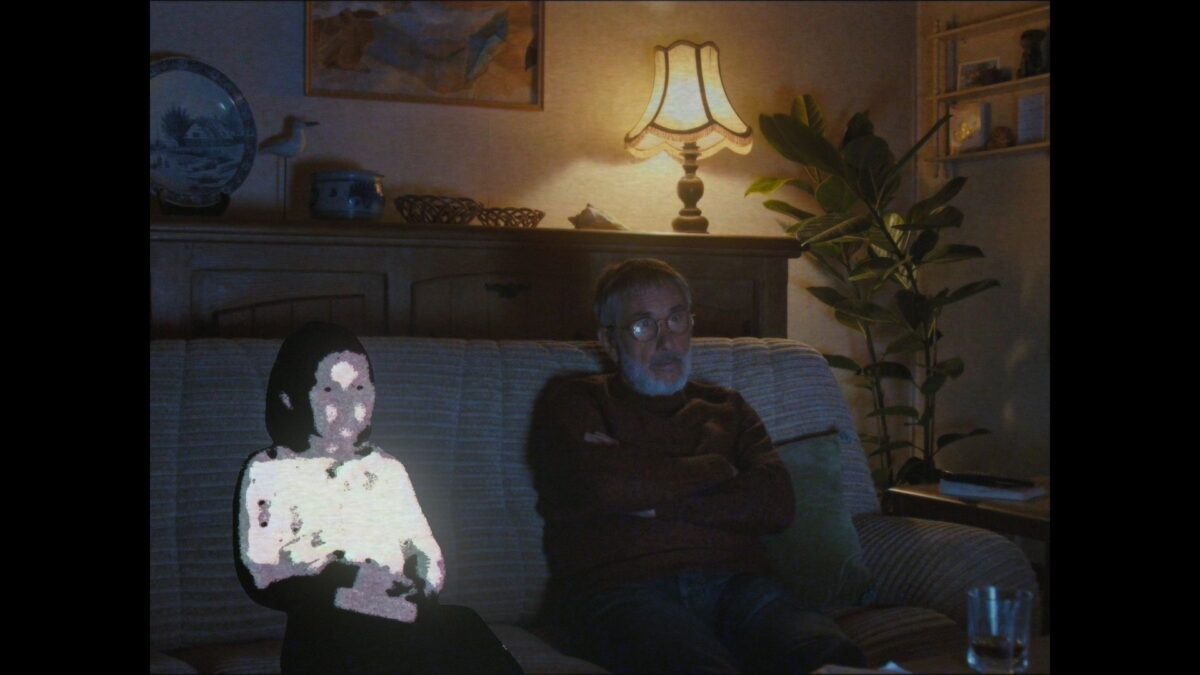
Christopher Yates is preparing to unveil his first fiction feature, Night Vision (Öised nägemused), with a world premiere at the 30th Tallinn Black Nights Film Festival in Estonia.
The self-produced, low-budget film will debut Nov. 14 in the festival’s Rebels with a Cause Competition. Yates co-wrote Night Vision with Sandra Fassio, and the pair also served as producers.
Blending documentary-style filmmaking, found footage, romance, horror, autofiction and animation, the movie centers on Jenny, a young filmmaker searching for inspiration but unable to remember her dreams. During a flea-market visit with her crush, Pierre, she buys an old video camera and discovers unusual artifacts and apparent “presences” recorded on its tape. That discovery raises the possibility that the camera can capture dreams.
Salomé Crickx, Pierre Gervais and Angelo Bison star. Leonor Malamatenios served as cinematographer, while Matthieu Jamet-Louis edited the film.
Dreams, Grief and a Camera Mystery
Yates said the central idea of a camera recording dreams arrived suddenly and offered a practical route into the story. Its documentary-style approach also suited both his filmmaking background and the project’s limited resources.
“I’m a big dreamer and have been reading a lot, some a bit geeky stuff, about dreams,” he said, explaining that his personal library on the subject includes works by Freud and predates the film itself.
Dream logic does more than shape the premise. According to Yates, it provides the movie’s underlying structure, allowing Jenny’s story to move through linked thoughts, memories, changing tones and different possible projects rather than following a conventional progression.
Mourning and trauma are also central to the film. Yates lost his father when he was 20, though not to suicide, and described encountering people who have died in dreams as a lasting inner experience. He also had a friend die by suicide when he was 30, an event he remembers as traumatic.
Those experiences brought dreams, grief and memory together for the filmmaker. He described memory as “a kaleidoscope of things,” while also pointing to a broader feeling surrounding “the multitude of the departed” and people who disappear without leaving a trace in the world.
The connection surfaces within the film when Jenny proposes Graveyard of Memories as a possible movie idea after acquiring the camera. The moment also introduces the unconventional relationship between Jenny and Pierre. Yates said he wanted Jenny to be mean and to reverse familiar gender roles, while Pierre was characterized by the actor playing him as “a Labrador.”
A Hands-On Production
Yates approached the shoot with the flexibility he had used in documentary work. Crickx and Gervais participated in the writing process, improvising scripted scenes that Yates would then revise before the actors improvised them again.
Part of Night Vision was filmed in Yates’ Brussels apartment, which also became a working space during other stages of production. Crickx repeatedly returned there to record additional voiceover material, and Yates said much of that narration was written during post-production.
The home-based collaboration also came with a practical lesson: Yates found that cooking pasta or mushroom sandwiches for the team helped keep the group happy.
The film’s animation and visual effects began as another DIY undertaking. Yates watched YouTube tutorials and transformed footage captured on his iPhone into animation, while also creating early effects for the nightmare sequences himself.
After completing an initial rough cut with unfinished animation and effects, the team sought an aide à la finition, a post-production and finishing grant available in the French-speaking part of Belgium. The funding provided what Yates called “a little cash” to bring in professionals and compensate them properly for completing that work.
The broader crew, however, worked on a participation basis rather than receiving upfront pay. Their compensation was structured as a percentage of any eventual gross. Yates acknowledged that the final return could be zero, though he added, “who knows.”
The movie’s found-footage elements may invite comparisons to The Blair Witch Project. Yates said that influence is understandable, although he had not rewatched the film and remembered being around 20 or younger when it was released. He called it a “radical proposition” that had stunned audiences at the time.
Night Vision also turns its attention toward cinema itself. Yates said the movie plays with his knowledge of film and pokes fun at genres frequently seen in Belgium, including coming-of-age stories.
The feature follows Yates’ earlier nonfiction work. He directed the 2009 documentary Not Here, a road movie about the rock band Girls in Hawaii, and co-directed the 2015 mining documentary Reveka, set around Potosí, Bolivia. He is also a co-creator and co-writer of the Belgian series Public Enemy and has worked as an editor.
ShowBiz Take
Night Vision matters as both Yates’ fiction-feature debut and a direct extension of his documentary instincts. Its production method mirrors its artistic design: improvisation, home shooting, self-taught effects and post-production discoveries all feed a story built around unstable memories and free association.
The Tallinn premiere now gives that intensely collaborative process an international festival platform. A place in the Rebels with a Cause Competition also fits a movie that deliberately crosses formats and genres rather than settling into one established mode.
What Happens Next?
Beyond the Nov. 14 premiere, Yates and Fassio are developing several projects. Yates has begun writing a second feature about a nurse hired to work in a wealthy household where a seven-year-old child is in a coma after a swimming accident.
The nurse can telepathically hear what people feel internally, making the proposed film an experiment in sound. Yates said the idea remains partly within horror but will again carry a twist, reflecting his belief that investing years in a film should give audiences something new, or at least something they have not encountered before.