
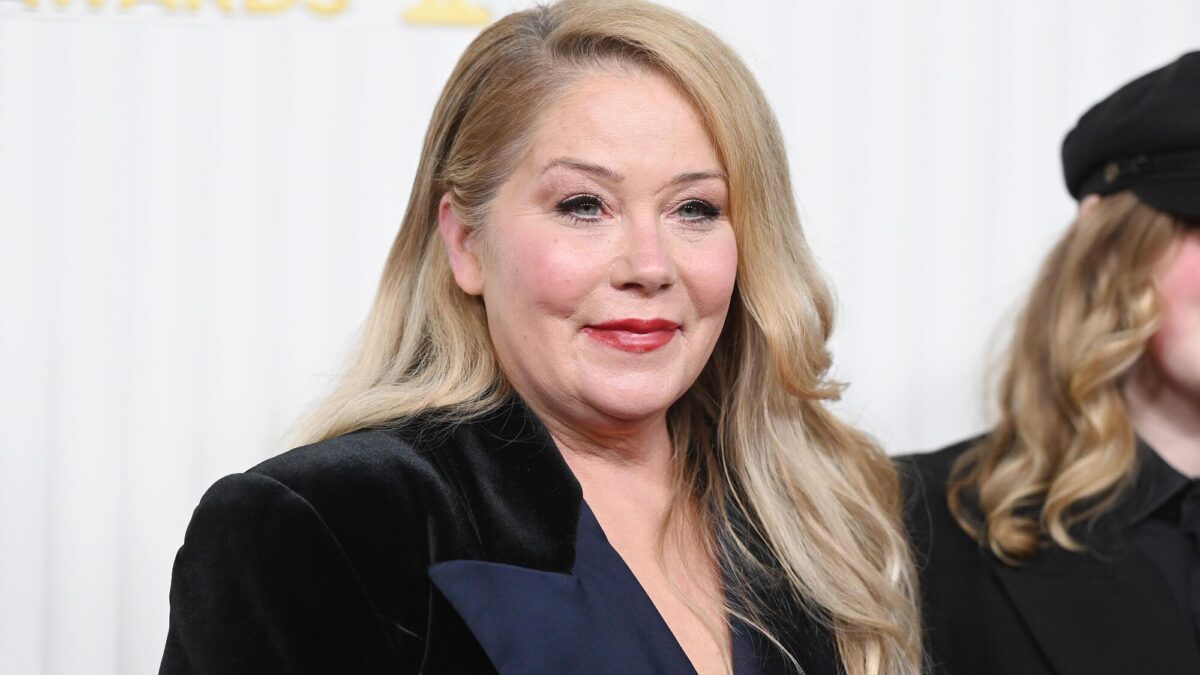
Christina Applegate says her commitment to the multiple sclerosis community will continue, despite the recent discovery that she had been misdiagnosed with the disease.
Returning to the “MeSsy” podcast one week after sharing the change in her diagnosis, Applegate told co-host Jamie-Lynn Sigler and listeners that she still considers people affected by MS to be “my people.” Sigler was diagnosed with MS in 2001.
“Even though I don’t have this disease, I’ve fallen in love with everyone that we know, our listeners, our friends that have MS,” Applegate said, according to Entertainment Weekly. “I’m still your warrior, and I’m still going to speak out on your behalf forever and ever. Despite not having MS. I still feel like part of this community. No matter what, I love you.”
The Emmy winner first announced an MS diagnosis in 2021. After the finale of “Dead to Me” the following year, she retired from acting and became an outspoken advocate for people living with the disease, which damages the central nervous system.
Applegate also co-founded “MeSsy” to discuss her own experiences and raise awareness. Her latest message makes clear that the podcast’s connection to the MS community will not end because her medical circumstances have changed.
Symptoms Continue Despite MS Misdiagnosis
While Applegate has now been told that she does not have MS, the physical symptoms that prompted years of concern have not disappeared. On the podcast, she described an increasingly difficult morning routine and said she still does not know what is causing her condition.
“I actually timed it today, it took me 10 minutes to be able to move off my pillow and get out of the bed and stand up, at which point I almost couldn’t walk to the bathroom,” Applegate said.
She added that a walker is now positioned next to her bed because of what she is experiencing. “I don’t know what’s going on,” she said, explaining that she previously had been able to sit up without the same difficulty.
The update follows Applegate’s Oct. 21 return to “MeSsy” after a seven-month break. During that episode, she became tearful as she explained that new technology had led to the discovery that the MS diagnosis was incorrect.
Although hearing that she did not have MS could sound like welcome news, Applegate said it instead left her without an explanation for symptoms that have persisted and, in some respects, worsened.
“This may come as great news, but to me, I’m back at square one,” she said. Applegate recalled her doctor telling her, “Congratulations, you don’t have MS,” but stressed that the revised diagnosis did not mean she had suddenly recovered.
“I haven’t gotten better,” she said. “If anything, I’ve gotten worse in some ways. So I’m back at square one, that I don’t know what’s going on with me.”
Applegate also spoke candidly about the emotional impact of the reversal. After becoming such a prominent advocate for the MS community, she said she felt as though she had “let everybody down.” She described herself as still being in a “state of shock” and called the experience “a mindfuck, for sure.”
ShowBiz Take
Applegate’s latest podcast appearance matters because it separates two major parts of her story: her unresolved health struggle and the advocacy work she built around an MS diagnosis she believed was accurate.
The medical change has returned her to uncertainty, but it has not erased the relationships she formed through “MeSsy” or her determination to support its listeners. By promising to remain a voice for people with MS, Applegate is signaling that her connection to the community extends beyond her own diagnosis.
At the same time, her account underscores why the news has been emotionally complicated. She has not described a recovery or an end to her symptoms. Instead, she is confronting significant mobility problems without a confirmed explanation for what is causing them.
What Happens Next?
Applegate has not identified the illness behind her continuing symptoms. For now, she remains “back at square one” medically while pledging that her public support for those affected by MS will continue “forever and ever.”