
Why This Matters
Chris Brown’s guilty plea in a London nightclub fight adds a serious new legal chapter to a career that has often been shadowed by courtroom proceedings as much as by chart performance.
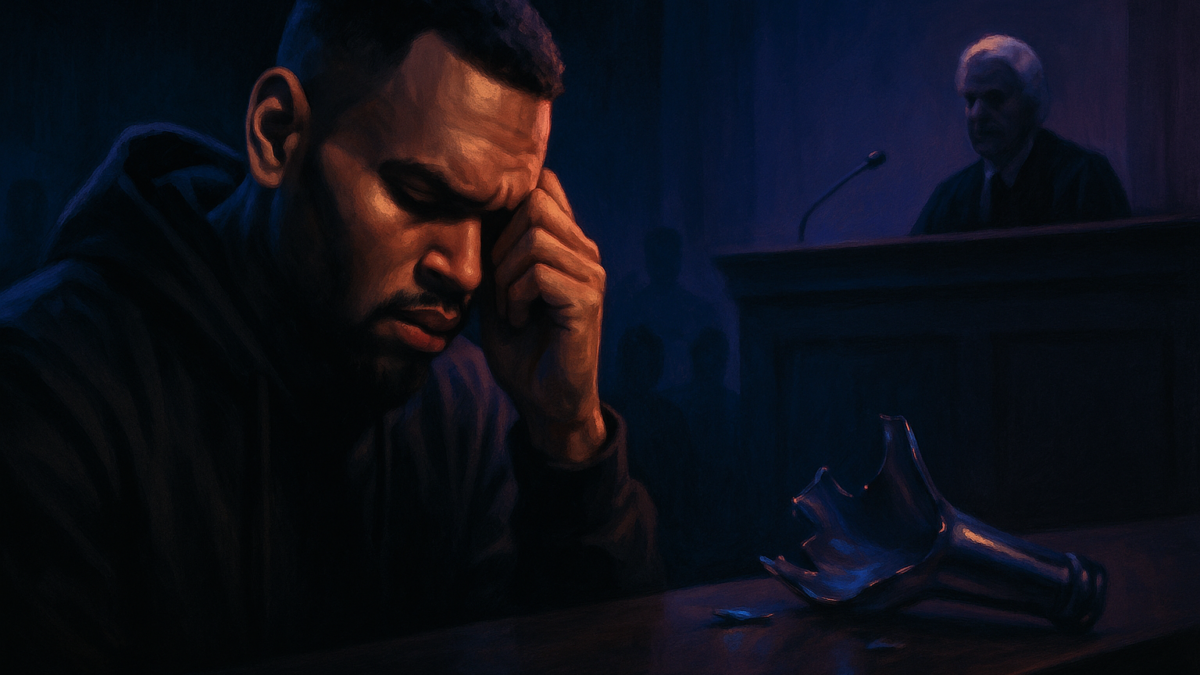
The Grammy-winning singer admitted his involvement in the 2023 altercation involving music producer Abraham Diaw, a case prosecutors had characterized as “a vicious and unprovoked attack.” Brown had faced more severe allegations tied to the incident, including claims that Diaw was struck in the head with a bottle. As part of the plea arrangement, assault and weapon-related charges were dropped in exchange for Brown’s admission to fighting.
The practical stakes remain significant. Brown, 37, could face as much as three years in prison when he is sentenced in October, a potential outcome that would immediately affect his touring business, recording schedule and broader commercial commitments. For an artist whose revenue is closely tied to live performances, international travel and high-volume fan engagement, even the possibility of custody creates uncertainty across multiple parts of the music ecosystem.
The case also matters because Brown remains a major figure in contemporary R&B despite years of controversy. His fan base has proved unusually durable, and his streaming numbers have often remained strong even when public scrutiny intensified. That endurance has made him a case study in how celebrity, accountability and commercial viability collide in the modern entertainment business.
For promoters, labels, agents and venue operators, the plea creates an immediate risk-management question. Brown is not a developing act whose absence can be easily absorbed by the market. He is a proven live draw with an international audience, meaning any disruption to his availability can have financial consequences beyond the artist himself. Crew members, dancers, vendors, ticketing partners and local promoters can all be affected when a major artist’s legal status becomes uncertain.
The plea also lands at a time when public tolerance for offstage conduct by high-profile entertainers is more complicated than ever. Audiences are fragmented, and fan communities can be fiercely protective, but corporate partners and institutional players tend to be more cautious. A guilty plea gives the industry something more concrete than an allegation to assess, even if the most serious charges were dropped as part of the agreement.
Industry Context
Brown’s career has long occupied an uneasy place in the music business: commercially resilient, culturally influential and repeatedly controversial. Since his breakthrough as a teenage performer, he has built one of R&B’s most recognizable catalogs, blending pop, hip-hop and dance-heavy performance into a global brand. At the same time, his public image has been shaped by past legal issues, most notably his 2009 felony assault case involving Rihanna, which continues to inform how new incidents are received by the public and press.
In earlier eras, record labels and promoters often attempted to separate an artist’s personal conduct from their market value. That divide has become harder to maintain. Social media ensures that court developments are instantly recirculated, while streaming platforms make it possible for fans to support an artist without necessarily engaging with traditional media coverage. The result is a split-screen dynamic: legal controversies can dominate headlines while the same artist continues to perform strongly on digital platforms.
Brown’s situation underscores the music industry’s dependence on live entertainment as a primary revenue engine. For established artists, touring can be more lucrative than recorded music, particularly as streaming royalties remain a point of tension across the business. When a performer with Brown’s international profile faces possible imprisonment, the concern is not limited to one tour date or one market. It can ripple through insurance policies, routing plans, sponsorship conversations and visa considerations.
London is also a major global music hub, making the location of the case especially relevant. The city remains a critical stop for American artists seeking European reach, and legal trouble in the U.K. can carry consequences for future appearances, depending on sentencing and any travel restrictions that may follow. Even when artists avoid the harshest penalties, promoters may still factor perceived volatility into future bookings.
The plea agreement itself reflects a familiar legal reality in celebrity cases: the final charge to which a defendant admits guilt may be narrower than the allegations that generated public attention. Prosecutors initially described the incident in stark terms, while Brown’s admission concerns his participation in fighting. That distinction will likely be central to how his legal team frames the case before sentencing, and how his representatives seek to manage the narrative with fans and business partners.
Still, in the entertainment industry, perception often moves faster than legal nuance. The dropped charges may matter considerably in court, but the broader public conversation is likely to focus on the fact that Brown pleaded guilty in connection with a violent nightclub incident. That creates a reputational challenge even before a sentence is handed down.
What Happens Next?
Brown is now expected to return for sentencing in October, when the court will determine whether his guilty plea results in imprisonment, a suspended sentence or another penalty. The maximum exposure, according to the charges described in court, could be up to three years behind bars, though sentencing decisions typically consider a range of factors, including the plea, the circumstances of the incident and arguments presented by both sides.
Before then, Brown’s legal team will likely emphasize the reduced scope of the plea and the dismissal of the assault and weapon charges. Prosecutors, meanwhile, may continue to point to the seriousness of the nightclub confrontation and the alleged harm to Diaw. The sentencing hearing will be the moment when those competing interpretations are tested in practical terms.
For Brown’s music operation, the next several months are likely to involve contingency planning. Any upcoming performances, recording commitments or international appearances may need backup scenarios depending on the outcome in October. Even without an immediate custodial sentence, the plea could complicate negotiations with promoters, insurers and brand partners wary of additional legal exposure.
The fan response will also be closely watched. Brown has historically retained a loyal audience through controversy, and that support could soften commercial fallout in the short term. But the industry will be looking beyond social media reaction to harder indicators: ticket demand, streaming movement, radio appetite and whether business partners remain willing to publicly align with him.
Until sentencing, the case remains unresolved in the way that matters most for Brown’s career. The guilty plea has narrowed the legal dispute, but it has not removed the uncertainty. October will determine whether this becomes another controversy absorbed by a resilient star machine or a legal outcome with immediate consequences for one of R&B’s most commercially durable performers.