
While many players stepped back from Pride marketing in recent years, the appetite remains strong, and it’s lucrative for those who get it right. According to Chelsie Hares, Stylus’s trends writer and researcher in brand engagement, the LGBTQ+ market offers “significant” economic value and cultural influence. Queer business platform, myGwork, estimates the LGBTQ+ community represents $3.9 trillion in global spending power. In fact, per a new study from consumer insights firm MRI-Simmons, half of Gen Z consider it important that brands feature LGBTQ+ figures in advertising, while Kantar’s data confirms that 65% of global consumers deem it important to buy from companies promoting diversity and inclusion, compared to 59% in 2021.
In this vein of meeting queers where they already are, this Pride month, Diesel teamed up with Tinder, presenting the For Successful Loving campaign (a play on the brand’s tag line). For this, the two brands released a capsule of shredded denims and skin-flashing separates, marketing them through sassy video interview content hosted by drag artist Gigi Goode, also pushing the content in-app.
”The first step was finding a partnership that felt authentic,” says Diesel creative director Glenn Martens. “Tinder is one of the spaces where contemporary love takes shape, without boundaries or predefined labels. Both Diesel and Tinder share a curiosity about how people connect today and a belief in giving people the freedom to define relationships on their own terms.” To his point, Tinder’s data reveals that almost seven billion LGBTQ+ matches have been made on the app globally. Plus, Tinder reports a 66% year-on-year increase in queer matches, estimating that 30% of all those made on app are between to LGBTQ+ users.
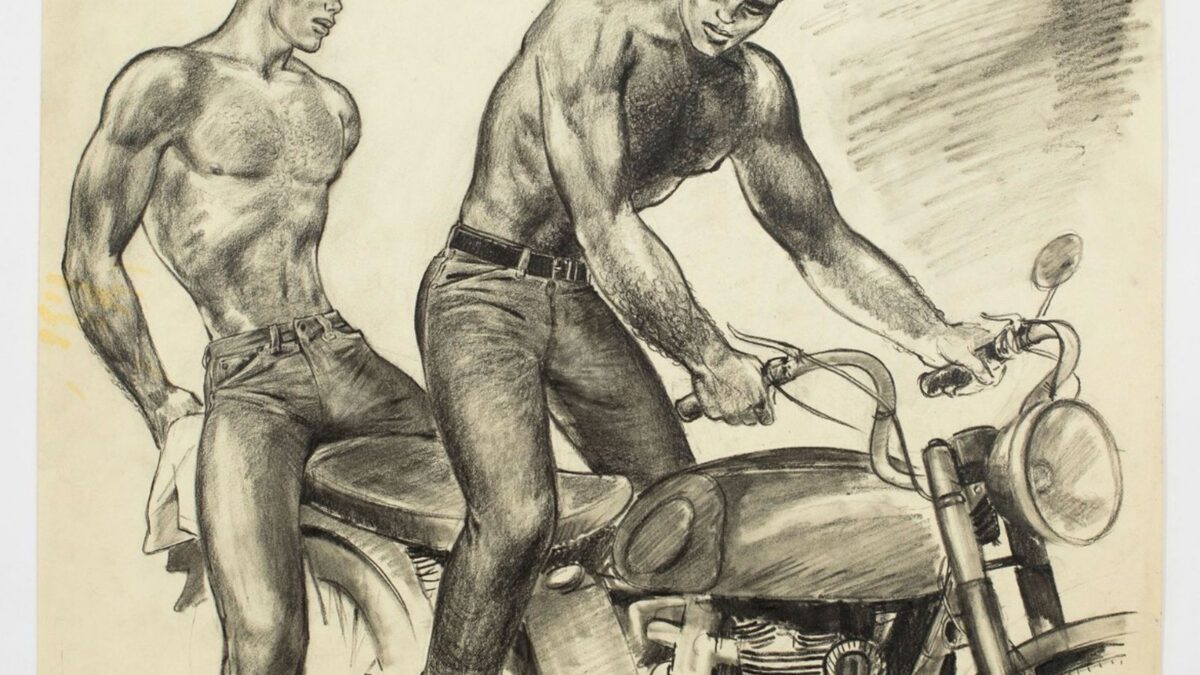
Elsewhere this month, JW Anderson staged an exhibition of homoerotic illustrations from the historical gay illustrator, Spartacus, which first appeared in issues of the original, clandestine gay muscle magazine, Pictorial Physique. Levi’s put forward a gay biker-inspired collection, upping the ante on leather. And, taking a gentler approach, Erdem joined forces with the UK’s first official queer bookshop, Gay’s The Word, to design a T-shirt complete with artist Derek Jarman’s artwork from a film he made during his battle with an accelerating AIDS diagnosis. The approaches delve deep into queer culture, activism, and history, eschewing cursory engagement and, in effect, taking a stance.
In the beauty space, brands focused on supporting LGBTQ+ charities and businesses. LVMH-owned Sephora’s UK wing continued its partnership with trans+ charity, Not A Phase, showing up at pop festival Mighty Hoopla as charity partner with a spin-to-win activation and a makeup station. More recently, Cult Beauty launched a dedicated Pride beauty box, packed with cosmetics — a Tan-Luxe tanning lotion, an Isle of Paradise SPF, and a Byoma moisturizer, among others — from LGBTQ-founded or owned businesses, as well as partnering with the Queer Britain museum for a special Pride weekend activation. The brand shares that social views and engagement are already up 20% and 14% year-on-year, respectively, compared to 2025 Pride content. “It’s about creating space for the voices within our community,” says Julianna Villalobos Lamont, senior brand manager. “We believe in supporting our brands year-round and organically elevating LGBTQ+ voices and stories.”