
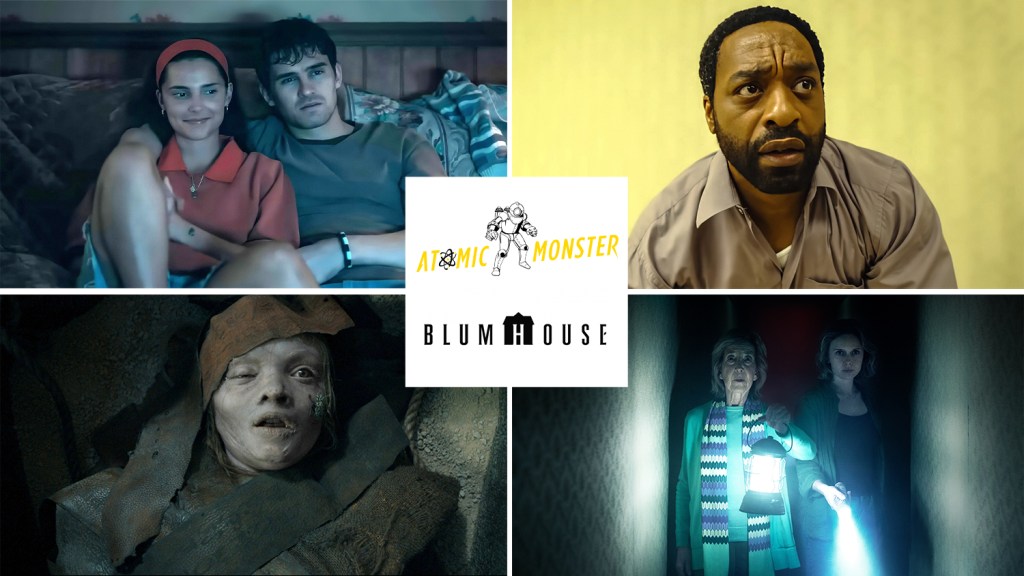
Blumhouse Atomic Monster has crossed $1 billion at the global box office year-to-date, powered by the breakout performance of Obsession, strong international play for Backrooms and another durable showing from the Insidious franchise.
The milestone marks the third time in four years that the horror-focused company has surpassed the billion-dollar benchmark worldwide, underscoring the commercial resilience of genre filmmaking at a moment when studios are still searching for reliable theatrical bets outside of superhero movies and animation.
For Blumhouse Atomic Monster, the achievement is more than a symbolic victory lap. It is an early validation of the combined operation formed by Jason Blum’s Blumhouse and James Wan’s Atomic Monster, two brands that helped define the modern low-to-mid-budget horror model. Together, the companies have leaned into a strategy that Hollywood has been trying to replicate for years: keep costs disciplined, market concepts clearly and give audiences a reason to show up opening weekend.
Obsession has been the company’s biggest catalyst this year, expanding beyond core horror audiences with a campaign that emphasized psychological suspense, star-driven tension and a premise easy to communicate in a trailer. The film opened strongly domestically and then found extended life overseas, where thrillers with contained stories often travel well when they are not overly dependent on local cultural references.
Backrooms, meanwhile, has played like a digital-native horror property built for the current marketplace. Based around the unsettling mythology that has spread across online communities, the film benefited from built-in awareness among younger moviegoers and a marketing push designed to feel less like a traditional studio rollout and more like a mystery already circulating on the internet. That approach helped it punch above expectations in several territories, particularly among Gen Z audiences.
The latest Insidious installment also contributed meaningfully to the total, reminding the industry that long-running horror franchises remain among the most dependable assets in theatrical distribution. The series has never required blockbuster-level spending to generate blockbuster-style profit margins, and its recurring mythology continues to give fans a familiar entry point while leaving room for new characters and scares.
A Billion-Dollar Signal for Horror
The global box office has been uneven this year, with some expensive tentpoles struggling to justify their budgets while select genre films, family titles and event pictures have carried the marketplace. Against that backdrop, Blumhouse Atomic Monster’s billion-dollar haul is especially notable because it was not built on a single mega-budget release. Instead, it reflects a portfolio approach: multiple films, controlled spending and a clear understanding of audience appetite.
That matters because horror continues to function as one of the few theatrical categories where original or semi-original concepts can still break through without requiring nine-figure production costs. A film such as Obsession does not need to reach superhero-sized grosses to become a major financial win. When a movie is produced efficiently, even moderate global success can translate into significant profit.
The milestone also strengthens the company’s leverage with distributors, talent and exhibition partners. Theater owners have long valued horror because it can drive younger audiences, perform well on opening weekends and generate communal viewing experiences that are difficult to replicate at home. For studios, the genre offers a hedge against volatility: not every film will explode, but the risk profile is generally more manageable than that of large-scale franchise filmmaking.
The Blumhouse Atomic Monster Model
Blumhouse and Atomic Monster built their reputations on slightly different but complementary strengths. Blumhouse became synonymous with disciplined budgets and bold concepts, turning films such as Paranormal Activity, Get Out and The Purge into cultural and commercial events. Atomic Monster, founded by Wan, brought a strong franchise-building sensibility through titles connected to The Conjuring, Annabelle and M3GAN.
The combined company now sits in a rare position: it can develop original horror, extend established IP and identify online-born concepts that can be converted into theatrical events. That range is increasingly important as studios compete for audiences whose viewing habits have fragmented across streaming platforms, social media and gaming.
Industry observers have watched closely to see whether the merger would dilute either brand’s identity or create a more formidable genre powerhouse. The year-to-date box office total suggests the latter. Rather than relying on nostalgia alone, Blumhouse Atomic Monster has been able to sell both known franchises and newer properties, giving it a diversified slate at a time when diversification has become essential.
The success also arrives as Hollywood continues to reassess the economics of theatrical distribution. Streaming remains a major part of the business, but the strongest horror titles often benefit from the buzz cycle that begins in cinemas. Audience reactions, viral clips, word-of-mouth and opening-weekend urgency can all amplify a movie before it eventually reaches home platforms.
Why It Matters
Crossing $1 billion worldwide is not just a corporate bragging right. It demonstrates that theatrical horror remains one of the industry’s most efficient engines, capable of generating global revenue while creating reusable intellectual property. In an era when studios are under pressure to reduce risk, Blumhouse Atomic Monster’s slate offers a case study in how to build scale without abandoning budget discipline.
It also reinforces the value of brand trust. Moviegoers may not follow every production label, but horror fans often recognize the Blumhouse and Atomic Monster names as signals of a certain experience: high-concept fear, polished scares and a willingness to take risks within commercial packaging. That recognition can make the difference when audiences decide whether a film is worth seeing in theaters.
What Happens Next
Blumhouse Atomic Monster is expected to keep pushing a mix of franchise extensions, original thrillers and internet-era horror concepts as it looks to extend its momentum into the rest of the year. The company’s next challenge will be maintaining quality control while increasing volume, a balance that has tested many successful genre labels in the past.
If the current pace holds, the billion-dollar milestone may become less of an outlier and more of a recurring benchmark for the merged company. For Hollywood, the message is clear: horror is not just surviving the modern box office. When handled with discipline and a sharp understanding of audience behavior, it is helping define it.