
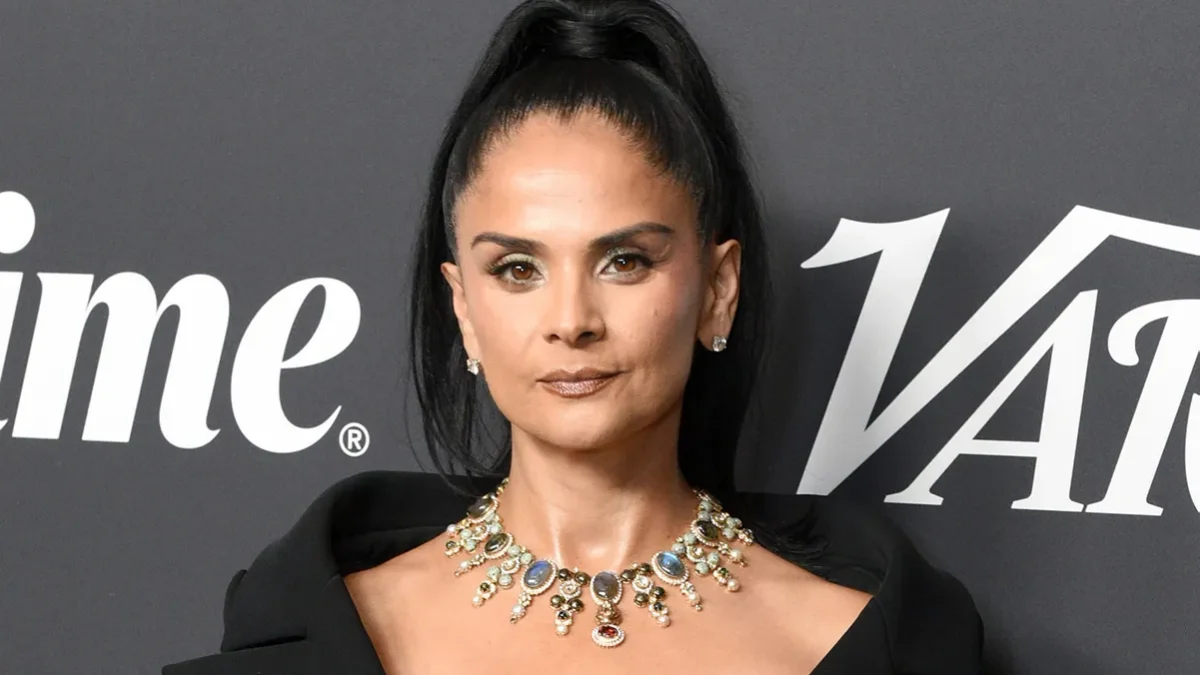
Netflix has fired chief content officer Bela Bajaria after a decade at the company, replacing her with former Walt Disney Company general entertainment chairman Peter Rice in a leadership change that stunned executives and talent representatives across Hollywood on Thursday.
News of Bajaria’s departure surfaced before she could speak with most of her internal teams. Her removal arrived alongside the announcement of Rice’s hiring, creating an abrupt transition at the top of Netflix’s film and television operation.
Variety reported that “scapegoat” repeatedly surfaced in nearly a dozen conversations with industry figures following the decision. Although Netflix is known for sudden executive exits and its “keeper test” culture, many observers had viewed Bajaria as unusually secure despite the company’s recent stock difficulties.
A Content Shake-Up Amid Growth Pressure
The change comes as Netflix confronts slower engagement growth and a round of layoffs. User engagement increased 2% year over year during the first half of 2026, a pace co-CEO Ted Sarandos publicly acknowledged was not sufficient.
“Yes, overall, we’re not growing as fast as I want us to, and we’re working on making that move faster,” Sarandos said at a recent Bloomberg conference.
Netflix is scheduled to report its third-quarter earnings next Tuesday. Some industry observers have speculated that the results could be extremely disappointing, although that assessment remains unconfirmed.
Several insiders questioned whether Bajaria was being held responsible for challenges extending beyond programming. One source argued that content was receiving the blame when the larger concern was the business model, pointing to layoffs affecting 1,000 people. Another questioned why Bajaria should carry responsibility if subscription price increases are the principal available route to revenue growth.
The company’s awards performance may also have contributed to the pressure. Netflix won 16 Primetime Emmy Awards this year, its lowest total since 2016 and a sharp decline from 30 in 2025. In 2021, the service tied the record for the most Emmys won by a single outlet in one year, with 44.
While Netflix has not recently launched what the reporting characterized as a culture-defining success on the scale of “Stranger Things,” it has still delivered some of the year’s most-watched programming, including “His & Hers” and the fourth season of “Bridgerton.”
Bajaria’s Global and Live-Entertainment Legacy
Bajaria joined Netflix in 2016 after working at CBS and NBCUniversal, where she ultimately led Universal TV. Her authority expanded significantly in 2020 when Sarandos combined Netflix’s English-language and international content operations under her following the removal of Cindy Holland.
Holland had overseen prominent Netflix titles including “House of Cards,” “Stranger Things” and “The Crown.” Bajaria, meanwhile, was credited internally with emphasizing local-language productions and strengthening Netflix’s international reach. Nearly two dozen global offices opened during her tenure.
She was also involved early in Netflix’s push into live entertainment. According to an insider familiar with the company, Bajaria was part of the initial work on licensing agreements with WWE and the NFL, which became significant attractions for subscribers using Netflix’s advertising-supported tier.
Her industry relationships were another major part of her role. She regularly attended film and television premieres and launches, and was recently seen beside Sarandos at the Los Angeles premiere of Ben Affleck’s “Animals.”
WME co-chair Richard Weitz called her impact “undeniable,” citing her work attracting talent, bringing live sports, concerts and events to Netflix, expanding the company globally and moving it into additional areas of entertainment.
“Simply put, she’s been transformational and I know her worldwide team and the talent who have worked with her will miss her,” Weitz said.
Peter Rice Steps Into a Disrupted Operation
Rice brings experience leading both film and television businesses. In addition to his Disney role, he previously headed Fox Searchlight and the Fox network before becoming president of 21st Century Fox ahead of Disney’s acquisition. He later entered a producing agreement with A24 and has served as head of ceremonies and content for the Los Angeles 2028 Olympic Games, a position that may now end as he turns his attention to Netflix.
His availability became a subject of industry attention only weeks ago. Rice had reportedly been connected to discussions involving Skydance co-CEO Ynon Kreiz, although one source said their lunch concerned a request for Rice to replace Kreiz on Mattel’s board rather than a role at the newly combined company. A separate rumor suggested Rice had met with NBCUniversal, but a source familiar with that company said no position was under consideration for him. NBCUniversal declined to comment.
Sarandos’ earlier lunch with HBO chief content officer Casey Bloys also drew questions in retrospect. Speculation ranged from a possible Netflix executive role for Bloys to a production deal, but Sarandos downplayed the meeting last week, saying, “He’s a good guy. For some reason, we had a very well-publicized lunch.” No proposed job for Bloys was confirmed.
Rice now inherits a department already affected by significant cuts. Netflix dismissed director of original series Carolina Garcia after a decade at the company, along with scheduling chief Andy Kubitz; Lisa Lang McMullen, director of overall deals and series; Andrew McQuinn, director of original series; James Oh, director of original drama series; and Jason Pan, manager of original series creative development.
The remaining film group appears secure for now after vice president Doug Belgrad was let go earlier in the week. It is not yet clear whether Rice’s plans will include Bajaria’s senior lieutenants, among them U.S. and Canada scripted-series chief Jinny Howe and film head Dan Lin.
ShowBiz Take
Bajaria’s exit matters because Netflix is not simply changing executives; it is placing its film and television strategy under new leadership while facing slower engagement growth, stock pressure, reduced Emmy returns and internal job cuts. Her record encompassed global expansion, local-language programming, live events and major sports licensing, making the speed of her dismissal especially striking.
Rice arrives with broad film and TV experience, but his first challenge is as much organizational as creative. He must take control of an unsettled content operation, address morale after multiple layoffs and determine which elements of Bajaria’s strategy—and which members of her leadership team—remain part of Netflix’s next phase.
What Happens Next?
Attention now shifts to Netflix’s third-quarter earnings report next Tuesday and to Rice’s initial decisions as chief content officer. Those developments should provide the first clearer indications of whether Bajaria’s firing signals a sweeping programming reset or a leadership change within the strategy she helped build.