Why This Matters
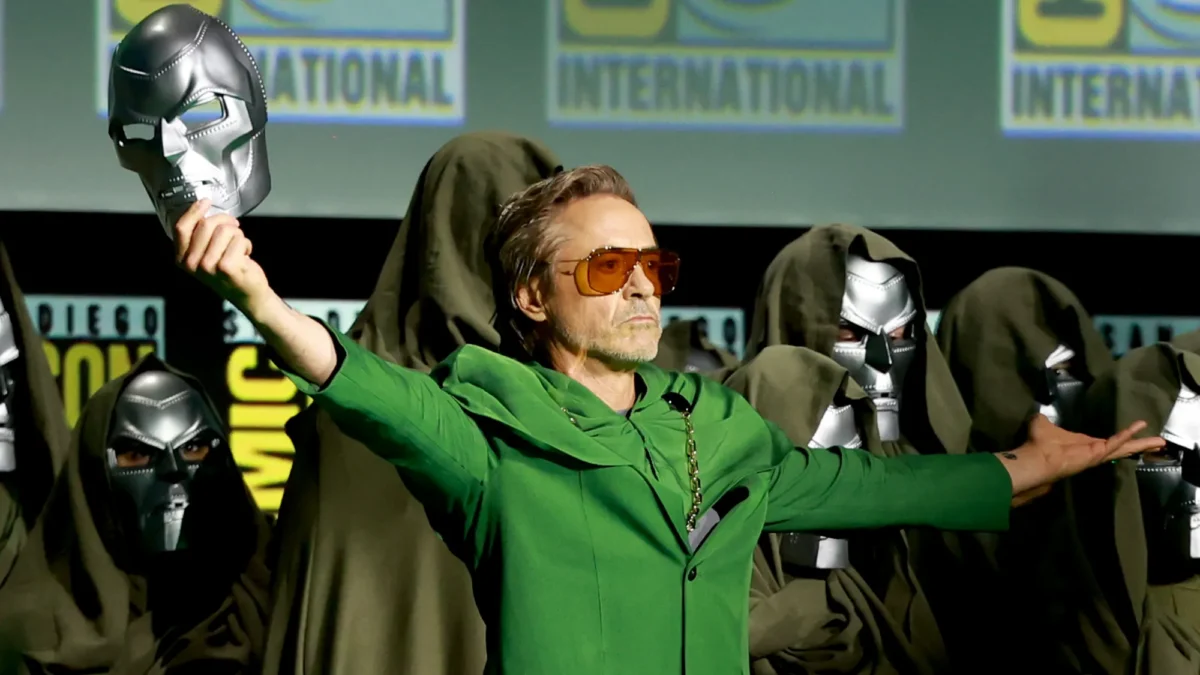
Marvel’s first look at Avengers: Doomsday is being treated less like a routine trailer drop and more like a temperature check for the entire superhero marketplace. Disney’s new footage, released July 20, puts Robert Downey Jr.’s Doctor Doom front and center, signaling the studio’s biggest creative swing since the conclusion of the Infinity Saga.
The immediate fascination is obvious: Downey is not returning as Tony Stark, the role that helped define the Marvel Cinematic Universe and reshaped modern franchise filmmaking. Instead, the actor is stepping into the armor of Victor Von Doom, one of Marvel Comics’ most consequential villains. That casting choice turns nostalgia into suspense. It invites audiences to feel the familiarity of Downey’s presence while questioning everything they think they know about his place in the MCU.
For Marvel, the move is both bold and calculated. Doctor Doom is not merely another antagonist designed to be dispatched by the closing credits. In the comics, he is a monarch, a genius, a sorcerer, a scientist and a rival to some of Marvel’s most powerful heroes. Done properly, he can anchor years of storytelling. By giving the role to Downey, Marvel is signaling that Doom’s arrival is intended to feel seismic rather than incremental.
The trailer’s other major talking point is who does not appear. Spider-Man’s absence has already fueled speculation about whether Tom Holland’s Peter Parker will be part of the ensemble. In a franchise where a single silhouette can launch a thousand theories, leaving out one of Marvel’s most bankable heroes is hardly a neutral choice. It may be a strategic holdback, a rights-related complication or simply a reflection of how little Disney wants to reveal this early.
Either way, the conversation around Spider-Man demonstrates how audience engagement with Marvel has changed. Fans no longer watch trailers only for plot clues; they analyze them as corporate tea leaves. A missing character can generate as much momentum as a confirmed appearance. That kind of speculation remains one of Marvel’s most valuable marketing tools, particularly as the studio works to reignite the sense of event status that once accompanied every Avengers installment.
Industry Context
Avengers: Doomsday arrives at a pivotal moment for the MCU. After more than a decade of dominance, Marvel has faced a more complicated landscape in recent years, with uneven box office returns, Disney+ saturation and growing audience fatigue around interconnected storytelling. The next Avengers film is not just another sequel; it is a referendum on whether Marvel can restore the collective urgency that made earlier crossover films feel unavoidable.
The franchise has been here before, though under very different circumstances. The build toward Avengers: Infinity War and Avengers: Endgame benefited from years of carefully paced setup and a villain, Thanos, whose looming presence was gradually amplified across multiple films. The Multiverse Saga has been more diffuse, with storylines spread across theatrical releases and streaming series. That has created opportunities for scale, but also challenges in clarity.
Doctor Doom offers Marvel a path toward sharper focus. Unlike many multiverse concepts, Doom is tangible. He has a political identity, personal ambition and a long comic book history that connects him to the Fantastic Four, the Avengers and the broader Marvel cosmos. If the studio can position him as a singular, charismatic threat, Doomsday could help consolidate scattered narrative threads into a more urgent central conflict.
Downey’s casting also reflects a broader industry trend: legacy talent remains an essential asset in franchise storytelling. Studios are increasingly leaning on familiar performers not only for fan service, but for audience trust. Downey’s return gives Marvel a headline-grabbing advantage at a time when superhero films can no longer assume automatic goodwill. The risk, however, is that the casting could overshadow the character if viewers are unable to separate Doom from Iron Man.
Spider-Man’s uncertain status adds another layer of industry intrigue. The character remains uniquely valuable because of the partnership between Sony Pictures, which controls the film rights, and Marvel Studios, which has creatively integrated Peter Parker into the MCU. That arrangement has produced enormous commercial results, but it also means Spider-Man’s placement in major Marvel events is not as simple as adding another hero to a call sheet.
From a marketing standpoint, holding back Spider-Man may be the smartest possible play. If he appears later, the reveal becomes a second wave of publicity. If he does not, the studio avoids promising a character whose inclusion may depend on broader scheduling, rights or story considerations. For now, the ambiguity keeps fan discussion alive without requiring Disney or Marvel to commit publicly.
The December 18 release date also positions the film as a holiday-season tentpole, a corridor where major event movies can play for weeks if word of mouth is strong. Marvel knows the stakes of that window. A successful launch would not only boost theatrical revenue, but also refresh the value of the MCU across consumer products, streaming libraries and future theatrical chapters.
What Happens Next?
Marvel’s next challenge is managing expectations. The first trailer has done its job by making Doctor Doom’s entrance feel like an event and by prompting immediate debate over Spider-Man. The studio will now have to decide how much more to reveal in future marketing without deflating the mystery that is currently driving conversation.
Additional casting confirmations are likely to become the next flashpoint. Fans will be watching closely for any hint of Spider-Man, the Fantastic Four and other major MCU figures who could logically be pulled into Doom’s orbit. Even small promotional choices — poster placement, logo design, voiceover lines — will be scrutinized for clues.
For Downey, the campaign ahead will require a delicate balance. Marvel must convince audiences that this is not a gimmick, but a genuine reinvention. If the film can establish Doctor Doom as a formidable character in his own right, the casting could become one of the studio’s most successful gambles. If it leans too heavily on the actor’s Iron Man legacy, the move could feel like a shortcut.
Until Marvel offers clarity, Spider-Man’s absence will remain one of the film’s biggest unanswered questions. That may be exactly the point. In an era when trailers are dissected frame by frame within minutes, silence can be as powerful as spectacle. For now, Avengers: Doomsday has accomplished what Marvel needed most: it has made the next Avengers chapter feel like a must-watch mystery again.