
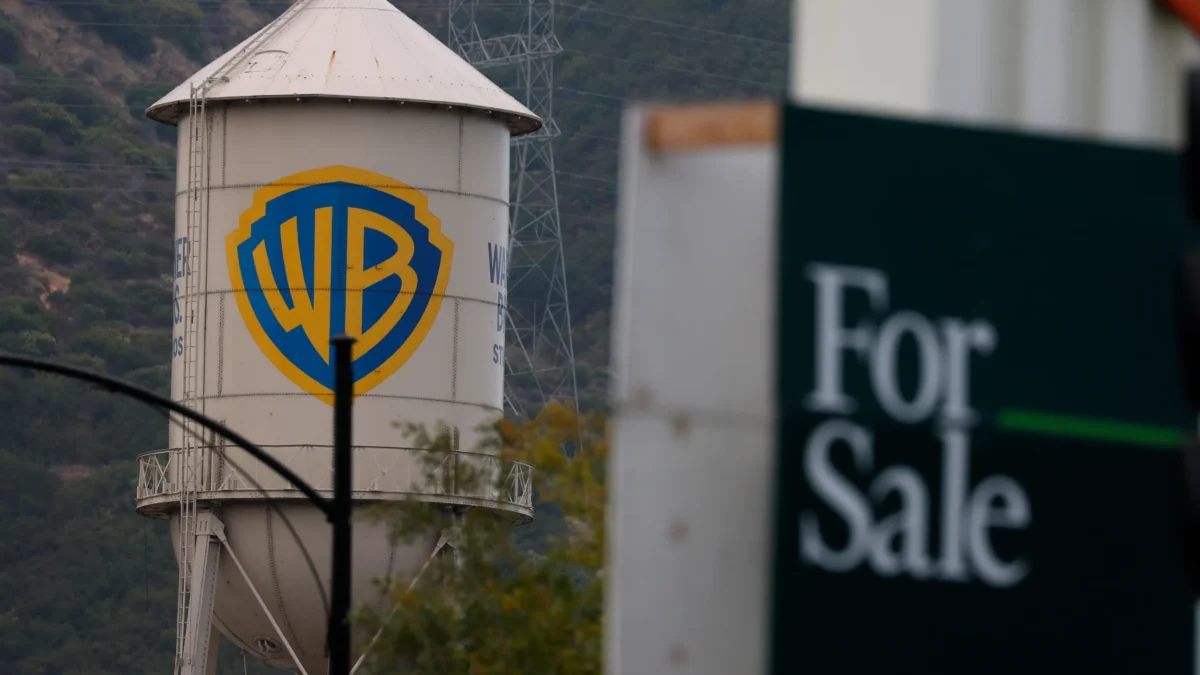
Settlement discussions between Paramount and the state attorneys general trying to stop its Warner Bros. Discovery deal continued Sunday, but the talks ended the day without an agreement.
California Attorney General Rob Bonta, who is leading the 12-state coalition’s antitrust case, is said to be willing to consider a package of conditions that would place limits on Paramount’s takeover of Warner Bros. But the path to a deal is being complicated by resistance from at least two other attorneys general who want tougher restrictions before signing off.
The negotiations, which continued over the weekend, were expected to pause Monday for the Yom Kippur holiday.
Terms on the table
The potential settlement terms discussed include Paramount agreeing to keep Warner Bros.’ studio operations separate for a period of time. Paramount chief David Ellison has already said he is willing to do that.
Another provision under discussion would require the combined Paramount-Warner Bros. to release at least 30 films theatrically each year, with financial penalties if the company misses that benchmark. Ellison has also previously made that 30-film commitment.
The talks have also included a binding guarantee that Paramount would not move its existing California operations. Ellison has threatened such a relocation. In addition, the parties have discussed creating a third-party “editorial adviser” to oversee CNN and CBS News.
For some states, those proposals do not go far enough.
New York Attorney General Letitia James wants Paramount to make specific job-protection commitments, including protections for Warner Bros. employees, sources confirmed. Paramount has said it would generate $6 billion in cost savings by merging with WBD, a figure that would imply thousands of layoffs.
Connecticut Attorney General William Tong is opposed to the current proposed settlement terms, Variety confirmed. A source familiar with Tong’s position said he wants any agreement to include stronger protections ensuring that CNN and CBS News remain independent from interference by Paramount’s owners, with provisions that carry more force than a third-party adviser.
News independence remains a flashpoint
The dispute has taken on political dimensions because of the connections between Paramount Skydance CEO David Ellison, his family and President Donald Trump. The Justice Department and the FCC approved the transaction without requiring concessions or remedies, an unusually hands-off stance for a horizontal merger of this scale. That cleared the way for the coalition of 12 states to press its own legal challenge.
Ellison has argued that the opposition is not really about antitrust concerns, but about whether he should control CNN. In a New York Times op-ed, he wrote: “I believe this fight is not really about market share. I believe a plainer worry sits beneath the briefs and the news releases: the news. The issue is whether I can be trusted as a steward of Warner’s CNN.”
Ellison has also pledged that CNN and CBS News journalists “will continue to answer to the facts and to all the people they serve — not to any party or cause.”
The state lawsuit, along with a similar antitrust case filed by the Writers Guild of America West, remains among the final barriers to Paramount closing the WBD acquisition.
The transaction has already followed a turbulent yearlong path. Paramount had to outbid Netflix, which reached a deal in early December to buy Warner Bros. and HBO. Netflix was out of the picture by late February.
Even if Paramount reaches a settlement with the state attorneys general, the merger would not close immediately, a knowledgeable source told Variety. Because of the $110 billion pact’s complex financing — including roughly $24 billion from Middle Eastern government funds — and other factors, Paramount and Warner Bros. Discovery would need at least a week or so after any deal with the states is reached.
The states’ case
The state challenge has already produced a temporary restraining order. In July, the U.S. District Court for the Northern District of California granted the states’ request to halt the Paramount-Warner Bros. Discovery merger.
After that order, Tong said in an official statement: “This is a critical victory for American consumers, for objective and independent journalism, and for the workers, actors, artists and fans of our country’s celebrated film and television industry. We are suing to protect free and fair competition, choice and quality programming. This order demonstrates the strength of our case and the power of states stepping in to fill the void left by Trump’s absent Department of Justice.”
James also sharply criticized the deal when the 12 states first filed their lawsuit in July. “For over a century, Paramount and Warner Bros. have competed to create movies and television that bring people together, inspire and sustain generations of artists, and help us understand the world,” she said. “This merger would destroy that competition, creating a massive company with unprecedented power and influence over news and entertainment across the globe. Paramount’s acquisition of Warner Bros. threatens to raise costs for consumers and put jobs and businesses nationwide at risk.”
For now, the settlement effort remains unresolved, with Bonta open to considering restrictions while James and Tong press for stronger guarantees on jobs and news independence.