
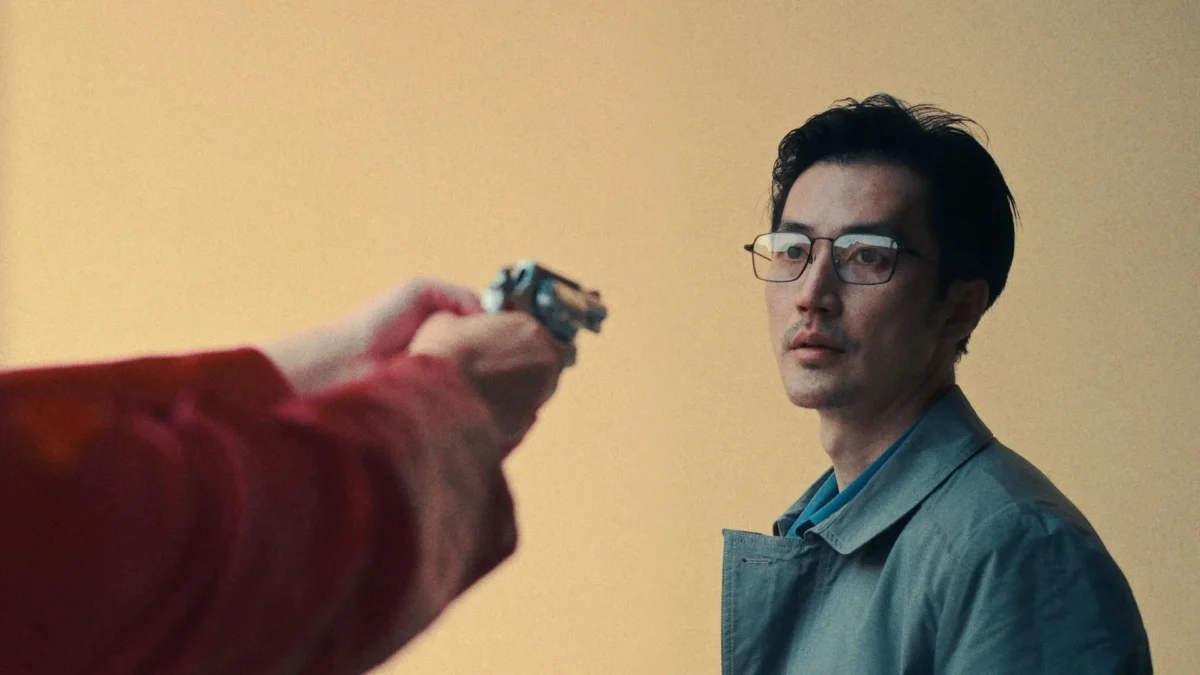
A mysterious scent becomes the doorway to a disorienting inner world in the trailer for Aroma (Hõng), writer-director Xue Ma’s third feature film.
🎬 Watch the Trailer
The story centers on Yang, played by Jiali Zhao, whose life is governed by a rare condition that makes most smells unbearable. Lemons and disinfectant are the exceptions — until an unfamiliar aroma leads her to Fang, a stranger portrayed by Weihao Xu.
Yang’s discovery comes with an immediate complication: Fang is in a coma. Although physically unresponsive, he remains caught inside a private existence where childhood memories, fantasy and forbidden desire intersect. His sister, who supported the pair by working as a masseuse, reappears as a woman dressed in red.
From there, the film begins erasing the boundaries separating the living and the lost, as well as dreams and imagination. Both Yang and Fang become entangled in that increasingly unstable space.
A sensory mystery headed to Tallinn
Aroma will have its world premiere Nov. 16 in the Rebels With a Cause Competition at the 30th edition of Estonia’s Tallinn Black Nights Film Festival, also known as PÖFF.
The cast also includes Ze Ying and Lu Huang. Ash Chen serves as cinematographer, while Maxime Pozzi-Garcia edited the film. Aroma follows Ma’s previous features, White River and Sonata of Wave.
PÖFF describes the movie as a dark fairy tale in which Ma uses scent as a route between reality and the subconscious. The festival’s preview also highlights Chen’s cinematography and its role in moving the story from a clinical atmosphere into a dangerous, desire-filled dreamscape.
That description leaves the central mystery deliberately unresolved. Fang may be confined within his own fantasy, but the film raises the possibility that he is not the only character trapped there.
Xue Ma wants audiences to feel the film
Ma told The Hollywood Reporter that her approach begins with cinema’s ability to create an emotional experience. For Aroma, she considered how images and sound could suggest other senses, including smell and touch, and then connect those sensations to feeling.
“Cinema lets people experience feelings,” Ma said. “I always imagine what cinematic language to use. I think it’s very interesting to experiment and share with others a common [sensory] experience — from the visual and sound to the smell and touch.”
The filmmaker also said she wants her work to challenge the expectations often applied internationally to directors from Asian cultural backgrounds.
“I want to create with greater freedom,” she said.
Despite the movie’s highly stylized construction, Ma sees its emotional concerns as universal. Loneliness and the desire for intimacy, she explained, are not confined by language or a particular social or cultural setting. She pointed to people — especially in Asian countries — who struggle to state their emotions and needs clearly, instead concealing secrets behind a public mask.
That tension shapes Yang and Fang’s story. Ma believes viewers may recognize parts of themselves in the protagonists, particularly when the characters’ hidden emotional lives begin to surface.
She also connected those ideas to the uncertainty of the post-pandemic period, when people may feel unsettled, adrift and less sure of their identities. According to Ma, that instability can make loneliness more apparent, while the film addresses the confusion and personal struggles that can exist beneath an outward mask.
Reality and dreams become one puzzle
The overlap among memory, fantasy and reality is an intentional part of Aroma rather than a mystery designed to produce a simple division between what is real and what is not.
“I don’t think a dream is fake, and reality is real,” Ma said. “I think sometimes a dream is more real because there is no need to tell everyone. This is a very secret world.”
For the filmmaker, dreams can disclose an inner self that remains hidden in ordinary life. She built the movie’s cinematic world as a puzzle, hoping its structure might encourage audiences to reconsider their own behavior and the things to which they give their attention.
ShowBiz Take
Aroma stands out because its central device is not merely a plot clue. Yang’s heightened sense of smell shapes the film’s entire approach to memory, intimacy and emotional concealment. The premise gives Ma a way to explore experiences that cinema cannot literally reproduce, using visuals and sound to evoke touch and scent.
Its placement in PÖFF’s Rebels With a Cause Competition also aligns with Ma’s stated desire to move outside familiar frameworks and create more freely. The trailer introduces the mystery, but the filmmaker’s comments make clear that the deeper focus is on loneliness, longing and the private worlds people keep behind their masks.
What Happens Next?
Aroma will make its world premiere at the Tallinn Black Nights Film Festival on Nov. 16. The screening will bring Ma’s sensory puzzle — and the unanswered question of who may truly be trapped inside its dream world — to its first festival audience.