

Developments in streaming, microdrama and AI dominated the first day of sessions at the APOS conference in Bali, Indonesia. On the AI front, speakers on several panels discussed the creative, financial and societal aspects of the new technology, including actor and filmmaker Andy Serkis, TWG Global Co-chairman Thomas Tull and investment banker Gautam Saxena.
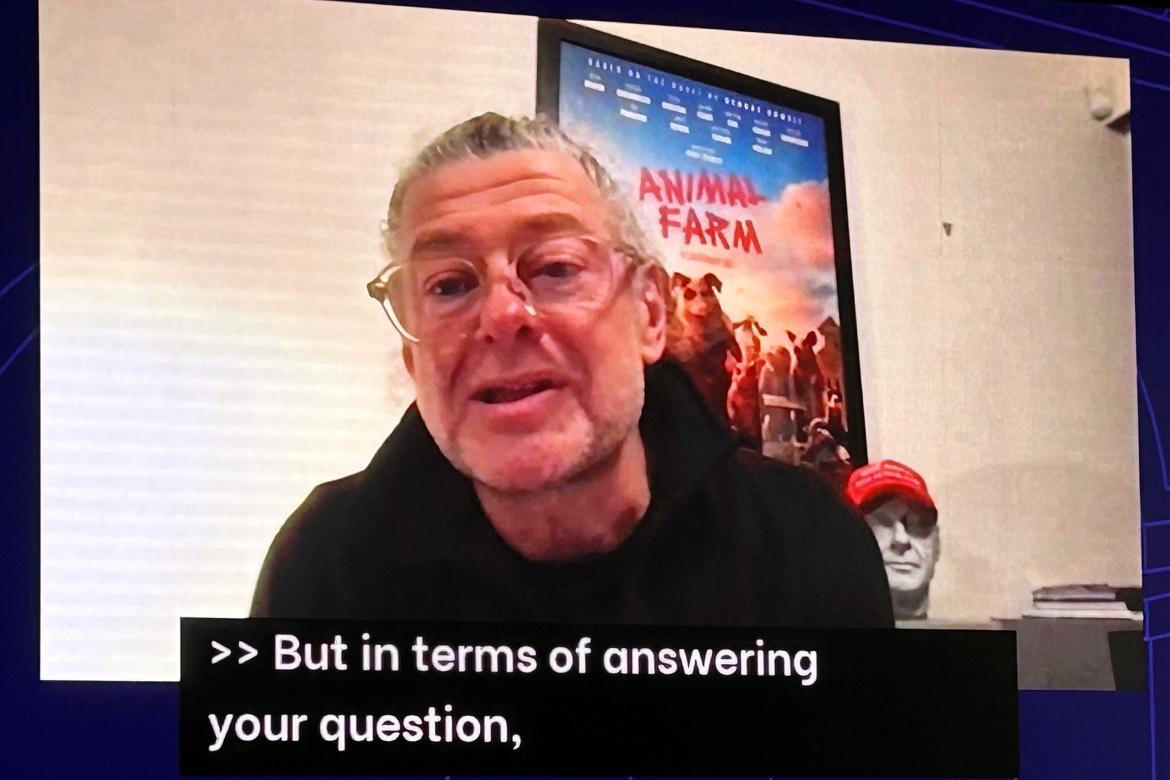
Not surprisingly, Serkis, a motion capture pioneer and co-founder of Imaginarium Studios, was enthusiastic about AI although he also called for it to be used responsibly.
“One of the most exciting things I’m looking forward to is seeing young creative minds tell stories in compelling, exciting new ways, regardless of their means, their social class or their access to equipment and money,” Serkis said. “Obviously the downside is when it’s used inappropriately or to entice viewers into worlds that perhaps they shouldn’t be going into. As with any technology, it’s about about how responsible we are.”
Serkis was speaking to APOS on a video link from New Zealand where The Lord Of The Rings: The Hunt For Gollum is about to start principal photography. Also speaking on the panel were writer-director Josh Nelson Youssef, a specialist in immersive experiences, and Jon Zepp, Google’s MD, Entertainment Content & Platforms. Serkis and Youssef are working on a mixed reality experience for Google’s Android XR platform.
Watch on Deadline
Youssef commented: “Two things that excite me – we’re at a stage with this technology where the chasm between ideation and visualization is collapsing – the distance between a world in your head and being able to have somebody experience that world is getting drastically shorter. I also think this technology is enabling new ways to tell stories that couldn’t be told before.”
However, he also added a note of caution: “I share the same concerns as many artists around provenance, and whose work is training these models, and who gets credited and the ecological impact. Also one concern we hear less conversation around is that when you take away some of the friction in the process of storytelling – that might make it easier to see something you don’t really need.”
In a keynote earlier in the day, Tull spoke on a macro level about the impact of AI. Pulling no punches, the AI investor and former CEO of Legendary Entertainment, said: “I think you’ll see the largest transfer of wealth in human history. You’re going to see it permeate every corner of our economy, the way people live, interact and work, and we need to think several steps ahead in terms of the impact it’s going to have, not only on blue collar jobs, but what we traditionally call white collar jobs.”
Tull founded TWG Global with Guggenheim Partners CEO Mark Walter to make investments in AI businesses and has a joint venture with Palantir Technologies to create AI tools for financial services companies.
While acknowledging the huge cost, energy consumption and pushback associated with data centers, Tull also said that companies that merely dabble with AI – treating it like “the condiment on top of the sandwich” – will be left behind: “It has to be part of the DNA of your business, part of the way you approach business problem solving efficiency, and the folks that turn in that direction are going to see the largest results.
“We’re going to see traditional companies of scale pivot successfully, and we’re going to see some that don’t, and it wouldn’t surprise me if some companies that have traditionally been thought of as very large and successful become irrelevant in the next three to five years.”
Speaking specifically about the entertainment business, Tull said he was excited about the work being done by some companies, including AI-driven studio FaiBLE, founded by Columbia Business School graduate Sharad Devarajan in India. However, he believes there will always be a human component in content creation, “whether it’s an incredible actor, Chris Nolan directing, or the writers – there’s something different about humans that is tough to imitate.”
Wrapping up the first day of APOS sessions, four bankers and private equity investors talked about where the capital is flowing in AI. Gautam Saxena, who heads APAC corporate finance at the ING multinational banking group, observed that the “AI hyperscalers” are now financing their computing power, chips and data centers through debt, not cash reserves, and that the demand for capital is growing. But there are still questions around the potential returns of AI.
When asked whether companies outside the U.S. and China could be limited by not having access to AI models, Saxena described “AI Sovereignty” as a key issue: “We should expect a lot of countries to now become very careful about who has access, who has to be restricted, and as we’ve seen during this conference, there are already concerns about the misuse of AI.”
Saxena was on a panel with speakers from three other financial institutions – Elysian Park Ventures’ Nikhil Bahel, Asia Partners’ Swapnil Chichani and David Do, MD of VI Group, an investor in Vietnam’s Galaxy Studio.
Asked about whether regional or global companies would be the biggest winners with AI, Chichani said there would be cost savings in content production – which could benefit regional companies – but that global players would “continue to have an edge in terms of distribution, and perhaps also in terms of content creation”.
“A lot of the local players may or may not have access to the best technology, depending upon the country,” Chichani continued. Do added that it may not be about the latest technology, but about “getting creatives to use what’s already there.”