
Why This Matters
California Attorney General Rob Bonta’s sharp response to a reported relocation threat from Paramount has turned an already high-stakes media merger review into a public confrontation over corporate leverage, state power and the future of Hollywood’s physical footprint.
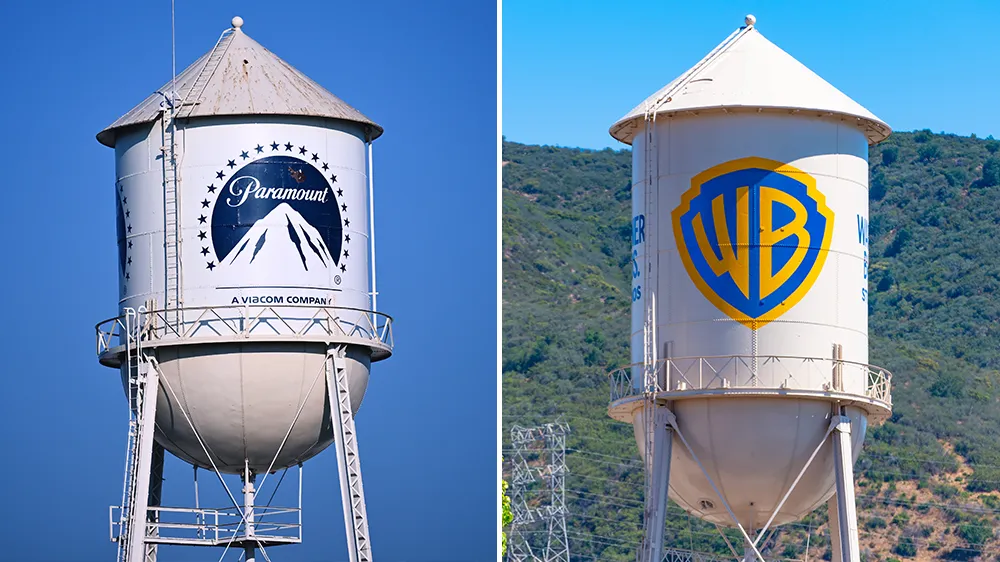
According to a report published Tuesday, Paramount-Skydance chief executive David Ellison told senior company leaders that he is prepared to move the combined studio operation out of California if Bonta and other state attorneys general do not negotiate a settlement over their legal challenge to Paramount’s proposed merger with Warner Bros. Bonta, responding to the report, characterized the alleged threat as “blackmail,” escalating the rhetoric around a deal that was already drawing scrutiny from regulators, labor groups and industry observers.
The language matters because it frames the dispute not merely as a disagreement over antitrust law or merger conditions, but as a broader test of whether a major entertainment company can pressure a state by invoking the possible loss of jobs, tax revenue and studio infrastructure. California remains the symbolic and operational center of the American film and television business, even as production has increasingly migrated to states and countries offering aggressive tax incentives. A threat to relocate a studio of Paramount’s scale lands squarely in that anxiety.
For Bonta, the reported ultimatum also gives the state a political opening. By casting the move as coercive rather than strategic, the attorney general can argue that California’s legal review should not be shaped by fears of economic retaliation. That posture may resonate with elected officials who have long watched entertainment companies lobby for subsidies while simultaneously shifting shoots to lower-cost locations. It also allows Bonta to position the state’s legal challenge as a defense of consumers, workers and competition rather than as a bureaucratic obstacle to consolidation.
For Paramount and Skydance, the stakes are equally significant. The companies are attempting to build scale at a moment when legacy entertainment businesses are under pressure from streaming economics, declining linear television revenue and rising production costs. A merger with Warner Bros. would create one of the most formidable content libraries and studio operations in the marketplace, potentially reshaping film distribution, television production, streaming strategy and global licensing. But the larger the transaction, the more likely regulators are to probe its competitive impact.
Any suggestion that the combined company could leave California also raises immediate questions for employees, vendors and the broader ecosystem that depends on studio activity. A large studio operation supports far more than executive offices and soundstages. It feeds post-production houses, craftspeople, caterers, equipment suppliers, security teams, transportation providers, below-the-line workers and a dense network of small businesses that orbit the entertainment economy. Even the prospect of a move can create uncertainty across that network.
Industry Context
The clash comes as Hollywood is still recovering from a prolonged period of disruption. The pandemic, the 2023 strikes, studio cost-cutting, a slowdown in greenlights and a shift toward fewer series orders have left many entertainment workers facing a thinner job market. California’s production community has been especially vocal about “runaway production,” with rival hubs in Georgia, New York, New Mexico, Canada, the U.K. and Australia competing aggressively for studio spending.
At the same time, consolidation has become a defining feature of the entertainment business. Studios are searching for greater bargaining power with distributors, more efficient streaming platforms and deeper libraries that can be monetized across theatrical, television, digital and international markets. The strategic logic is clear: scale can help companies absorb risk. But regulators increasingly question whether scale also reduces competition, limits creative opportunity, raises prices or diminishes leverage for workers and independent producers.
That tension is central to the review of any deal combining major Hollywood assets. A transaction involving Paramount and Warner Bros. would draw attention not only because of the companies’ film and television labels, but because of the broader constellation of franchises, production pipelines, streaming services, cable networks and distribution relationships that could be affected. State attorneys general often work alongside or parallel to federal regulators in scrutinizing such deals, especially when they believe local labor markets or consumers could be harmed.
Bonta’s comments also arrive at a politically sensitive time for California’s relationship with the entertainment industry. State leaders have been under pressure to expand or modernize production incentives in order to keep more shoots at home. Studio executives and guild representatives alike have warned that Los Angeles is losing ground to jurisdictions with richer credits and lower operating costs. Against that backdrop, a reported relocation threat tied to a legal challenge is especially combustible.
Paramount’s position, as described in the report, may be viewed by some in the industry as hard-nosed dealmaking rather than a literal plan to abandon California. Major corporations frequently evaluate headquarters, facilities and tax environments during mergers, and executives often use relocation possibilities as leverage in negotiations with governments. But entertainment is not a generic sector in California. The state’s identity, workforce and tourism economy are deeply connected to the presence of major studios, making any such threat unusually public and emotionally charged.
There is also a reputational risk for the company. A studio that appears to threaten California while seeking approval for a transformative merger could invite backlash from lawmakers, unions and creative partners. Talent relationships still matter in Hollywood, and many writers, directors, actors and producers are deeply invested in the health of the Los Angeles production base. Even if a relocation were operationally difficult, the perception that a company is willing to use local jobs as leverage can linger.
What Happens Next?
The immediate question is whether Paramount, Skydance or representatives for the proposed combined company will publicly clarify Ellison’s reported remarks. A denial, a narrowing of the comments or an explanation that all operational options are being reviewed could soften the confrontation. Silence, by contrast, may allow Bonta’s characterization to dominate the public narrative and increase pressure on other state officials to take a harder line.
Regulators are likely to continue examining the merger on its merits, including its potential effects on competition, labor markets, licensing, theatrical distribution and streaming. If state attorneys general are already in settlement discussions, the reported threat could complicate those talks by making any agreement appear politically fraught. Bonta will not want to be seen as yielding to corporate pressure, particularly after using such forceful language.
The company’s next moves will be watched closely across Hollywood. If Paramount signals a genuine willingness to shift operations, local officials may be forced to confront the vulnerabilities of California’s production economy. If the relocation talk proves to be negotiating theater, the episode may still harden attitudes toward large-scale media consolidation at a moment when the industry is asking regulators for room to restructure.
Either way, the dispute has expanded beyond the legal mechanics of a merger challenge. It now touches the central question facing Hollywood in 2026: how much power should legacy studios have as they reinvent themselves, and how far can states go in demanding accountability from companies that remain culturally rooted in California but increasingly operate as mobile global enterprises?