
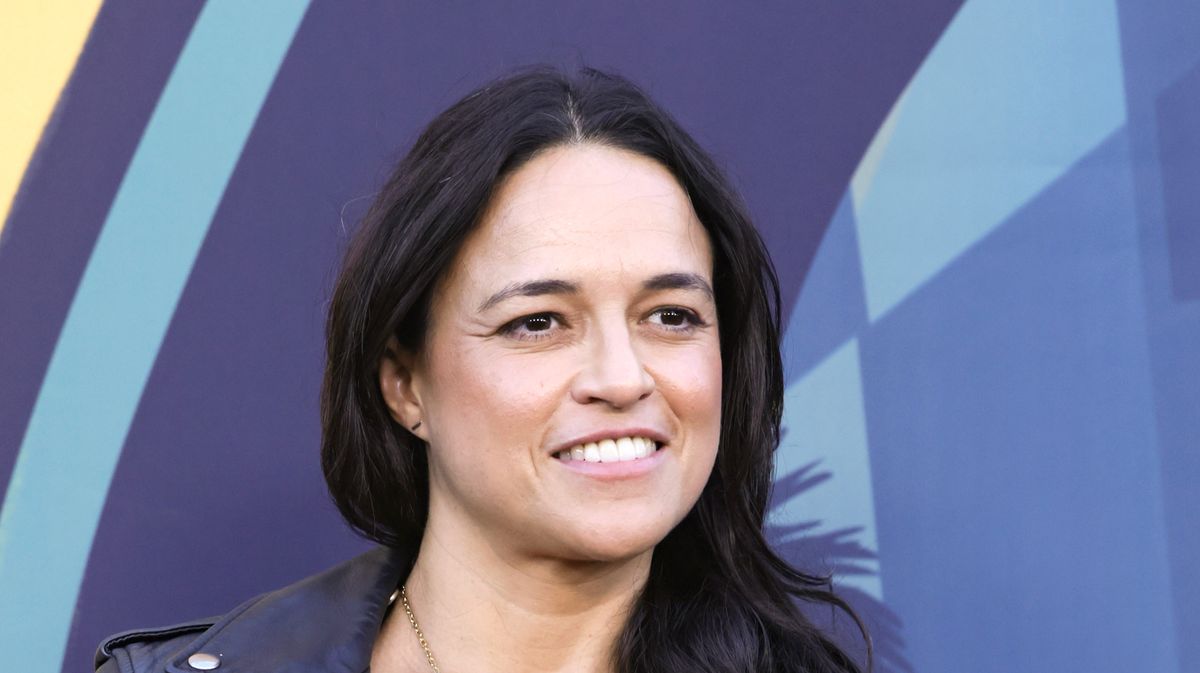
Michelle Rodriguez used a red-carpet appearance tied to a Fast & Furious anniversary screening to voice alarm over the number of young performers whose deaths have shaken Hollywood — while also invoking her past connection to Hayden Panettiere, with whom she co-hosted the World Music Awards in 2010.
Speaking to reporters at the event, Rodriguez described the pattern of early losses in the entertainment world as “not normal,” framing her remarks as part tribute, part warning about the pressures placed on actors who become famous young and then live much of their adulthood under public scrutiny.
Rodriguez, 48, did not offer a formal statement through representatives, but her comments quickly circulated among fans because of the resurfaced connection between the two actresses. Rodriguez and Panettiere appeared together on stage at the 2010 World Music Awards in Monaco, a glossy international broadcast that paired film stars, pop acts and global celebrities at the height of the era’s red-carpet spectacle.
The appearance has since taken on renewed emotional weight for fans revisiting footage of the pair, with Rodriguez’s remarks landing amid broader conversations about the toll of fame, the intense visibility of young women in Hollywood and the way celebrity grief now unfolds in real time across social platforms.
“It’s not normal,” Rodriguez said when asked about the frequency with which the industry has mourned performers in their 20s, 30s and 40s. “There’s something about the way people are pushed, watched and consumed. We have to look at that.”
The actor, best known for her long-running role as Letty Ortiz in the Fast & Furious franchise, has personal experience with sudden loss in the public eye. The franchise was permanently altered by the death of Paul Walker in 2013, a tragedy that remains one of the defining off-screen moments in modern blockbuster history. Rodriguez has often spoken about how Walker’s death affected both the cast and the emotional direction of the films that followed.
Her latest comments reflect a broader unease in Hollywood, where tributes to young stars increasingly arrive alongside questions about workload, addiction, mental health, online harassment and the difficulty of transitioning from child or teen fame into adult careers. Panettiere herself became famous as a child actor before breaking out on shows including Heroes and Nashville, and has spoken publicly in past interviews about personal struggles, postpartum depression and the costs of growing up in the business.
That history is part of why Rodriguez’s words resonated. They were not simply a remembrance of a colleague from a shared awards-show stage; they were also a criticism of an entertainment ecosystem that often celebrates vulnerability only after years of demanding access to it.
Industry observers note that Hollywood has become more fluent in the language of wellness and support, but the machinery around young stars remains relentless. Actors are expected to promote films and series globally, maintain social-media profiles, absorb criticism instantly and remain commercially useful in a marketplace that prizes constant visibility. For performers who began working as children, the pressure can be even more complicated, with personal milestones unfolding in front of audiences that feel a sense of ownership over them.
Rodriguez’s remarks also come at a moment when nostalgia-driven fan culture has made older television clips, award-show appearances and behind-the-scenes footage newly powerful. A brief hosting segment from 2010 can now be shared millions of times within hours, turning a once-disposable broadcast moment into a communal artifact. That dynamic can help fans process grief, but it can also intensify speculation and blur the line between tribute and intrusion.
For Rodriguez, whose public persona has long blended bluntness with loyalty, the message was consistent with the way she has approached Hollywood for years. She has often positioned herself as an outsider within the studio system — a major franchise player who nonetheless speaks candidly about representation, typecasting and the emotional cost of fame.
The Fast & Furious setting made the comments especially poignant. The franchise is one of the most commercially successful in Universal’s history, but it is also unusually associated with off-screen family language, public mourning and cast solidarity. Walker’s absence continues to shape how the series is discussed by fans, and Rodriguez’s comments suggested that for many performers, grief is not an isolated event but an accumulation.
Hollywood tributes can sometimes become formulaic: a black-and-white photo, a short caption, a quote about talent gone too soon. Rodriguez’s response cut through that pattern because it pointed beyond individual loss toward systemic questions. Why are so many artists struggling? What kinds of support exist before a crisis? And how much responsibility do studios, managers, media outlets and fans share in the culture surrounding young fame?
Those questions are unlikely to fade. As entertainment companies continue mining nostalgia and elevating young performers into global brands, the industry faces increasing pressure to prove that its concern for artists extends beyond public statements after tragedy.
What Happens Next
Rodriguez is expected to continue promotional appearances connected to the Fast & Furious anniversary rollout, where questions about legacy, loss and the future of the franchise are likely to follow her. Meanwhile, fans are revisiting Panettiere’s earlier work and her 2010 World Music Awards appearance with Rodriguez, turning the moment into a reminder of how closely Hollywood’s brightest young careers are watched — and how urgently the business is being asked to care for the people behind them.