
Spoiler alert: The following contains major details about “You Can See Everything,” now playing in theaters.
A24 is mounting an unusually broad Oscar campaign for “You Can See Everything,” Nathan Fielder and Lance Oppenheim’s documentary about Theranos founder Elizabeth Holmes, with bids planned for best picture and multiple craft categories at the 99th Academy Awards.
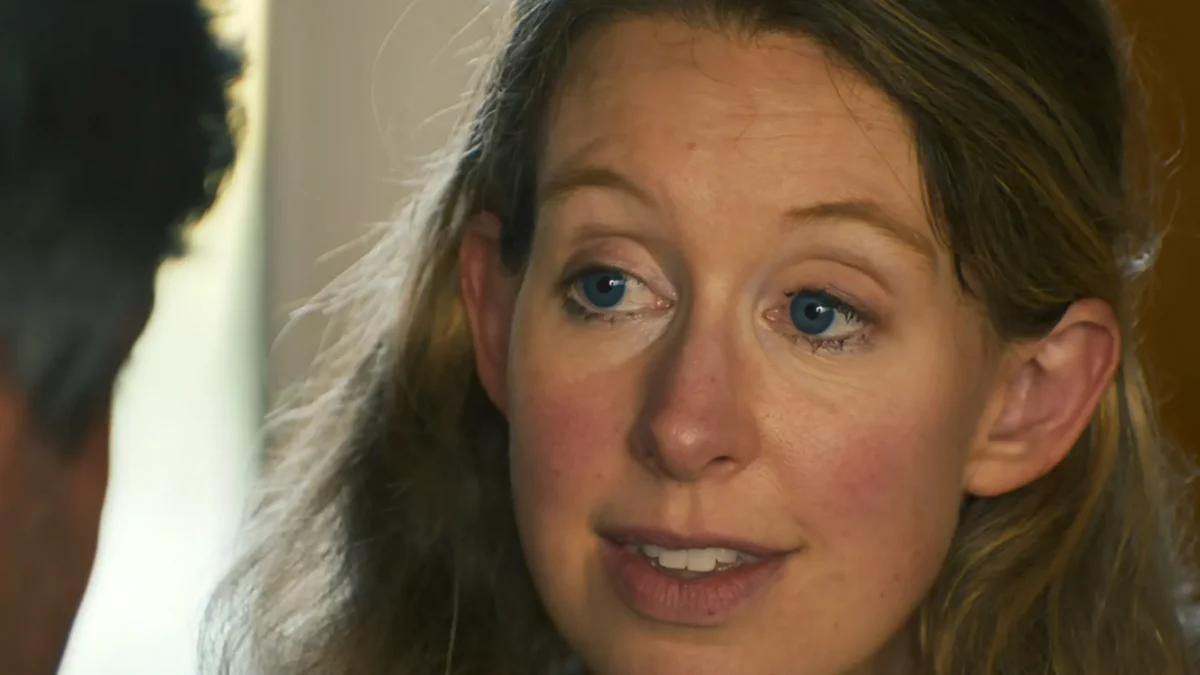
Amanda Seyfried will also be promoted for supporting actress. Credited as Elizabeth Holmes, Seyfried appears both as herself and in recreated scenes, reprising her Emmy-winning portrayal from “The Dropout.” Sources close to the campaign say she will be the central focus of the film’s acting push.
If nominated, Seyfried would receive her second Academy Award nomination after “Mank” in 2020. Her candidacy is particularly unconventional because the film presents her simultaneously as herself and as Holmes.
Christopher Abbott, who plays Holmes’ spouse, Billy Evans, in recreated material, is eligible for supporting actor consideration. Fielder may also be eligible as a performer despite being credited as himself; if he is eligible and submitted, lead actor would be the logical category. No performer has ever been Oscar-nominated for playing themself.
A24’s Full Oscar Plan
The documentary follows Holmes during the 34 days before she reported to prison and continues filming afterward. In addition to its expected submission for best documentary feature, A24’s awards site lists campaigns for best picture, director, production design, cinematography, costume design, film editing, makeup and hairstyling, sound and original score.
The named best picture team is Fielder, Oppenheim, Tatiana Bears, Maggie Ambrose and Jack Davis. Fielder and Oppenheim are being put forward for director, with Alex DiGerlando and Rebecca Meis for production design, David Bolen for cinematography, Katina Danabassis for costume design, Adam Locke-Norton for editing, Stephanie Pasicov and Kerrie Smith for makeup and hairstyling, Paul Hsu and Richard Carlos for sound, and Ari Balouzian for original score.
The campaign arrives after a $15 million opening weekend. As of Monday, Oct. 19, the film held a 99 on Metacritic, 98% on Rotten Tomatoes, 4.7 out of 5 on Letterboxd and 9.4 on IMDb. If that IMDb score remains in place, it would move ahead of “The Shawshank Redemption” as the platform’s highest-rated film.
The best picture campaign would break longstanding Academy precedent if successful: no documentary has been nominated in that category across the first 98 Oscar ceremonies.
A Complicated Awards Route
The Academy may permit the film’s expansive campaign, but several major precursor organizations operate under rules that do not fit its combination of documentary footage and narrative recreations.
Under the Golden Globes’ current written rules, documentaries cannot compete for picture, directing or acting honors, meaning the film cannot presently be submitted in any category. Sources indicate the organization may consider the situation for the coming awards run, although it remains unclear whether any change would extend beyond acting or whether the film would be treated as a drama or comedy/musical.
The Critics Choice Awards offer the clearest route, with “You Can See Everything” eligible across the board, including in the acting races. That currently makes Critics Choice the only major pre-Oscar event where the performances could receive significant recognition without an eligibility exception.
The Actor Awards, formerly the SAG Awards, do not recognize documentaries because they are not classified as narrative films. However, the relevant committee is said to be examining whether this film’s recreated scenes could make it eligible. BAFTA is another question mark: its guidelines appear to allow entry in the top categories, but acting eligibility for Seyfried and Fielder remains less certain.
The film is ineligible at the Writers Guild of America because it has no credited screenplay. It also cannot compete in either Oscar screenplay category.
At the Directors Guild of America, Fielder and Oppenheim can qualify for both the documentary prize and the top theatrical feature directing award. The film cannot enter the first-time feature director category because Oppenheim previously directed “Spermworld” in 2024 and “Some Kind of Heaven” in 2020. Separately, Oppenheim will seek first-time feature recognition for his narrative directing debut, A24 thriller “Primetime,” starring Robert Pattinson, Merritt Wever and Skyler Gisondo.
The Producers Guild of America also permits the documentary to compete for both its theatrical motion picture award and documentary prize. At the ACE Eddies, it must select one editing category from drama, comedy, documentary or animated. The American Society of Cinematographers will accept it only in the documentary field.
ShowBiz Take
“You Can See Everything” matters this awards season because its Oscar ambitions extend far beyond the category traditionally reserved for nonfiction filmmaking. A best picture nomination would be unprecedented, while Seyfried’s campaign tests whether a performance embedded inside a documentary can gain the same traction as work in a conventional narrative feature.
Yet the film’s strongest asset may also be its biggest procedural obstacle. Different organizations are classifying it in different ways: some allow competition for their top prizes, some restrict it to documentary categories, and others currently shut it out entirely.
What Happens Next?
The immediate question is whether the Globes, Actor Awards or BAFTA will revise or clarify their positions. Every guild and voting body sets its own standards and may convene a committee to reconsider eligibility, so the current landscape remains subject to change.
For now, Critics Choice, the DGA and the PGA provide the most direct opportunities for the film to demonstrate top-category strength before Oscar nominations. Those results could indicate whether A24’s contender is headed toward a historic best picture nomination—or an even more consequential finish.