
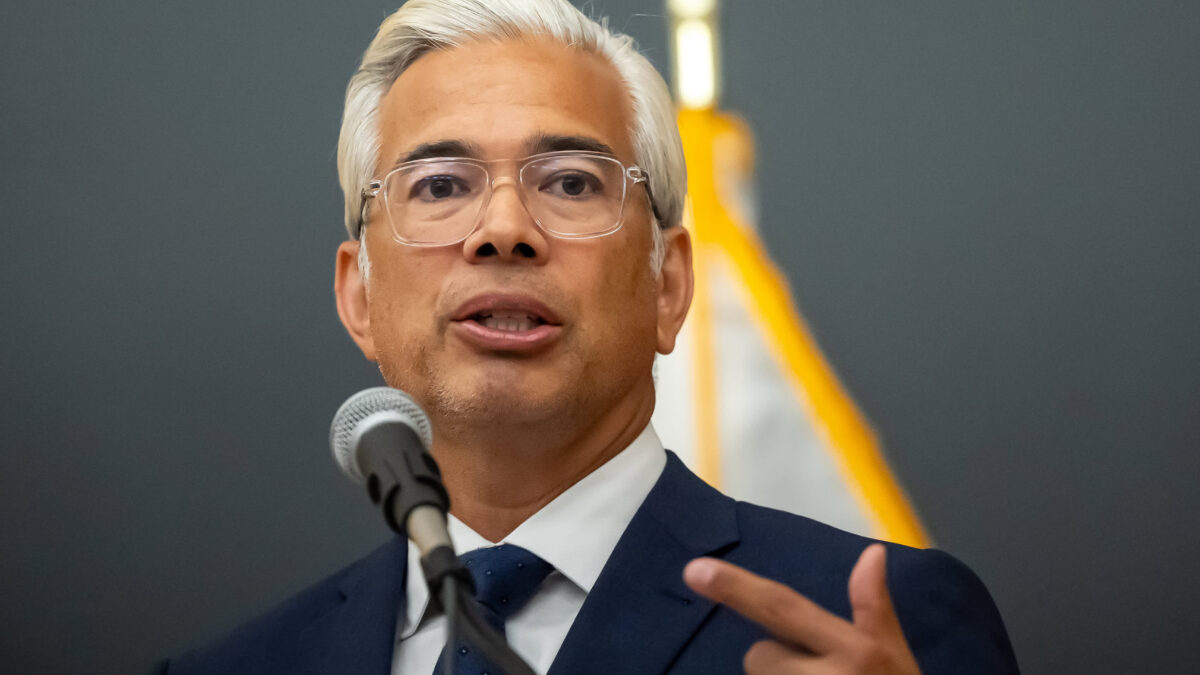
California Attorney General Rob Bonta said Thursday that states challenging Paramount Skydance’s proposed acquisition of Warner Bros. Discovery would need more than promises about future conduct to resolve their antitrust concerns, signaling that any settlement would have to include significant changes to the shape of the deal.
Speaking on CNBC, Bonta described the case as a straightforward competition dispute and said the coalition of state attorneys general would require “robust structural remedies” before considering an agreement. In antitrust terms, that language typically points to asset sales, divestitures or other deal-altering conditions, rather than commitments that a merged company will behave in a certain way after closing.
The comments are a notable escalation in the public posture of state enforcers scrutinizing one of the most consequential media combinations proposed in years. A Paramount Skydance-Warner Bros. Discovery tie-up would bring together two historic Hollywood studios, major television networks, a deep film and TV library, streaming platforms and sports-adjacent cable assets under one corporate roof.
For Bonta, whose state is home to much of the entertainment industry’s creative and production infrastructure, the proposed merger is not merely a Wall Street transaction. It carries implications for workers, consumers, filmmakers, distributors and the balance of power in an industry already remade by streaming economics and consolidation.
His use of the phrase “structural remedies” matters because it narrows the path to a negotiated resolution. Companies often prefer behavioral remedies — pledges to license content fairly, maintain access for rivals or refrain from bundling practices regulators dislike. State attorneys general and federal antitrust officials have increasingly questioned whether such promises are enforceable over time, particularly in fast-moving digital and media markets.
A structural remedy, by contrast, can force a company to sell or separate assets so that competition remains in the marketplace after the deal closes. In a media merger, that could theoretically involve studios, networks, streaming services, distribution rights or other business lines, though Bonta did not publicly specify which assets the states would target.
A high-stakes media fight
The lawsuit arrives at a turbulent moment for legacy entertainment companies. Paramount has been attempting to reposition itself after years of pressure from cord-cutting, streaming losses and a weakening linear TV advertising market. Warner Bros. Discovery, meanwhile, has been under scrutiny for its debt load, cost cutting and the long-term strategy behind Max, HBO, CNN, Warner Bros. film and television operations, and its cable portfolio.
Supporters of large-scale media deals argue that traditional studios need more size to compete with Netflix, Amazon, Apple and YouTube, all of which operate with global reach and, in some cases, business models that extend far beyond entertainment. In that view, consolidation is a survival strategy: fewer companies with deeper libraries, stronger technology investment and more leverage in global distribution.
Regulators have grown less receptive to that argument. Across the Biden-era antitrust landscape and continuing through state-level enforcement, officials have challenged the notion that scale alone justifies reducing the number of major competitors. In entertainment, the concern is that fewer buyers for projects can depress compensation and opportunity for creators, while fewer owners of marquee content can raise prices or limit consumer choice.
The Paramount-Warner Bros. Discovery combination would be examined through several overlapping lenses: theatrical distribution, television production, streaming, sports rights, news and entertainment channels, and licensing leverage with pay-TV distributors and digital platforms. Even where direct overlaps are not dominant in isolation, regulators often look at the cumulative effect of combining major content engines.
Bonta’s remarks suggest the states believe the transaction, as currently structured, would create competitive harm that cannot be solved by modest side agreements. That is a message aimed not only at Paramount Skydance and Warner Bros. Discovery, but also at investors hoping for a quick settlement that preserves the essential economics of the transaction.
Why the California role matters
California’s involvement gives the case particular symbolic and practical weight. The state is the center of the American film and television business, and its attorney general can frame antitrust enforcement not just around consumer prices, but around labor markets, production ecosystems and cultural output.
Hollywood has spent the past several years grappling with the consequences of consolidation. Writers, actors, directors and producers have all raised concerns about a shrinking field of buyers. The 2023 labor strikes brought renewed attention to how streaming-era business models changed compensation, residuals and job stability. While the lawsuit is separate from those labor disputes, the broader anxieties overlap.
If a merged Paramount Skydance-Warner Bros. Discovery controlled a larger share of studio production and distribution channels, independent producers and talent representatives would likely be watching closely for changes in dealmaking leverage. Exhibitors, cable operators and streaming rivals would also assess whether the combined company could use must-have franchises, news brands or premium programming to secure more favorable terms.
For consumers, the stakes are less immediate but still significant. A merger of this scale could affect subscription pricing, content availability and the way film and television libraries are bundled or withheld across platforms. Regulators are increasingly attentive to whether consolidation leads to fewer choices disguised as bigger catalogs.
Deal uncertainty grows
Bonta’s comments do not mean a settlement is impossible. Antitrust cases often move through a period of hard-line public positioning before companies and regulators explore compromises. But the demand for structural remedies raises the cost of any deal-saving negotiation.
If the states insist on divestitures that remove key assets from the merger, Paramount Skydance and Warner Bros. Discovery would have to decide whether the remaining combination still delivers the strategic and financial benefits that justified the transaction. Selling off important businesses could reduce debt concerns or appease regulators, but it could also weaken the rationale for combining in the first place.
The companies are also likely to weigh litigation risk against timing. A prolonged court fight can delay integration plans, unsettle employees and complicate relationships with advertisers, distributors and creative partners. At the same time, accepting aggressive remedies too early can leave shareholders questioning whether management gave up too much.
What Happens Next
The next phase is expected to turn on whether the companies offer a remedy package substantial enough to bring the states back to the table. If talks progress, regulators will likely examine whether proposed divestitures create viable independent competitors rather than simply reshuffling assets to friendly buyers.
If no settlement emerges, the case could move toward a courtroom battle that tests how judges view consolidation in the modern entertainment economy. For Hollywood, the outcome will help define how much bigger legacy studios can become as they fight for survival in a streaming market dominated by technology giants and global platforms.
For now, Bonta’s message is clear: the states are not looking for a handshake deal built on assurances. They want changes to the transaction itself, and that demand could determine whether one of the industry’s biggest proposed combinations moves forward, shrinks dramatically or falls apart.