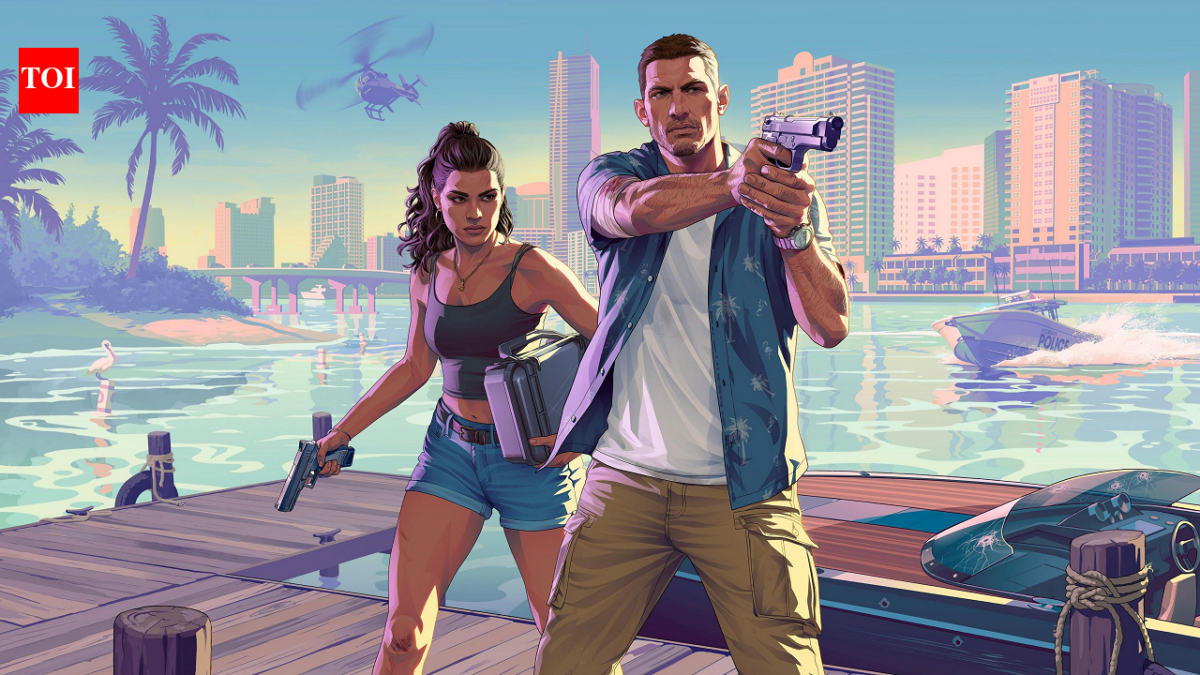
Two short videos that appear to show gameplay from Grand Theft Auto 6, along with an image purporting to show the game’s full Leonida map, surfaced online on Aug. 18, setting off a rapid takedown campaign just days before a planned Netflix reveal tied to the title.
The clips spread across social platforms and fan accounts within hours, carrying watermarks that pointed viewers to a group calling itself CyberLeek. The footage, which has not been verified by Rockstar Games or parent company Take-Two Interactive, was quickly targeted by copyright claims as users reposted, mirrored and dissected the material frame by frame.
Rockstar and Take-Two have not publicly commented on the leak. But the aggressive removal effort has fueled the assumption among fans and industry observers that the material is at least close enough to legitimate to warrant intervention. In the modern games business, silence paired with DMCA takedowns often functions as an unofficial confirmation, even when companies avoid saying so outright.
The leaked gameplay clips are brief, and their circulation has been uneven as platforms remove uploads and users attempt to repackage them under altered filenames or cropped visuals. Still, the material was online long enough to ignite the familiar GTA speculation machine, with fans debating animations, lighting, user interface details and whether the map image aligns with previously released footage of Leonida, Rockstar’s fictionalized take on Florida.
A leak during a tightly managed rollout
The timing is especially sensitive. Grand Theft Auto 6 is not merely another major game release; it is one of the most closely watched entertainment launches of the decade. Rockstar has been managing information with unusual precision, allowing carefully selected trailers and official images to define the conversation around the long-awaited sequel.
That strategy is now being challenged by unofficial material arriving only days before the expected Netflix-related reveal. Whether the upcoming presentation was designed to show new footage, deepen the marketing partnership or broaden mainstream awareness, the leak threatens to pull focus away from the company’s intended message.
For a publisher like Take-Two, which has a large financial and cultural stake in the game’s reception, control over timing matters. Every trailer, screenshot and gameplay reveal can influence investor sentiment, preorder momentum and the wider entertainment conversation. A leak can compress months of marketing planning into a chaotic afternoon of unauthorized reposts, fan theories and damage control.
Rockstar has been here before. In 2022, an enormous cache of in-development GTA 6 footage appeared online, offering an unfinished look at the project years before release. The breach became one of the most significant leaks in video game history and forced the studio into the rare position of publicly acknowledging that early development material had been stolen.
Since then, Rockstar has appeared determined to avoid letting unofficial glimpses define the game. The company’s official trailers have emphasized polish, scale and tone, presenting GTA 6 as both a continuation of the franchise’s satirical crime saga and a technical showcase for current-generation hardware.
Why the map image matters
The purported Leonida map may be the most consequential part of the new leak. In Grand Theft Auto, geography is more than scenery. The map is the product. It dictates mission flow, open-world exploration, environmental storytelling and the long tail of online play that can sustain a title for years.
Fans have been attempting to reconstruct Leonida since the first official trailer, using road signs, skyline shots, wildlife, beaches, swamps and fictional brands as clues. A full map image, if real, would give away one of Rockstar’s biggest reveals: the size, shape and structure of the world players will inhabit when the game launches.
That is why the takedown effort has drawn so much attention. Publishers are generally more tolerant of speculation than of assets that appear to originate from internal materials, development builds or marketing packages. When copyright claims land quickly and broadly, it suggests the rights holder sees more than harmless fan fiction.
The incident also highlights the collision between blockbuster gaming and entertainment media. GTA 6 is being covered less like a conventional software product and more like a Marvel movie, a Taylor Swift tour or a prestige streaming premiere. Its leaks do not stay inside gaming forums; they cross into TikTok, X, Reddit, YouTube and entertainment news within minutes.
That scale creates a nearly impossible enforcement problem. Even if original uploads are removed, altered versions can reappear with filters, watermarks, reaction overlays or commentary tracks. The removal process can also increase curiosity, creating a feedback loop in which the attempt to suppress content becomes part of the story.
The business stakes
Take-Two has positioned GTA 6 as a defining release for its upcoming fiscal performance, and expectations around the title are enormous. The previous entry, Grand Theft Auto 5, became one of the most commercially successful entertainment products ever released, with GTA Online extending its lifespan across three console generations.
That legacy raises the pressure on the sequel. A new GTA does not simply sell copies; it drives hardware upgrades, digital storefront traffic, streaming viewership, creator content and years of post-launch monetization. Any disruption to the rollout is therefore watched closely by investors, platform partners and rival publishers planning around Rockstar’s release window.
Leaks can also complicate internal studio morale. Developers often spend years working on systems and environments that are meant to be introduced under finished, favorable conditions. When incomplete or context-free material appears online, teams can find their work judged before it is ready, even if the footage reflects a build that is months or years old.
At the same time, the public reaction underscores the extraordinary appetite for the game. Even fragments of alleged footage were enough to dominate discussion across gaming communities. That level of attention is a reminder of Rockstar’s unmatched cultural footprint — and of the risk that comes with operating at that altitude.
What Happens Next
Rockstar and Take-Two are expected to continue issuing takedown notices while avoiding any detailed public acknowledgment unless the leak expands or compromises planned marketing beats. The companies may also quietly adjust the upcoming reveal if the leaked material overlaps with assets scheduled to be shown.
The larger question is whether the Netflix event can reclaim the narrative. If Rockstar delivers a substantial official look at GTA 6, the leak may quickly become a footnote. If the reveal is modest, however, the unauthorized footage and map image could remain the dominant talking point.
For now, the company’s best weapon is the one it has always relied on: a controlled, polished presentation that reminds audiences why they were waiting in the first place.