
FEATURED ENTERTAINER OF THE WEEK
Madonna
Singer
August 02, 2026
Madonna’s Love Sensation Reaches No. 1 on Dance Airplay Chart
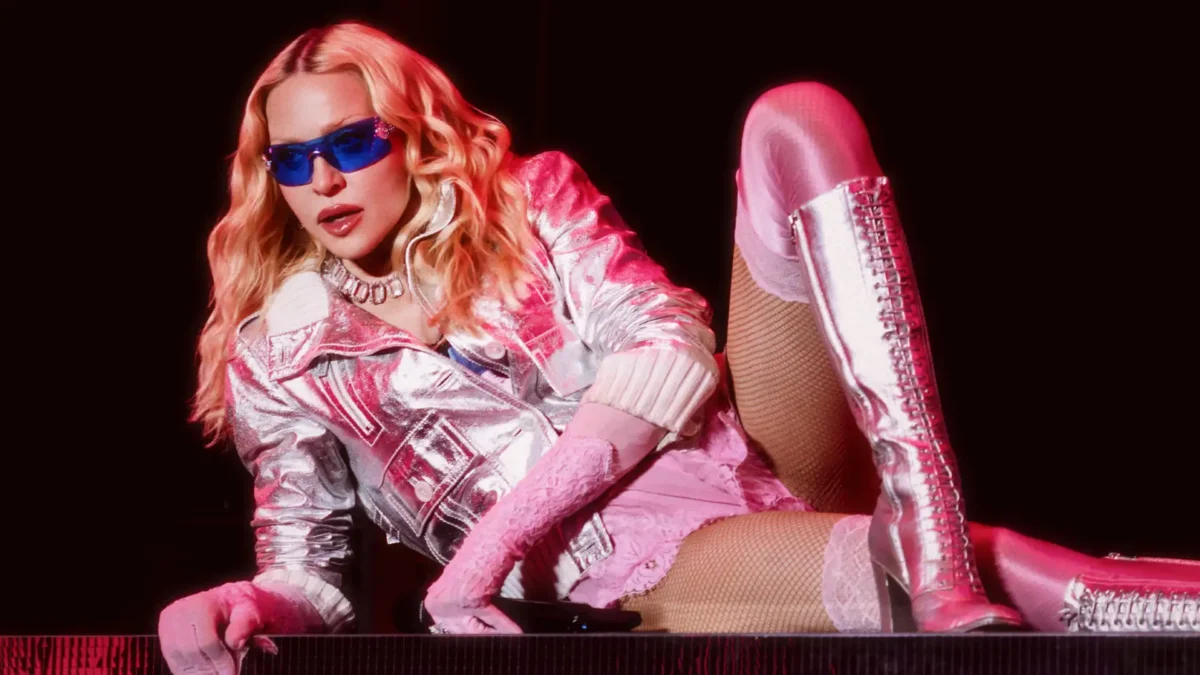
Madonna has never treated the dance floor as a backdrop. For her, it has been a laboratory, a pulpit, a runway, a confessional and, when necessary, a battleground. That is why this week’s news lands with more weight than a routine chart item: Love Sensation has reached No. 1 on Billboard’s Dance Airplay chart, giving Madonna a ninth career leader on the radio-based dance ranking. For an artist whose career began in the clubs of downtown New York and whose biggest reinventions have often arrived with a beat under them, the milestone feels less like nostalgia than continuity. Madonna’s chart history is often discussed in superlatives: the most successful female recording artist of all time by Guinness World Records, a defining MTV-era performer, a pop provocateur who made controversy part of the marketing language of modern celebrity. But the better story is how deliberately she built a career around motion. She moved from Michigan to New York with dancer’s discipline, from club records to global pop, from videos to film musicals, from Catholic iconography to electronic minimalism, from tabloid storms to art-world ambition. The point was never simply to change costumes. It was to control the room before anyone else decided what that room should look like. Love Sensation matters because it returns the spotlight to the place where Madonna’s authority has always been unusually deep: dance music as a living culture, not a decorative genre. The current Confessions II era nods to one of her most admired late-career triumphs, but it also underlines something more durable. More than four decades after her first singles began crossing from clubs to radio, Madonna can still bend pop’s attention toward rhythm, desire and spectacle.
Quick Facts
| Born | August 16, 1958 |
| Birthplace | Bay City, Michigan, United States |
| Nationality | American |
| Years Active | 1979-present |
| Residence | New York City; she has also been publicly associated with residences in London and Lisbon |
| Spouse | Previously married to Sean Penn and Guy Ritchie |
| Children | Six: Lourdes Leon, Rocco Ritchie, David Banda, Mercy James, Stella Ciccone and Estere Ciccone |
Early Life
Madonna Louise Ciccone grew up in a large Italian-American and French-Canadian Catholic family in Michigan, a setting that gave her both a strict moral architecture and, later, an inexhaustible supply of imagery to challenge. Her mother, Madonna Louise Fortin, died of breast cancer when Madonna was five, an event the singer has repeatedly described as formative. The loss left her with an acute awareness of absence, control and self-reliance, themes that would later surface in songs, videos and interviews without ever becoming neatly sentimental. She was a strong student and trained seriously in dance, studying with Christopher Flynn, a teacher who encouraged her to pursue performance beyond Michigan. After enrolling at the University of Michigan on a dance scholarship, she left for New York City in 1978. The move has been mythologized because it contains the essential Madonna ingredients: nerve, physical discipline and a refusal to wait for permission. In New York she studied dance, worked small jobs, performed with bands including Breakfast Club and Emmy, and absorbed the city’s post-disco, punk, new wave and club scenes. The early Madonna was not a finished pop product. She was a hungry downtown performer learning how music, fashion, movement and attitude could become one language.
Family
Parents
- Madonna Louise Fortin, her mother, died in 1963
- Silvio Anthony Ciccone, her father, worked as an engineer and later became associated with the family winery Ciccone Vineyard & Winery in Michigan
Siblings
- Anthony Ciccone
- Martin Ciccone
- Paula Ciccone
- Christopher Ciccone
- Melanie Ciccone
- Mario Ciccone
- Jennifer Ciccone
Career
Madonna’s recording career began where reputation mattered as much as radio: in New York clubs. Her early singles Everybody, Burning Up and Holiday established the template, but they did not yet reveal the scale of the project. Holiday in 1983 became the song that announced she could make liberation sound casual. By 1984, Like a Virgin transformed her from a dance-pop newcomer into a national argument. The song, the wedding-dress performance at the first MTV Video Music Awards, and the carefully sharpened image around the album made clear that Madonna understood television as a pop instrument. She did not merely release records; she staged arrivals.
The first major turning point came with True Blue in 1986. Rather than disappearing into novelty, Madonna broadened her sound and subject matter. Papa Don’t Preach, Open Your Heart and Live to Tell showed a performer beginning to command adult drama as well as dance-floor immediacy. She was not always embraced by critics in those years, and her acting career soon delivered both hits and embarrassments. Desperately Seeking Susan used her charisma brilliantly; Shanghai Surprise and Who’s That Girl made her an easy target. Yet even the misfires taught her something useful: in pop music, a perceived failure can become raw material if the artist returns with a stronger frame.
That stronger frame arrived with Like a Prayer in 1989. The album remains one of the central works of her career because it fused pop accessibility with confession, family memory, religion, sexuality and guilt. The title video provoked outrage, cost her a Pepsi campaign and confirmed her instinct that the boundaries around popular music were not fixed. The scandal often overshadows the craft. Like a Prayer is also the moment when Madonna’s songwriting voice became more openly personal, when the provocation was not just visual but emotional.
The 1990s pushed her into larger, riskier forms. Vogue was a hit of astonishing elegance, turning ballroom culture into a global pop reference while also raising later conversations about appropriation, visibility and credit. The Blond Ambition World Tour set a new standard for the pop concert as theater: choreographed, narrative-driven, erotic, confrontational and meticulously styled. Truth or Dare, the 1991 documentary chronicling the tour, helped create the modern backstage celebrity text, where performance and private life blur until the audience is unsure which one it came to see.
Madonna then entered her most combative commercial period. The Sex book and the Erotica album in 1992 tested the public’s tolerance for a woman artist controlling erotic spectacle on her own terms. The backlash was intense. Body of Evidence deepened the sense, among detractors, that she had overplayed her hand. But the mid-1990s showed her capacity for recalibration. Bedtime Stories softened the edges without surrendering control. Something to Remember reminded skeptics that she had a ballad voice capable of restraint. Then Evita gave her the prestige role she had pursued for years. Playing Eva Perón in Alan Parker’s 1996 film musical, she delivered a performance disciplined enough to win the Golden Globe for Best Actress in a Motion Picture Musical or Comedy. It mattered because it gave the industry a version of Madonna it had often resisted acknowledging: not just a star who could command attention, but a performer willing to submit to a demanding character and score.
Her 1998 album Ray of Light was another decisive reinvention. Working with William Orbit, Madonna turned toward electronic textures, spiritual searching and a more reflective vocal presence. The album won major Grammy recognition and became a rare late-1990s blockbuster that felt both technologically current and emotionally weathered. Music followed in 2000, bringing her into collaboration with Mirwais Ahmadzaï and again proving that she could absorb club innovation without sounding like a tourist.
Not every experiment worked. American Life in 2003 became one of her most debated albums, tangled in political imagery and released at a moment when the American pop climate was unforgiving. Yet its commercial and critical challenges helped set up one of her most elegant recoveries: Confessions on a Dance Floor in 2005. Built as a continuous dance record and led by Hung Up, it returned Madonna to the club with the authority of someone who had never really left. The album’s Grammy win for Best Electronic/Dance Album confirmed that her relationship with dance music was not a youthful phase but a career spine.
In the decades since, Madonna has operated in a changed pop world partly shaped by her own example. Younger artists now build multimedia identities, fold fashion into album campaigns, use controversy strategically and speak more openly about sexuality and power because Madonna helped expand that terrain. She has faced criticism over vocals, film choices, age, image and public persona, yet the durability is undeniable. The Celebration Tour, launched after a serious health scare delayed its start, reframed her catalog as a living archive of pop history. Now Love Sensation reaching No. 1 on Dance Airplay adds another chapter. It is not simply another chart peak. It is a reminder that Madonna’s most natural arena remains the one where bodies move first and arguments arrive later.
Television
- American Bandstand (1984) — Musical guest
- MTV Video Music Awards (1984-present) — Performer and presenter
- Saturday Night Live (1985, 1993, 2000, 2003) — Host, musical guest and cameo performer
- Will & Grace (2003) — Liz
- Live 8 (2005) — Performer
- Super Bowl XLVI Halftime Show (2012) — Headliner
- The Tonight Show Starring Jimmy Fallon (2015) — Guest and performer
- Eurovision Song Contest (2019) — Guest performer
Filmography
- Desperately Seeking Susan (1985) — Susan
- Shanghai Surprise (1986) — Gloria Tatlock
- Who’s That Girl (1987) — Nikki Finn
- Dick Tracy (1990) — Breathless Mahoney
- Madonna: Truth or Dare (1991) — Herself
- A League of Their Own (1992) — Mae Mordabito
- Body of Evidence (1993) — Rebecca Carlson
- Evita (1996) — Eva Perón
- The Next Best Thing (2000) — Abbie Reynolds
- Swept Away (2002) — Amber Leighton
- Die Another Day (2002) — Verity
- Filth and Wisdom (2008) — Director
- W.E. (2011) — Director and co-writer
Awards & Honors
- 1992 — Grammy Awards (Best Music Video, Long Form) — Won
- 1997 — Golden Globe Awards (Best Actress in a Motion Picture – Musical or Comedy) — Won
- 1998 — Grammy Awards (Best Pop Album) — Won
- 1998 — Grammy Awards (Best Dance Recording) — Won
- 1998 — Grammy Awards (Best Short Form Music Video) — Won
- 1998 — Grammy Awards (Best Recording Package) — Won
- 2000 — Grammy Awards (Best Song Written for a Motion Picture, Television or Other Visual Media) — Won
- 2007 — Grammy Awards (Best Electronic/Dance Album) — Won
- 2008 — Rock and Roll Hall of Fame (Performer) — Inducted
- 2012 — Golden Globe Awards (Best Original Song) — Won
Business Ventures
- Maverick: Madonna co-founded the entertainment company in the early 1990s, releasing her own work and music by other artists through its label operations.
- Boy Toy Inc.: Her long-running company associated with her music, touring and intellectual property interests.
- Maverick Films: A production arm connected to film and television projects.
- Material Girl: A fashion line launched with her daughter Lourdes Leon.
- Truth or Dare by Madonna: A lifestyle and fragrance brand launched in the 2010s.
- Hard Candy Fitness: A branded fitness venture associated with international gym locations.
- MDNA Skin: A skincare line developed with Japanese beauty company MTG.
- Publishing: She wrote The English Roses and other children’s books, expanding her brand into publishing.
Philanthropy
- Founded Raising Malawi in 2006 to support vulnerable children through education and health initiatives.
- Supported the Mercy James Centre for Paediatric Surgery and Intensive Care in Blantyre, Malawi, which opened in 2017.
- Has been a longtime supporter of HIV/AIDS awareness and fundraising, including work connected to amfAR and other benefit efforts.
- Participated in major benefit events including Live Aid, Live 8 and Hope for Haiti Now.
- Has used concerts and public platforms to advocate for LGBTQ rights, women’s rights and freedom of expression.
Current Projects
- Love Sensation has reached No. 1 on Billboard’s Dance Airplay chart, giving Madonna a ninth career leader on the radio-based dance ranking.
- The Confessions II era is extending her long association with dance music and club culture.
- The Celebration Tour recently reframed her catalog as a four-decade pop archive, drawing renewed attention to her influence on performance, fashion and music video.
Interesting Facts
- Madonna moved to New York in 1978 to pursue dance, not initially to become a pop singer.
- Her first major national pop hit, Holiday, was not accompanied by an official music video, unusual for a star who would become synonymous with MTV.
- Before fame, she performed with bands including Breakfast Club and Emmy.
- Her longtime early collaborator Stephen Bray had known her from Michigan before working with her in New York.
- The Like a Prayer video controversy led Pepsi to cancel an advertising campaign tied to the song, but the single itself became one of her signature hits.
- Vogue was originally connected to the B-side of Keep It Together before becoming a major single in its own right.
- The Blond Ambition World Tour helped establish the template for the modern pop spectacle built around chapters, choreography and theatrical staging.
- Truth or Dare became one of the most influential music documentaries of its era, shaping how later pop stars presented backstage life.
- She trained extensively for Evita, including vocal preparation that expanded her range for the demanding Andrew Lloyd Webber and Tim Rice score.
- Ray of Light was recorded after a period of major personal change, including motherhood and spiritual exploration, which shaped its sound and lyrics.
- Hung Up prominently used a sample from ABBA’s Gimme! Gimme! Gimme! (A Man After Midnight), a notable clearance because ABBA have historically been selective about sampling.
- She was inducted into the Rock and Roll Hall of Fame in her first year of eligibility.
- Her children’s book The English Roses became a major publishing success after its 2003 release.
- She has repeatedly worked with photographers and designers who became central to her visual identity, including Jean Paul Gaultier, Steven Meisel, Herb Ritts and David Fincher.
- Her career includes both some of pop’s most celebrated reinventions and some highly public setbacks, a combination that has helped make her resilience part of her legend.
Why ShowBiz Selected This Entertainer
Madonna is ShowBiz.com’s Featured Entertainer of the Week because Love Sensation has climbed to No. 1 on Billboard’s Dance Airplay chart, giving her a ninth career leader on that radio-based dance ranking. The achievement is not an isolated victory; it connects directly to the through-line of her career. Madonna came out of club culture, used dance music to redraw pop’s boundaries, and has returned to the form at crucial moments, from Vogue to Ray of Light to Confessions on a Dance Floor. The new milestone in the Confessions II era shows that her relationship with dance music remains active rather than archival. At a time when many legacy artists are celebrated mainly through memory, Madonna is still adding to the chart story that helped define her in the first place.
Watch Next
- Madonna: Truth or Dare
- Evita
- Desperately Seeking Susan
- A League of Their Own
- Dick Tracy
- The Confessions Tour
- Madonna: The Celebration Tour
- Blond Ambition World Tour Live
- Madame X