
FEATURED ENTERTAINER OF THE WEEK
Katy Perry
Singer
July 11, 2026
Katy Perry Beats Justin Bieber’s Radio Record With Her New Hit
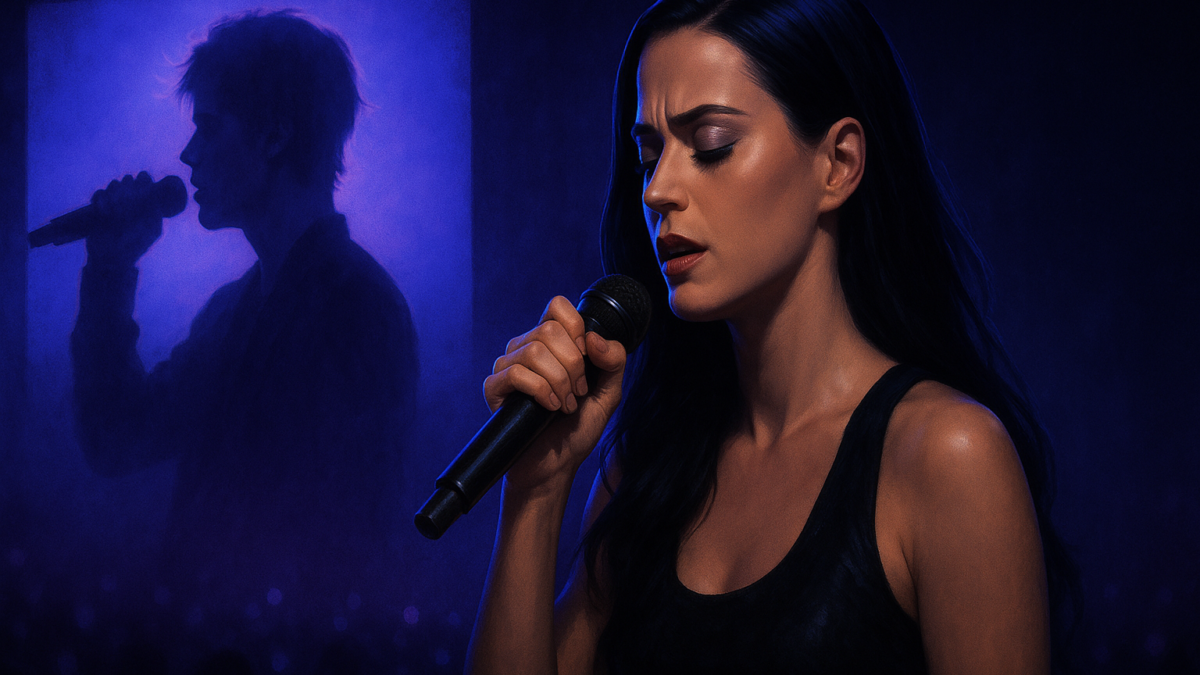
Katy Perry has always understood pop music as theater: the entrance, the costume, the hook, the wink to the balcony. What makes her latest moment so striking is that the spotlight has swung back not to a brand-new reinvention, but to a song that once looked like the one that narrowly missed pop immortality. ‘The One That Got Away,’ originally released during her extraordinary Teenage Dream run, has found a second life in 2026 through TikTok, global chart movement and renewed radio attention. This week, that resurgence became more than nostalgia: it turned into a measurable pop event, with Perry surpassing a radio record associated with Justin Bieber. For an artist whose career has often been discussed in terms of peaks, eras and spectacle, the moment is a reminder of something simpler and more durable. The songs still travel. Perry was selected this week because this revival neatly connects the present to the central story of her career: a gospel-raised California singer who survived label false starts, became one of the defining hitmakers of the 2010s, and built a catalogue big enough that even a decade-old single can suddenly feel newly current.
Quick Facts
| Born | October 25, 1984 |
| Birthplace | Santa Barbara, California, United States |
| Nationality | American |
| Years Active | 2001-present |
| Residence | Montecito, California area, as publicly reported |
| Spouse | Formerly married to Russell Brand; publicly engaged to Orlando Bloom since 2019 |
| Children | One daughter, Daisy Dove Bloom |
Early Life
Before she became Katy Perry, she was Katheryn Elizabeth Hudson, a minister’s daughter growing up in a household where secular pop was not the default soundtrack. Her parents, Mary Christine and Maurice Keith Hudson, were Pentecostal pastors, and Perry’s first musical education came through church, gospel records and the discipline of singing for congregations rather than clubs. That background matters because it gave her a voice built for projection and a performer’s sense of occasion before she had a pop career to project into. Perry has often spoken about discovering mainstream music later than many of her peers, which helps explain the slightly heightened quality of her early pop persona: when she arrived, she arrived with the enthusiasm of someone who had studied the room from the doorway and then decided to take it over. As a teenager she pursued music seriously, eventually releasing a Christian rock album under the name Katy Hudson in 2001. The album did not make her famous, but it gave her a professional beginning and, just as importantly, an early lesson in how fragile record-label dreams can be. After moving toward Los Angeles and secular pop, she endured a series of deals that did not turn into albums. Labels signed her, developed her, and moved on. In another career, those lost years would be a footnote. In Perry’s, they became the apprenticeship: the time when she learned how to sharpen a chorus, adapt an image and withstand rejection without losing her appetite for the big swing. She adopted the stage name Katy Perry, using her mother’s maiden name to avoid confusion with actress Kate Hudson, and began moving toward the bright, sly, candy-colored pop identity that would eventually make her unavoidable.
Family
Parents
- Mary Christine Perry Hudson, a Pentecostal pastor
- Maurice Keith Hudson, known as Keith Hudson, a Pentecostal pastor
Siblings
- Angela Hudson, older sister
- David Hudson, younger brother and musician
Career
Perry’s career did not explode because the industry immediately knew what to do with her. It exploded because, after years of being mishandled and shelved, she arrived with a single that made indifference nearly impossible. ‘I Kissed a Girl,’ released in 2008 from the album One of the Boys, was cheeky, controversial, instantly singable and perfectly timed for a pop landscape that rewarded provocation with a giant chorus attached. It became her first Billboard Hot 100 No. 1 and introduced her not as a cautious new artist, but as a fully colored-in character. ‘Hot n Cold’ proved she was not a one-song stunt. The bigger transformation came with Teenage Dream in 2010. That album became one of the most successful pop releases of its era, producing five No. 1 singles on the Billboard Hot 100: ‘California Gurls,’ ‘Teenage Dream,’ ‘Firework,’ ‘E.T.’ and ‘Last Friday Night (T.G.I.F.).’ The achievement tied Michael Jackson’s Bad for the most No. 1 singles from one album, a comparison that instantly lifted Perry’s chart success into pop history. Yet ‘The One That Got Away’ has always been the fascinating footnote from that period. It was the sixth single, reached the Top 3 in the United States, and carried a more wistful, less cartoonish emotional charge than some of the album’s brighter hits. It did not become the record-breaking sixth No. 1, which gave it an unusual place in her catalogue: beloved, highly successful, but forever framed as the near-miss. That is why its 2026 revival feels so apt. The song is no longer merely the single that did not complete the sweep; it is the one that returned years later with its own story. Perry followed Teenage Dream with Prism in 2013, led by ‘Roar’ and ‘Dark Horse,’ both major global hits that broadened her standing from pop provocateur to arena-scale hitmaker. ‘Roar’ became an empowerment anthem, while ‘Dark Horse’ showed her ear for hybrid pop production and unexpected collaborations. Her 2015 Super Bowl XLIX halftime show, one of the most-watched in the event’s history, distilled her appeal into twelve minutes of maximalist pop pageantry: giant lion, dancing sharks, rapid costume changes and a performer who knew how to make a stadium read on television. The years after Prism were more complicated. Witness in 2017 attempted to reposition Perry as a more self-aware, politically alert pop figure, but the campaign became a case study in how difficult it is for a superstar to change the conversation once the public has decided what it wants from her. Smile in 2020 arrived in a more reflective mode, shaped by personal change and the approach of motherhood. Her long run as a judge on American Idol, beginning in 2018, introduced her to viewers who knew the hits but had not necessarily spent time with her personality away from videos and award shows. On that series, she could be funny, emotional, theatrical and blunt, often in the same episode. In Las Vegas, her Play residency leaned into the visual absurdity that has always been part of her best live work, building a stage world out of oversized objects and pop-surreal imagery. By the time her 2024 album 143 arrived, Perry was no longer the new rule-breaker or the unchallenged singles machine. She was something more interesting: a pop star with a long public memory attached to her, still capable of commanding attention, still debated, and now supported by a catalogue old enough to be rediscovered by listeners who were children when the songs first hit. That is the frame for this week’s news. Perry’s current resurgence is not separate from her career story; it is the latest evidence that her most potent songs were built with unusually durable pop architecture.
Television
- The Young and the Restless (2008) — Herself
- The Simpsons (2010) — Herself
- How I Met Your Mother (2011) — Honey
- Saturday Night Live (2011, 2013, 2017) — Host and musical guest
- Raising Hope (2012) — Rikki
- American Idol (2018-2024) — Judge
- Peppa Pig (2024) — Ms. Leopard
Filmography
- The Smurfs (2011) — Smurfette
- Katy Perry: Part of Me (2012) — Herself
- The Smurfs 2 (2013) — Smurfette
- Katy Perry: The Prismatic World Tour (2015) — Herself
- Zoolander 2 (2016) — Herself
- Peppa’s Cinema Party (2024) — Ms. Leopard
Awards & Honors
- 2009 — Grammy Awards (Best Female Pop Vocal Performance) — Nominated
- 2009 — BRIT Awards (International Female Solo Artist) — Won
- 2011 — Grammy Awards (Album of the Year) — Nominated
- 2011 — Grammy Awards (Best Pop Vocal Album) — Nominated
- 2011 — MTV Video Music Awards (Video of the Year) — Won
- 2012 — Grammy Awards (Record of the Year) — Nominated
- 2012 — Billboard Music Awards (Spotlight Award) — Won
- 2012 — Billboard Women in Music (Woman of the Year) — Won
- 2013 — Grammy Awards (Best Pop Solo Performance) — Nominated
- 2014 — Grammy Awards (Song of the Year) — Nominated
- 2015 — Grammy Awards (Best Pop Duo/Group Performance) — Nominated
- 2017 — Human Rights Campaign (National Equality Award) — Won
Business Ventures
- Founded the record label Metamorphosis Music in partnership with Capitol Records in 2014; the label was later renamed Unsub Records.
- Launched Katy Perry Collections, a footwear line known for colorful, playful designs, in 2017.
- Released multiple fragrance products, including Purr and Meow, during the height of her early 2010s commercial expansion.
- Co-founded De Soi, a non-alcoholic aperitif brand, with Morgan McLachlan.
- Has been publicly associated with investment in Bragg Live Food Products alongside other high-profile backers.
Philanthropy
- Named a UNICEF Goodwill Ambassador in 2013, focusing on children and young people.
- Traveled with UNICEF to Madagascar and Vietnam to bring attention to children’s health, education and poverty issues.
- Has used major public platforms to support LGBTQ+ equality and received the Human Rights Campaign’s National Equality Award in 2017.
- Has supported organizations and initiatives connected to disaster relief, children’s causes, music education and youth well-being.
- Participated in benefit performances and charity campaigns throughout her career, including efforts tied to global health and humanitarian relief.
Current Projects
- The 2026 resurgence of ‘The One That Got Away’ on global charts and radio, driven by TikTok activity and renewed fan attention.
- Ongoing catalogue activity around the Teenage Dream era, which remains central to her streaming and radio legacy.
- Music and public appearances following her 2024 album 143.
- Business work connected to Katy Perry Collections and De Soi.
- Continuing public work as a UNICEF Goodwill Ambassador.
Interesting Facts
- Katy Perry’s first album was not a pop album; it was the 2001 Christian music release Katy Hudson.
- She changed her professional surname to Perry, her mother’s maiden name, partly to avoid confusion with actress Kate Hudson.
- Before her 2008 breakthrough, she experienced several stalled record deals and unreleased projects.
- Teenage Dream produced five Billboard Hot 100 No. 1 singles, tying Michael Jackson’s Bad for a historic album chart record.
- ‘The One That Got Away’ was the sixth Teenage Dream single and reached the Top 3 in the United States, making it both a major hit and a famous near-miss.
- Her 2012 documentary Katy Perry: Part of Me included material from the period surrounding the end of her marriage to Russell Brand.
- The ‘Left Shark’ dancer from her 2015 Super Bowl halftime show became an unexpected viral phenomenon of his own.
- Perry voiced Smurfette in both The Smurfs and The Smurfs 2.
- She has never won a Grammy Award despite multiple nominations across major pop categories.
- Her American Idol run introduced her to a different television audience, where her role depended less on pop spectacle and more on personality, critique and mentorship.
- Her Las Vegas residency Play leaned heavily into oversized props and surreal pop imagery, turning her long-established visual style into a stage-world concept.
- She co-founded De Soi, placing her among the entertainers who moved into the growing non-alcoholic beverage market.
- Perry’s daughter Daisy Dove Bloom was born in 2020; Perry and Orlando Bloom announced the news through UNICEF.
Why ShowBiz Selected This Entertainer
Katy Perry is featured this week because ‘The One That Got Away’ has turned into one of 2026’s most unexpected catalogue stories. The song’s renewed rise on global charts and radio, powered by TikTok discovery and longtime fan affection, has given Perry a fresh milestone more than a decade after the Teenage Dream era first made her a pop-history figure. The reported radio achievement over Justin Bieber adds a headline, but the larger story is richer: Perry’s catalogue is proving durable enough to generate new moments without needing to be repackaged as nostalgia. For a singer whose career has moved through blockbuster dominance, public backlash, television reinvention, motherhood, business ventures and creative resets, the return of this particular song feels almost poetic. The one that once got away has come back.
Watch Next
- Katy Perry: Part of Me
- Katy Perry: The Prismatic World Tour
- American Idol seasons featuring Katy Perry as judge
- The Smurfs
- The Smurfs 2
- Katy Perry’s Super Bowl XLIX halftime show