
Warning: This story contains major spoilers for the finale of The Good Daughter.
Rose Byrne does not see The Good Daughter as a story that needs another chapter.
The six-episode psychological thriller, which quickly became Peacock’s top show, concludes the turbulent journey of estranged sisters Samantha and Charlotte Quinn. Although Byrne hopes the characters can rebuild their relationship, she believes the limited series has completed the specific story it set out to tell.
“I don’t” see a continuation, Byrne said when asked about the show’s future. “It feels contained to this series, like the novel, to me.”
She added that she has hope Sam and Charlie could develop “a better relationship with one another” after everything they have endured, but said their central ordeal felt resolved within the series.
A family trauma collides with a murder case
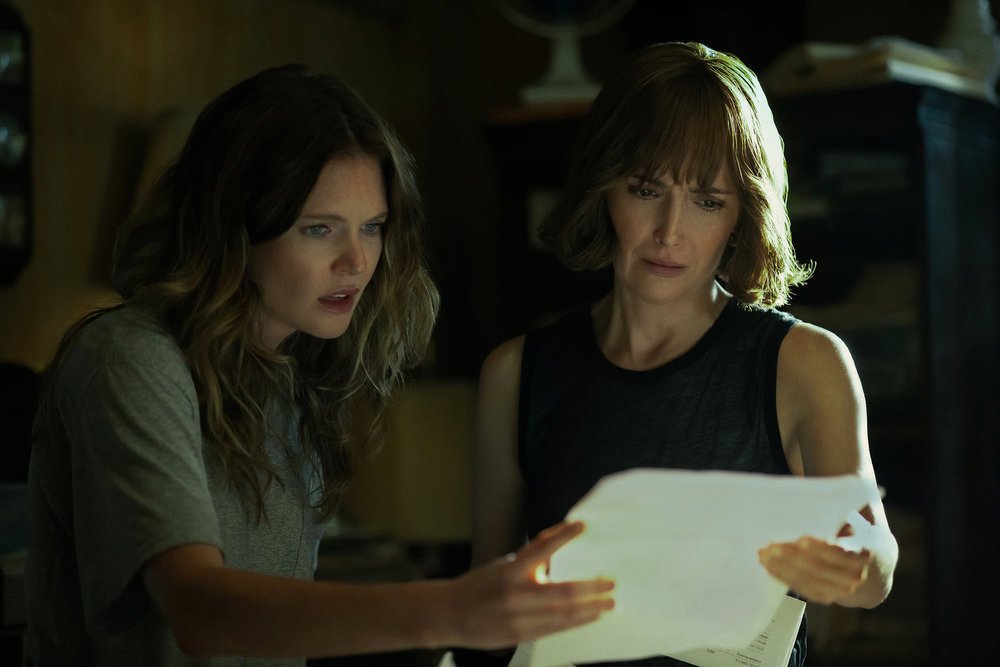
Byrne plays Sam, the older Quinn sister, opposite Meghann Fahy as Charlie. Their fractured bond dates back to a brutal attack they suffered as teenagers in retaliation for the legal work of their father, Rusty, played by Brendan Gleeson.
The violence killed their mother, Gamma, played by Olivia Williams, and left lasting damage. Sam, who protected Charlie during the attack, lives with partial blindness, a permanent limp and dysarthria caused by her trauma. Charlie escaped many of those physical injuries, but the experience affected her in other ways. Sam’s sacrifice also helped create years of emotional and physical distance between the sisters.
Rusty’s declining health brings Sam, now a patent lawyer in New York City, back to Pikeville, Georgia. She remains there as he takes on the defense of Kelly Wilson, played by newcomer Shayna Benardo. Kelly is a special-needs high school student who appears to be responsible for a school shooting that killed the principal and a freshman girl.
The case draws the sisters together because Charlie, also an attorney, witnessed part of the shooting. As questions about Kelly’s actions deepen, the Quinn family’s history resurfaces alongside the present-day investigation.
By the end, Kelly’s manipulation becomes clear. Asked whether the punishment Kelly receives is fair, Byrne initially called the issue “very, very complicated,” pointing to the difficult path that placed the teenager in the case. When pressed on Kelly’s limited understanding of what she was doing, Byrne was unequivocal: “Absolutely. None of it is fair.”
Byrne said she spoke with lawyers who work in the criminal justice system to understand matters including witness questioning and defense strategy. She credited author and showrunner Karin Slaughter with depicting both the system’s repeated failures and the possibility of occasional victories.
Byrne helped shape the series beyond her performance
In addition to starring, Byrne served as an executive producer alongside Bruna Papandrea. Byrne said the position gave her a greater voice, particularly during casting, and described bringing Fahy aboard as a major development for the production.
She also had a close view of the casting of Drew Ann Cheek and Audrey Grace Marshall as the younger Charlie and Sam. Byrne said physical resemblance mattered, but so did finding performers who could capture specific qualities in Fahy’s and her own performances.
Preparing to play Sam required separate work on the character’s speech and movement. Byrne collaborated with longtime voice coach Kate Wilson, the head of voice and speech at Juilliard, to develop Sam’s dysarthria and Georgia accent. They also considered how 20 years in New York might have changed the way Sam spoke and when her original accent would return.
For Sam’s limp, Byrne worked with a physical therapist experienced in rehabilitation. The team recorded numerous versions and consulted director Steph Green to determine how the movement would register onscreen without becoming exaggerated or comical.
Byrne said Sam attracted her because the character possessed qualities she does not always encounter in female roles. She described Sam as dominant and self-possessed, with physical scars and a complicated history, and said the part almost felt as though it had been written for a man.
The production also worked closely with RAINN while handling the story’s traumatic material. Resources were available on set for anyone who felt triggered or needed support. Byrne said she asked Green from the outset how the violence would be portrayed because she did not want the series to become gratuitous or exploitative.
Green and cinematographer Zoë White used close-ups and visual details, including shots focused on hands, to connect memories and flashbacks. Byrne said the approach created a vivid sense of memory and achieved something innovative.
ShowBiz Take
The Good Daughter may have the machinery of a suspense thriller, but Byrne’s comments make clear that its twists were built around the Quinn sisters rather than designed to keep the franchise indefinitely open. Slaughter adapted her own novel and served as showrunner for the first time, keeping the perspective centered on Sam and Charlie as daughters, sisters and survivors of violence.
That focus also explains why Byrne views the ending as complete. The mystery surrounding Kelly forces Sam and Charlie to confront the family history they had left unresolved, while Rusty’s death brings another painful turning point. The finale does not make every consequence fair, particularly for Kelly, but it completes the specific reckoning that brought the sisters back together.
The Peacock success continues a notable period for Byrne, who earned a best actress Oscar nomination and won both a Golden Globe and an Independent Spirit Award for If I Had Legs I’d Kick You. She also wrapped the second season of the Apple TV comedy Platonic.
For now, Byrne’s position is clear: she may hope life improves for Sam and Charlie after the credits, but she does not believe viewers need another season to finish their story. All six episodes of The Good Daughter are streaming on Peacock.