
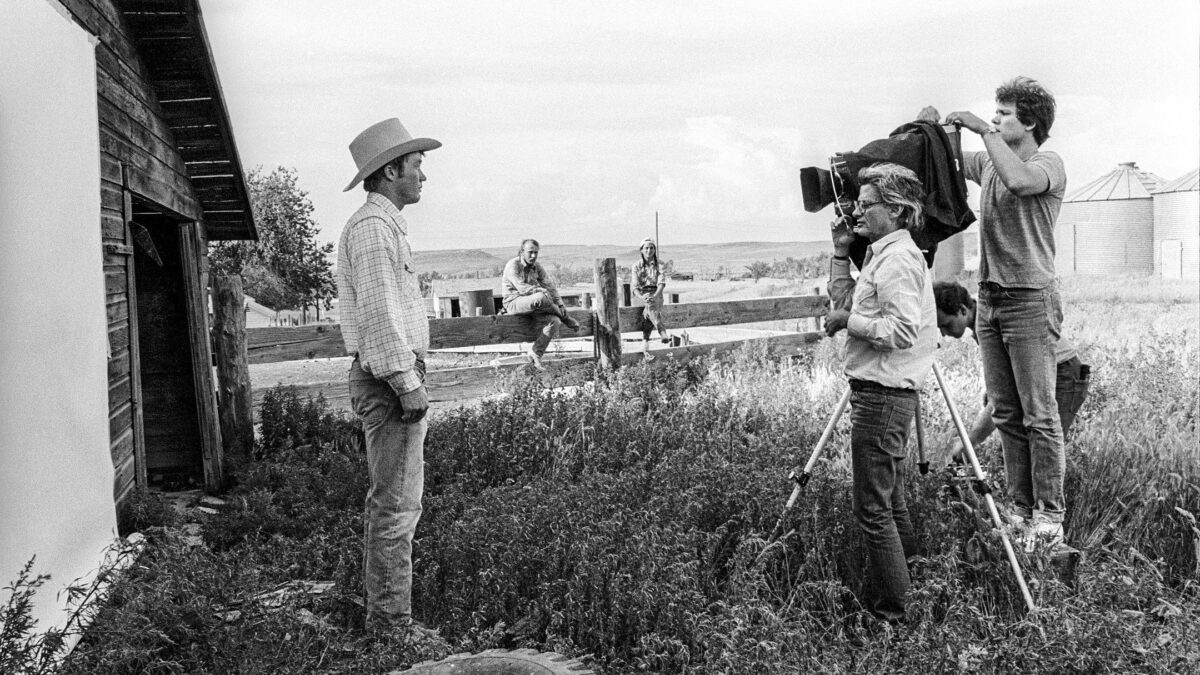
Ron Howard initially saw Richard Avedon as a strong documentary subject for Imagine Entertainment. He was far less certain that he should direct the film himself.
Speaking at an Oct. 28 screening during the SCAD Film Festival, Howard explained that his hesitation remained even after the Avedon Foundation opened the influential fashion photographer’s archives to him.
“I really went into it thinking, ‘This is a great subject, it’d be great for Imagine,’” Howard said. As he encountered the scope of Avedon’s work, however, he wondered whether he was “really the right filmmaker” for the project.
Howard’s first instinct was that the documentary could examine the making of Avedon’s best-known images and revisit the glamorous or compelling figures who appeared before his camera. Research ultimately led him toward a more personal film.
“Soon I really did connect with it as this very human story that I wanted to tell,” Howard said. Rather than concentrating primarily on behind-the-scenes anecdotes, he became interested in Avedon’s development and struggles as an artist.
Howard also found a point of connection despite seeing major differences between their personalities. He described Avedon as an extrovert and the “life of the party,” while saying that he avoids parties himself. What resonated was Avedon’s drive and ambition.
Inside the Avedon Archive
The finished documentary, Avedon, is now streaming on Netflix. Imagine Entertainment, the production company co-chaired by Howard and Brian Grazer, developed the project.
The film combines Avedon’s commercial and historical photography with interviews featuring people who collaborated with him, including former magazine editor Tina Brown, model Lauren Hutton, and dancer and choreographer Twyla Tharp. His portraits of figures from the civil rights movement are among the works included.
Beyond surveying the photographs, the documentary examines Avedon’s creative and political convictions. It also considers the tension between those passions and his responsibilities as a husband and father.
Building that portrait required an extensive review of his output. Producer Sara Bernstein, president of Imagine Documentaries, said producing partner Dallas Brennan Rexer went through 16,000 Avedon sittings. The filmmakers ultimately used 500 photographs in the documentary.
Bernstein said the team first expected a smaller group of defining images to carry Avedon’s creative story. The broader archive instead allowed the film to place his photography against events and personalities from the latter half of the 20th century.
A more intimate dimension emerged when Avedon’s son, John Avedon, agreed to participate. Howard described John as a “reluctant interview,” although he supported the documentary.
Howard told John that the film already had Richard Avedon’s voice and testimony from his colleagues, but lacked a family perspective from outside the studio. He believes John, who is himself a writer, understood that he could fill that gap.
His participation expanded the documentary into what Howard called a generational story about fathers and sons. John’s son, Michael Avedon, is also a fashion photographer.
Avedon’s Warning About Photography
One of the film’s final scenes features Avedon, who died in 2001, offering a stark forecast for the medium: “I don’t think there will be photography in the future, only machines.”
Asked how Avedon might respond to the current conflict between art and artificial intelligence, Howard stressed that his answer was a guess. He suggested the photographer would probably continue working with white paper and a three-by-five camera because photography had become a means of communication and exploration for him.
Howard also argued that Avedon would remain relevant because viewers could recognize the creator’s presence in his images, even when they did not know his name.
As for AI, Howard speculated that Avedon might have adopted it selectively. “My guess is also with his sensibility and aesthetic, he’d be using it as a tool to advance his aesthetic,” he said. Howard did not think Avedon would necessarily avoid the technology, but believed he would insist on retaining control.
ShowBiz Take
Howard’s initial reluctance became central to finding the documentary’s direction. The vast archive offered obvious opportunities to celebrate memorable photographs and famous subjects, but the director’s deeper connection came only when he saw an artist’s personal journey within that material.
The combination of 500 selected images, a historical backdrop, and John Avedon’s initially reluctant participation gives the film two distinct perspectives: the public record created through Richard Avedon’s camera and the private family story beyond his studio. His final warning about “machines” also gives the Netflix documentary a direct connection to present questions about authorship, technology, and artistic control.