
While the French film critics created and championed the auteur theory celebrating cinema as a medium dominated by directors, television has been perceived more primarily as the domain of writers and producers and even stars, going back to Gertrude Berg and Lucy & Desi, from Rod Serling and Norman Lear to David Chase and Matthew Weiner (both of whom directed their respective shows) and Aaron Sorkin (who did not).
Just as the auteur theory was a reductive way to approach the collaborative process of filmmaking, those conversations negating directors and cinematographers and other technical craftspeople as key players in the shaping of television have left countless influential figures marginalized in a medium that has developed and reshaped and evolved its aesthetic over 80+ years.
There’s no television without Karl Freund, the legendary film cinematographer (Metropolis, Dracula) recruited by Desi Arnaz to shoot I Love Lucy, bringing with him the polished black and white photography that characterized television’s first Golden Age and advancing and perfecting the look and process behind what would become the multi-cam comedy.
There’s no television without the legendary directors who turned around the weekly installments of Playhouse 90 and other anthology shows of the 1950s and early 1960s, creating a look and feel that was prestigious back when the phrase “prestige TV” would have been treated as an oxymoron.
Cinema would be lesser too, since those directors included the likes of John Frankenheimer, Sidney Lumet, George Roy Hill and Arthur Penn, who learned to work fast and to prioritize performance, laying the foundation for the American independent film of the 1960s and 1970s.
There’s no television without Robert Butler, who directed the Hill Street Blues pilot and helped bring a gritty realism that the small screen had often lacked, or Rod Holcomb and Mimi Leder or Thomas Schlamme, who continued the process of moving TV further and further from its often boxy and overly contained compositions with the early runs of ER and The West Wing, which laid a foundation for television’s more recent Golden Age.
And there’s no television without James Burrows, who died this week at 85. Burrows stood on the shoulders of the medium’s giants who came before him, and it could be easily and probably accurately argued that no figure in the past 50 years was more responsible for the look, feel, tone and rhythms of television comedy. Perhaps only Lear and Lorne Michaels, both from the writing-producing lineage more frequently valorized in the medium, have competing claims.
You can measure Burrows’ importance or influence in purely mathematical terms.
Going back to 1974, when he directed his first of four episodes of The Mary Tyler Moore Show, Burrows won 11 Emmys and five DGA awards, directing more than 50 comedy pilots. He directed 237 episodes of Cheers, 75 episodes of Taxi, dozens of episodes apiece for Frasier and Friends and Mike & Molly, plus every episode of Will & Grace, both in its original run and its revival. Some 50 years after those first stints behind the camera, and nearly a decade after NBC gave Burrows a well-earned primetime tribute, he directed all 10 episodes of Hulu’s Mid-Century Modern, which goes down as his final helming credit.
Speaking of math, that 2016 NBC special was timed to Burrows’ 1,000th episode as a television director (on NBC’s Crowded, if you’re hoping to win a deep cut game of bar trivia).
You can measure Burrows’ importance or influence in purely qualitative terms.
Did you see that list of titles? Can you go through those titles and isolate each of the individual acting performances, guided by Burrows, that received Emmys and other accolades?
Those are the shows that shaped decades of television output, for the most part emulated but never equaled. Cheers, which Burrows co-created along with the Charles brothers, and Taxi represent a pinnacle for the workplace sitcom. A Boston bar and a Manhattan taxi garage served as ideally contained Petri dishes for wacky situations, perfectly calibrated performances and characterizations that bent but never broke the precarious balance of the format.
Friends and Will & Grace were the hangout comedies to end all hangout comedies, except that they spawned countless imitators, but again few equals. You can see the elements of the Norman Lear shows and The Mary Tyler Moore Show in the DNA of Taxi and Cheers, but then you can see the DNA of Taxi and Cheers in everything to follow, even when the multi-cam periodically fell out of favor.
You can measure Burrows’ importance or influence in the anecdotes relayed by the director himself and the countless admirers who worked with and followed him.
Stories about Burrows and his contributions to various shows abound, too many to list in a simple tribute. Just look up the tales about the shape of the bar in Cheers or the pillar in Monica’s apartment on Friends or the depiction of gay intimacy on Will & Grace. Burrows deserves a lion’s share of the credit for the things you did notice about these shows that you loved, but he perhaps deserves even more credit for the things you didn’t notice.
You can measure Burrows’ importance or influence in television’s vocal awareness of his importance and influence.
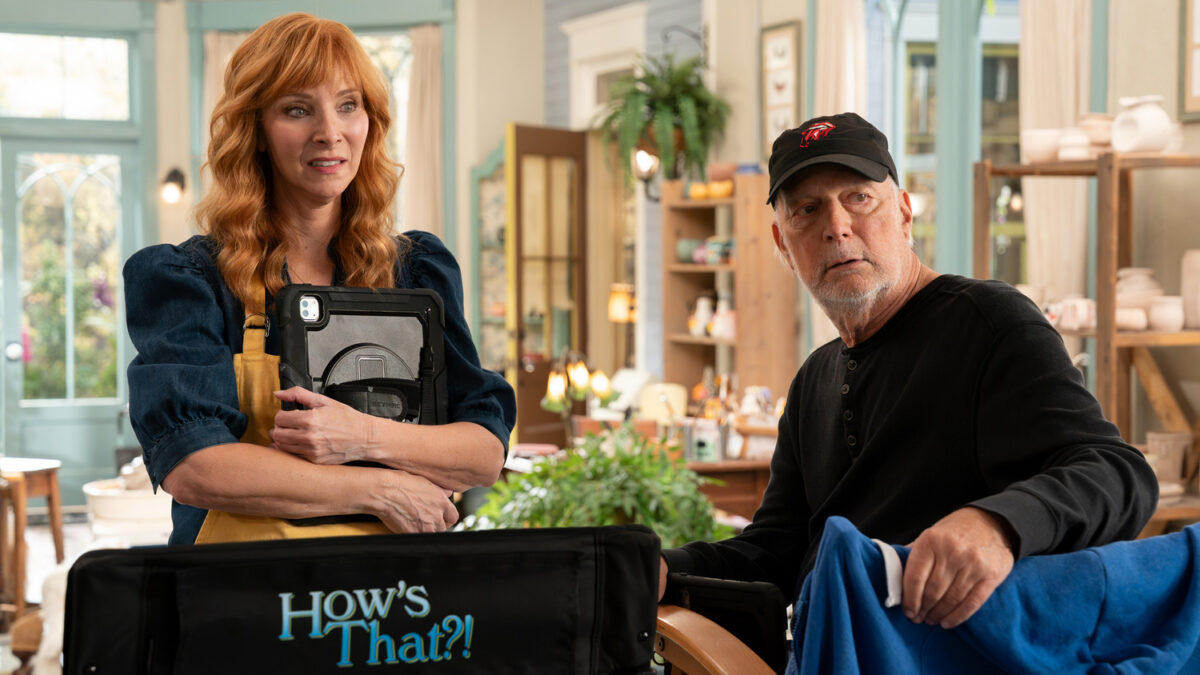
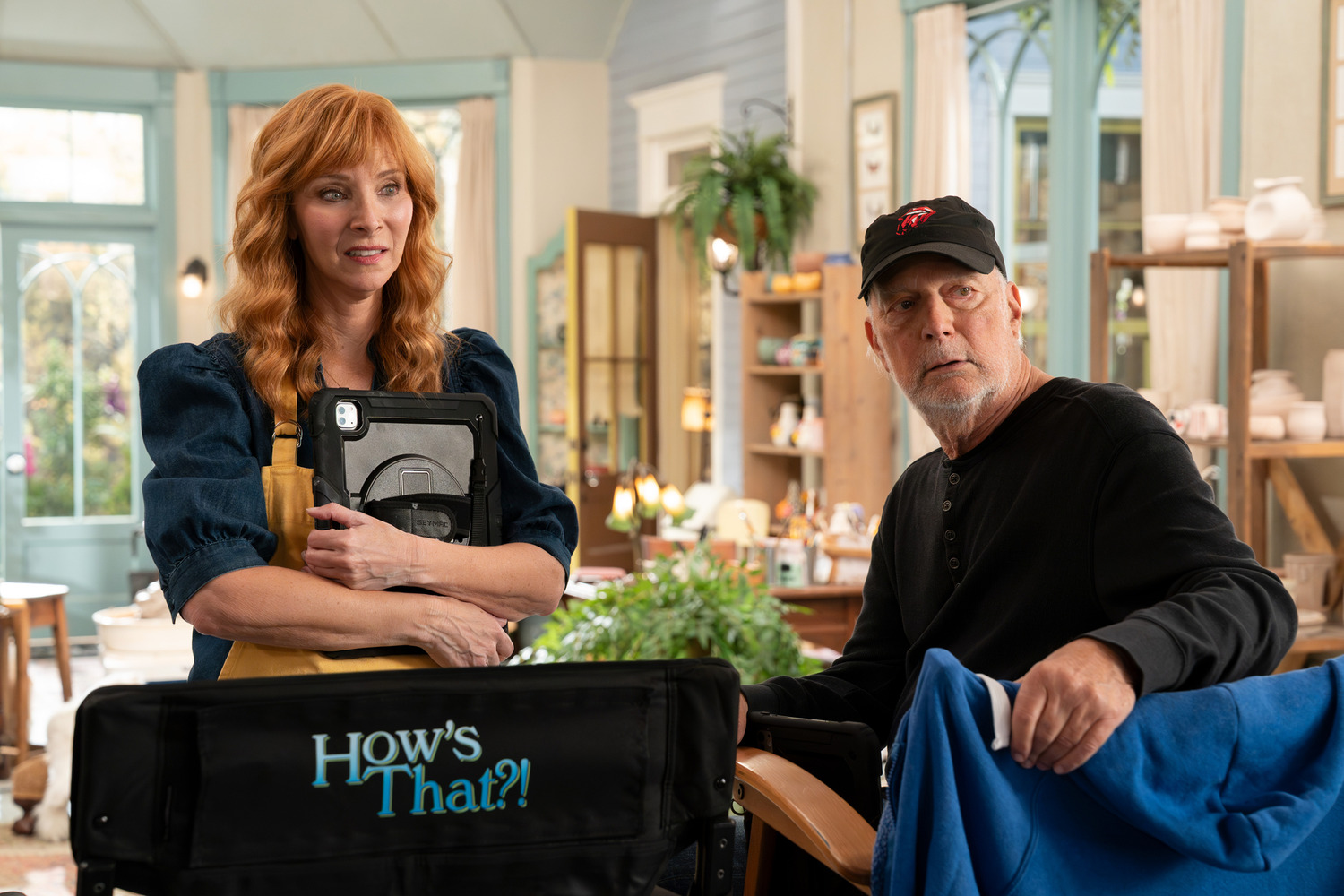
Emmy nominations will be announced in a few weeks and, if there’s any justice, Burrows will receive one, but not for directing. Burrows’ performance as James Burrows, television comedy icon, in HBO’s The Comeback proved a worthy career capper.
As I discussed in my review of the Comeback finale, the series was always about an industry under threat, staring down encroachment by cable, by streaming, by reality programming, by artificial intelligence and saying, “We’re still here and we still matter!”
In casting a figure who could embody an industry, a medium, a bulwark against unworthy encroachers and invaders, Michael Patrick King and Lisa Kudrow brought in Burrows as the most believable person possible. Burrows played himself as smart, empathetic, crotchety and, despite generations of experience under his belt, entirely forward-looking. It was the ultimate compliment to Burrows and Burrows’ performance was the ultimate complement to the ensemble and approach of The Comeback.
There’s a tendency among snobbier viewers to denigrate the multi-cam comedy, to say they’re ugly and old-fashioned and lazy, which some of them are, though nobody would get away with making the same accusation about an episode of Taxi or Cheers, shows that play as well today as when they premiered. Those snobs say the studio audience or, heaven forbid, the laugh track, do all the work.
No, James Burrows and his exceptional collaborators, following in a tradition that goes back to Gertrude Berg and Karl Freund, did the work.
There was nobody like him.