
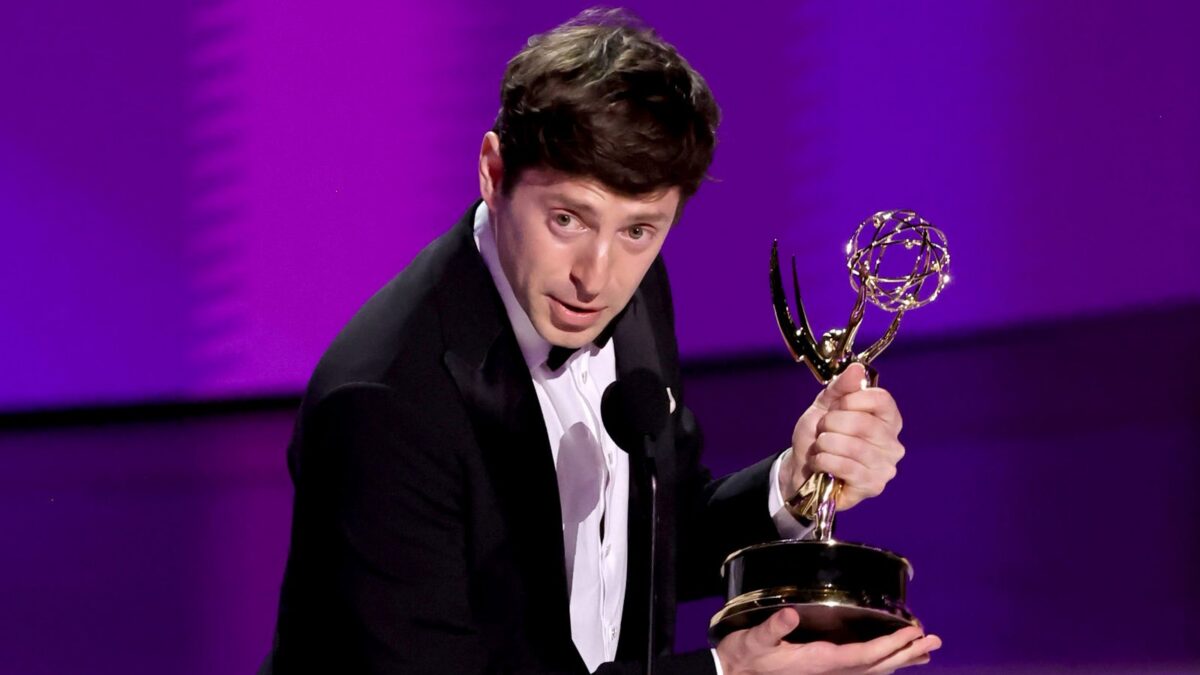
Alex Edelman says the Kennedy Center’s political transformation has made the celebrated Washington, D.C., venue an increasingly untenable destination for comedians who are not aligned with President Donald Trump.
“For me and the performers I know, it doesn’t make sense to play the venue now unless you’re avowedly and solidly Trump-supporting,” Edelman wrote in a guest essay for The New York Times. By his count, only three headlining comedians performed there this year, and all had been vocal Trump supporters at some point.
Edelman currently writes and stars in Peacock’s The Paper. He won an Emmy for his 2024 HBO/Max special Just For Us and received a special Tony for the show’s original Broadway staging.
A Personal Break With the Kennedy Center
The comedian’s assessment is rooted in his own history with the institution. He recalled performing his one-man show at the Eisenhower Theater in 2024, an occasion his parents traveled from Boston to attend.
“That might have been my last time performing there,” he wrote.
Beyond his experience as a performer, Edelman described the Kennedy Center as a place where he once regularly checked the calendar and attended productions. Its programming, he said, crossed ballet, comedy, country, opera, hip-hop and theater, extending from Guys and Dolls to avant-garde work.
Not every production appealed to him, but that was part of the institution’s value in his eyes. The mix included older plays, touring musicals and Thai contemporary dance alongside other offerings. Edelman argued that programming for audiences with different interests helped fulfill a public-service role comparable to that of the Smithsonian.
He also praised the programmers and promoters who brought both established names and less familiar performers into the building. In his description, those staffers cared about securing major headliners while also searching festivals for emerging acts an audience might embrace.
That reputation has now changed among his peers, Edelman said. “The comedians and actors I know no longer talk about it like a venue you want to visit.”
Takeover Continues to Reshape the Institution
The fallout has continued since Trump took over the Kennedy Center in 2025 and removed board members appointed by his predecessors. Deadline has reported that the center experienced falling ticket sales while artists canceled performances. Major shows ended in July, the original period in which Trump and the center had planned to begin a long-term renovation closure. The Washington Post and CNN have also recently examined the center’s troubled finances.
Another major change is coming to the Kennedy Center Honors. For the first time in the event’s history, the ceremony will move to a different venue. It is scheduled for December 7 at Capital One Arena in Washington, D.C.
In his essay, Edelman said a large portion of the Kennedy Center’s main building has been closed for what Trump has described as a costly renovation. Edelman further wrote that Trump would authorize that work only if the building carried his name. Because the Kennedy Center is a national memorial, Edelman suggested that legal challenges surrounding any renaming would not be resolved quickly.
He also criticized the priorities presented to a board that he characterized as newly filled with Trump’s political allies and loyalists. According to Edelman, the stated vision emphasized commercially successful shows rather than thoughtful curation, even though he said the center’s programming finished $40 million in the black during the final year of the Biden administration.
Edelman argued that the institution’s two prominent honors have also suffered. He described the Kennedy Center Honors and the Mark Twain Prize as so politicized that they are now “nearly worthless.” In making that point, he recalled honoree Steve Martin’s joke that the Mark Twain Prize was the only significant American comedy award “apart from money.”
Even amid his criticism, Edelman expressed sympathy for the artists who continue to appear there and for staff members he believes are constrained while trying to keep the institution operating.
ShowBiz Take
Edelman’s essay is about more than whether one comedian will accept another booking. His concern is that a venue he viewed as broadly welcoming—to performers, experimental work, mainstream productions and audiences with sharply different tastes—has acquired a political test that did not previously define its appeal.
His comments also connect the center’s programming dispute to its larger cultural standing. In Edelman’s telling, the cost is measured not only in canceled performances and ticket sales, but in the diminished value performers now place on appearing there and receiving its signature honors.
What Happens Next?
Edelman has not completely ruled out returning. He noted that an election is approaching and that presidential administrations do not last forever.
That leaves open the possibility that he could again perform near the Potomac for an audience that includes fans, skeptics, students, locals and tourists. For now, however, his 2024 appearance may remain his final Kennedy Center performance—and the institution’s political direction remains central to whether he would consider another.