
NBC entered the 1980s trailing CBS and ABC, but five defining comedies helped transform the network into the decade’s ratings force while expanding the possibilities of the television sitcom.
The scale of that turnaround was stark. During the 1980-1981 season, NBC placed only one series among television’s 10 highest-rated shows: “Little House on the Prairie,” at No. 10. CBS held seven of those positions, while ABC claimed two. By the 1985-1986 season, NBC had five shows in the top 10 and continued its ratings dominance through the rest of the decade.
At the center of that rise were “Cheers,” “Family Ties,” “The Cosby Show,” “Night Court” and “The Golden Girls.” Each offered a different model for what a successful comedy could look like, from sophisticated workplace storytelling to unconventional families and balanced ensembles.
“Cheers” (1982-1993)
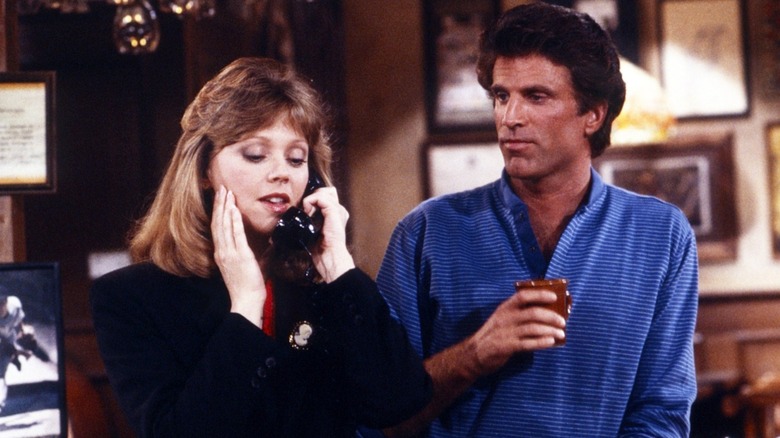
“Cheers” made a Boston bar the setting for a patient, dialogue-driven comedy that could build stories across years rather than resolve everything within a single episode.
Michael Zinberg, then an NBC development executive, explained the network’s ambition in a 2012 GQ retrospective: “We want[ed] to be in the sophisticated-adult-comedy business.” Director Will Burrows recalled the material as a “smart, intellectual story,” adding that he had not previously seen television built around “just guys sitting around, talking.”
The slow-building relationship between Sam, played by Ted Danson, and Diane, played by Shelley Long, unfolded over more than 100 episodes. Writer-producer Sam Simon called it “a sweeping narrative” and credited the show’s long-range approach with encouraging producers and networks to discuss an entire season’s arc in advance.
Although “Cheers” was not television’s first sitcom to place a possible romance between its male and female leads at the center, its handling of that dynamic became an influential template. The show also demonstrated how a comedy confined entirely to one welcoming workplace could avoid feeling limited.
“Family Ties” (1982-1989)
“Family Ties” reversed the generational conflict associated with “All in the Family.” Here, former hippie liberal parents faced off with their conservative, Reaganite son Alex, played by Michael J. Fox.
That setup reflected the decade’s broader shift away from the countercultural tone of many 1970s comedies and toward an emphasis on family values. Alex’s popularity also showed how strongly the character’s materialistic outlook connected with the era.
A 1989 New York Times article naming “Family Ties” among the decade’s most influential programs described Alex as “greed with the face of an angel.” Whatever showrunner Gary David Goldberg’s original intention, the series became part of a television landscape that made materialism appear appealing.
“The Cosby Show” (1984-1992)
Any return to “The Cosby Show” is now made extremely difficult by Bill Cosby’s crimes. Its place in 1980s television history, however, includes its role in proving that stories centered on Black characters could achieve enormous mainstream success.
The series was a hit from its debut. It adapted the comfortable, prosperous family model associated with shows such as “Leave It to Beaver,” but built that structure around a Black family. Its cast portrayed successful, well-adjusted characters while the show embraced comparatively conservative family values.
That portrayal also drew criticism. The Philadelphia Inquirer reported in 1985 that some viewers argued the family was not “black enough.” Yet the criticism underscored the importance of presenting happiness and professional success as fully compatible with Black family life.
“The Golden Girls” (1985-1992)
Set in Miami and led by four women, “The Golden Girls” became an immediate ratings success without relying on a traditional white male protagonist.
Its deeper structural impact came from the way it shared stories among its four central characters. Rather than placing one obvious lead permanently at the center, the series distributed its attention across the ensemble.
Its success preceded “Designing Women,” another socially engaged comedy featuring four female leads, by one year. While “The Golden Girls” did not invent ensemble sitcoms, it helped make that format more prominent. In the following decade, “Seinfeld” divided stories more evenly among its cast, particularly after Jason Alexander objected to being excluded from an episode, while “Friends” balanced screen time among its principal characters.
“Night Court” (1984-1992)
“Night Court” took the workplace-comedy model in a broader and more absurd direction. Set during the night shift in a Manhattan courtroom, it centered on an optimistic judge and an aggressive, disreputable prosecutor.
Where “Cheers” emphasized sharp conversation, “Night Court” leaned into outlandish gags. Its longevity showed that a workplace sitcom could be ridiculous and still attract a substantial audience.
The show’s willingness to play with sitcom conventions could later be seen in the meta-absurdist “It’s Garry Shandling’s Show,” which premiered in 1986. The late-1980s procedural comedy “Sledge Hammer!” also used several similar character types. Although “Night Court” was not as critically celebrated as the other four series, it remained recognizable enough to inspire a revival that lasted three seasons.
ShowBiz Take
These five comedies mattered not because they followed one formula, but because they demonstrated how many formulas could work. NBC found ratings success through an intellectual barroom comedy, a politically charged family clash, a landmark Black family sitcom, a female-led ensemble and an absurd courtroom workplace show.
Together, they help explain NBC’s dramatic climb from one top-10 series in 1980-1981 to five just five seasons later. Their influence also extended beyond the network’s immediate ratings victory: long-form romantic arcs, ensemble storytelling, unconventional leads and contrasting approaches to workplace comedy all became visible parts of television’s evolving sitcom language.