
Netflix’s “Godless” offers Western fans a seven-episode alternative to Taylor Sheridan’s television dramas, trading the modern settings of “Yellowstone” and “Landman” for a story set in late-1880s New Mexico.
Released as a single-season miniseries in 2017, “Godless” combines familiar Western action with a character-driven story built around La Belle, a mining town where women have assumed responsibility after most of its men were killed in an accident. That female-centered premise distinguishes the series from a genre traditionally populated by male cowboys, sheriffs, gunslingers and outlaws.
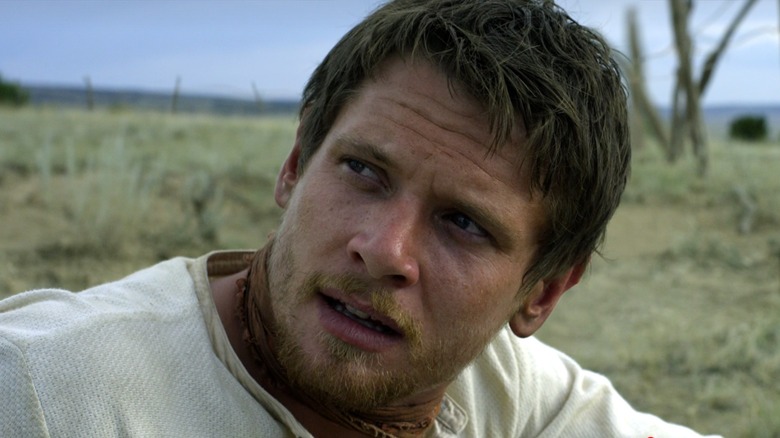
The drama begins to close in on La Belle when fugitive Roy Goode, played by Jack O’Connell, takes shelter nearby. Goode is being pursued by Frank Griffin, his former gang leader, and that manhunt ultimately puts the town’s survival in jeopardy.
Although its period setting makes “Godless” more comparable to Sheridan’s “Yellowstone” prequels “1883” and “1923” than to “Yellowstone” or “Landman,” the Netflix production establishes its own identity through the women running La Belle and the complex family relationships surrounding them.
A different perspective on the classic Western
Scott Frank created and directed “Godless,” which marked the first Western he had written after wanting to work in the genre for years. His approach was not to reject the genre’s most recognizable conventions. Instead, he set out to use them while finding a different way to present the material.
Frank also drew inspiration from real accounts of women who were left to keep mining communities functioning after fatal accidents. That history became central to La Belle, where the women are not supporting figures on the edges of the action but the people responsible for sustaining and defending the town.
In a 2017 interview with NPR’s “Fresh Air,” Frank described his willingness to lean into the familiar ingredients of a Western rather than avoid them.
“I love the Western so much,” he said. “Why not embrace every single cliche I can think of from the breaking of horses, to the train robberies, to the two guys facing each other in the street — all of that stuff? The mysterious loner — why not find a way to put them all in here and see if I can do it in some sort of different way?”
That approach allowed “Godless” to include horse breaking, train robberies, street confrontations and the mysterious-loner archetype while placing those elements inside a story with an unusual center of gravity. The threat posed by Griffin and the arrival of Goode provide the outlaw conflict, but La Belle and its residents give the miniseries its defining point of view.
Critical praise and Emmy recognition
When all seven episodes arrived on Netflix in 2017, “Godless” received favorable responses from critics and viewers. Its cast and its interpretation of traditional Western drama and action were among the elements singled out for praise.
The miniseries went on to win three Emmy Awards. Two of those victories recognized individual performances: Merritt Wever won for playing Mary Agnes McNue, the sheriff’s sister, while Jeff Daniels was honored for his portrayal of Frank Griffin, the story’s villainous outlaw.
With only one season and seven episodes, “Godless” tells its late-19th-century story in a self-contained miniseries format. For viewers interested in the family tensions and high-stakes confrontations found in Sheridan’s Westerns—but ready for another creative voice and a town led by women—the Netflix drama provides a distinct take on familiar frontier territory.