
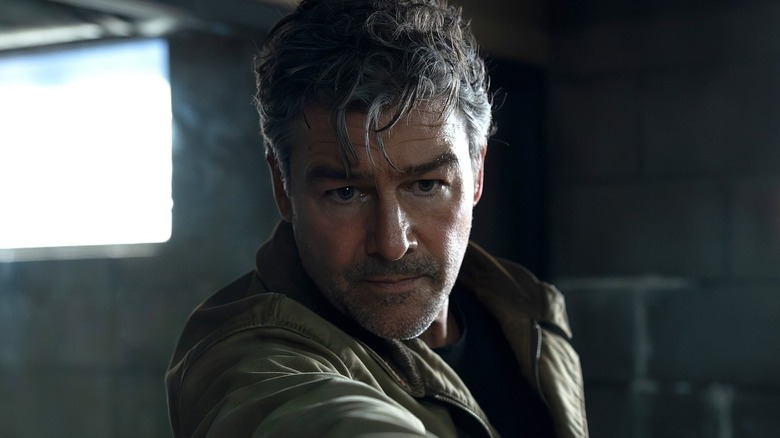
James Gunn is pushing back against criticism of HBO’s “Lanterns” after the drama’s first episode ended with the apparent death of Kyle Chandler’s Hal Jordan.
The twist divided viewers, particularly fans unhappy with the prospect of losing DC’s flagship Green Lantern just as the larger DC Universe franchise is getting underway. While the series has also drawn enthusiastic praise, its treatment of Hal has become a major point of contention.
Gunn, an executive producer on “Lanterns” and co-chairman of DC Studios, addressed that backlash directly on Threads. His central argument: Knowing when a character may die is not the same as immediately removing him from the story.
“Hal’s the star of [a] TV series & he’s in all the episodes so far,” Gunn wrote. “It’s more live action screen time than all the live action screen time he’s had combined throughout history.”
He added, “Us knowing the time of his death, if that’s exactly what that is, is absolutely not the same thing as killing him off right away.”
That qualification — “if that’s exactly what that is” — leaves some uncertainty around what viewers witnessed at the close of Episode 1. Gunn did not provide a definitive explanation of the ending, but his wording suggested the full meaning of Hal’s apparent fate has not yet been revealed.
Gunn credits Chandler’s Hal with the show’s popularity
Gunn also acknowledged the importance of Chandler’s performance to the response surrounding the series. He said the actor’s portrayal of Hal is “a big reason why the show is so popular with fans & non-fans alike.”
Hal Jordan was first introduced as Green Lantern in DC’s “Showcase” #22 in 1959. That history has helped fuel some of the anger over the premiere, with longtime readers objecting to what they see as a dramatic departure for such a prominent character.
Gunn made clear, however, that “Lanterns” is telling its own version of the story. For viewers unwilling to continue through the end and see how the storyline unfolds, he offered a brief response: “Sorry if you don’t like it.”
Why the DCU will not follow one comics continuity
In a separate Threads post, Gunn broadened his defense beyond Hal’s fate, arguing that screen adaptations routinely combine, revise and reinterpret material from different comic-book continuities.
“Whether it’s the DCU or Earth 0 or the Absolute Universe, they all pay homage to these iconic characters, retelling their stories in different ways,” he wrote. “Heck, even the MCU combined elements of the Ultimate universe, the 616, and original ideas.”
Gunn, who has made films for both DC and Marvel, said comic-book fans are generally “well aware” of the way adaptations reshape their source material. His comments place “Lanterns” within a tradition of superhero projects drawing from multiple eras rather than recreating a single established storyline exactly.
He pointed to that approach as a reality audiences should expect from the developing DCU, rather than anticipating a direct translation of any one preferred run or continuity.
“If you want the DCU to take the exact trajectory of whatever your favorite comics continuity is, that’s probably not going to happen,” Gunn wrote.
That position may not satisfy every viewer, especially those who have also found “Lanterns” too grounded. For audiences seeking a more space-focused version of the character, “Green Lantern: The Animated Series” offers Hal traveling to alien worlds with his power ring.
What Happens Next?
The central question remains whether the premiere showed Hal Jordan’s actual death or only part of a larger narrative reveal. Gunn has confirmed that Chandler’s Hal appears in every episode released so far, while carefully avoiding a definitive explanation of the first episode’s ending.
For now, his message is that viewers have not yet seen the complete story. Whether that reassurance changes the minds of frustrated fans will depend on what “Lanterns” reveals over the remainder of its HBO run.