
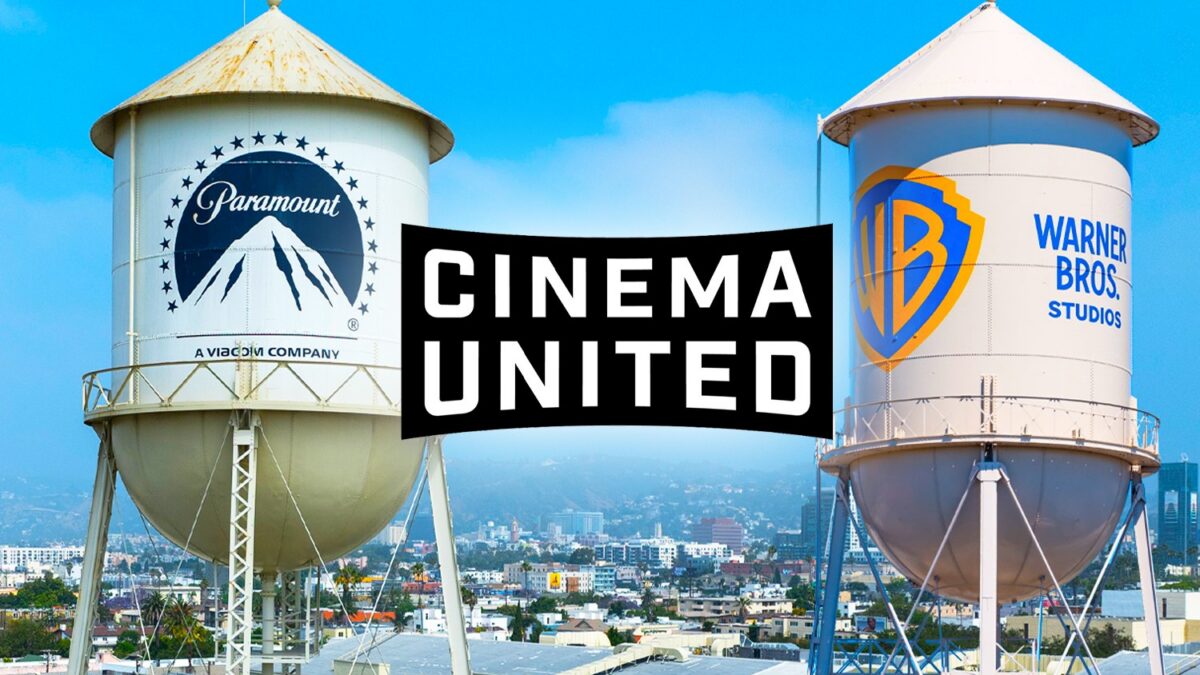
Cinema United is giving qualified support to the consent decree settling the merger lawsuit involving Paramount and Warner Bros. Discovery, saying the agreement delivers “many” of the protections sought by movie theater operators.
The trade association, which opposed a Warner Bros. Discovery acquisition from the outset, commended the four state attorneys general involved in reaching the settlement with Paramount. Cinema United President and CEO Michael O’Leary also credited Paramount for helping resolve the case.
“The agreement announced yesterday accomplishes many of exhibition’s objectives,” O’Leary said. “The consent decree includes language on increased film production for five years, meaningful theatrical exclusivity and wide distribution, prohibitions on cost increases, and continued access to the catalogs of Paramount and Warner Bros.”
Those conditions address several of Cinema United’s most persistent concerns about major-studio consolidation, including the possibility of tougher film-rental terms and reduced access to studio libraries. The organization had advocated for continued catalog access at reasonable rates, as well as production requirements lasting longer than three years.
The resulting decree includes a five-year production commitment. Under its distribution schedule, 20 of 30 films in the first two years must receive wide releases. During years three through five, 21 of 32 films must go wide.
Cinema United also secured the definition it had sought for a wide release: 2,000 screens.
Theatrical windows receive added protection
Release windows were another key issue for exhibitors. Cinema United had pushed for language preventing premium video-on-demand marketing before Day 30 of an exclusive theatrical run. Under the agreement, Paramount has committed to a 45-day period of theatrical exclusivity and a 90-day subscription video-on-demand window.
The provisions arrive after theaters endured COVID closures and the box-office effects of Hollywood’s union strikes. The domestic theatrical market is now in its strongest position since 2019 and is tracking toward $10 billion.
O’Leary acknowledged that the decree does not remove every concern surrounding a transaction of this scale.
“While no settlement can eliminate all risk from a merger of this size, these conditions will enable our industry to adapt and succeed in a rapidly changing media environment,” he said.
Cinema United’s opposition has extended across multiple attempts to acquire Warner Bros. During Netflix’s pursuit of the company, the association warned a U.S. House committee in January that such a transaction would place greater control of film production and distribution with “a single, dominant, global streaming platform” in an already concentrated market.
The group said the consequences would extend beyond theater owners to moviegoers and neighboring businesses in communities of all sizes. It also warned that a Paramount-Warner Bros. combination could put as much as 40% of the box office under one studio’s control.
Cinema United has further argued that consolidation could narrow the range of movies available and result in job losses. Its concerns also encompass commercial districts where theaters serve as anchors for surrounding businesses.
As part of its broader case against consolidation, the organization cited the aftermath of the Disney-Fox merger, pointing to $1 billion less in box office between 2016 and 2025, described as a 70% decline.
Despite those longstanding objections, O’Leary said the lawsuit and consent decree recognize the central place theaters hold within the domestic film business and local commercial communities.
“The State Attorneys General’s lawsuit and, now the consent decree, strongly validates that movie theatres are the beating heart of Main Street America and the entire U.S. film industry,” he said.
What Happens Next?
The agreement’s production and distribution requirements will extend across five years, while its theatrical-window and catalog-access provisions give exhibitors safeguards they had sought during the legal process.
Cinema United is now turning its attention back to its relationships with both studios. O’Leary noted that global exhibitors have worked with Paramount and Warner Bros. for more than a century and said the association wants to strengthen those partnerships.
“Our focus now shifts back to our bright future,” he said, adding that Cinema United wants to ensure moviegoing remains “the premier entertainment option for generations to come.”