
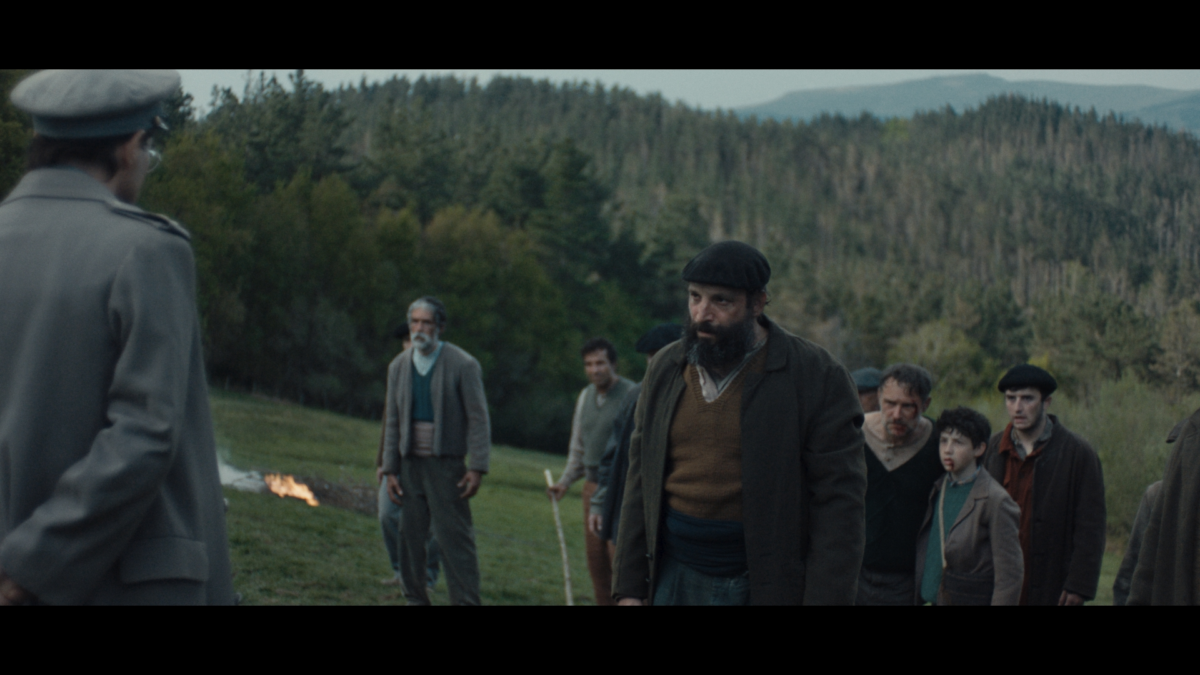
Igor Legarreta’s “The Blind Ants” (“Inurri Itsuak”) has made its world premiere at the 74th San Sebastián International Film Festival, bowing Sept. 18 in Zinemira, the festival section devoted to Basque productions.
The film, Legarreta’s third feature after “All the Moons” and “When You Stop Loving Me,” is also in competition for the Irizar Award for Basque Cinema. Its Spanish theatrical release is set for Oct. 9, with Buena Vista International Spain distributing.
Set in the Basque Country in 1930, “The Blind Ants” centers on a violent storm, an English ship stranded off the shores of Biscay and a desperate coastal community facing winter. With the vessel carrying tons of valuable coal, residents of Algorta rush to recover what they can. At the heart of the story is the Jauregui family, whose decision to brave the storm for the coal brings tragic consequences that permanently alter their lives.
The film is based on a novel by Ramiro Pinilla, a source Legarreta described as both rich and demanding to bring to the screen. Speaking ahead of the premiere, the director said adapting a novel offers a filmmaker the building blocks of plot, character and theme, while also requiring a transformation from one medium into another.
“It is a long and complex process where you must try to separate yourself from the initial material, but without ever betraying it,” Legarreta said.
He also pointed to Pinilla’s affection for literary and cinematic storytelling, particularly American fiction from the first half of the twentieth century. Legarreta said the film aims to honor that spirit, adding that he believes “there are not many films with the character and visual strength of ‘Blind Ants.’”
A Basque story with international reach
Lazona Zinema producer Luis Ferrón described the project as part of a larger production ambition in the Basque Country: pairing local talent with films designed to be artistically ambitious and made with strong production values.
“We achieved this with ‘Inurri Itsuak’: a Basque-language film with international appeal and high production value that tells a story as deeply rooted in the local context as that of Ramiro Pinilla,” Ferrón told Variety. He added that working with Playtime on international sales and Buena Vista on distribution in Spain would help the film reach the widest possible audience.
The production brings together Lamia Producciones, Lamia Films, Lazona Zinema, Lazona Producciones, Buendía Estudios Bizkaia, Bruja del Norte AIE and Sideral Cinema. Caviar Antwerp is a co-producer.
Legarreta said the project expanded as collaborators joined over time, pointing specifically to Robin from Caviar and the later involvement of Kris and his team at Loom as helping the film grow “in size and ambition.”
The cast and the coast
“The Blind Ants” stars Urko Olazábal, who won the Goya Award for best supporting actor for “Maixabel” and was nominated for best lead actor for “Soy Nevenka”; Itziar Ituño, whose credits include “Money Heist,” “Intimacy” and “Irati”; Josean Bengoetxea of “Balenciaga,” “Errementari” and “Loreak”; Miren Gaztañaga, whose credits include “The Last Romantics,” “Ane” and “The Platform”; and Carlos Santos, seen in “The Nuclear Bunker,” “Invisible” and “1992.”
For Legarreta, the Jaureguis required more than assembling individual performers. He said the challenge was finding actors who could convincingly create “a real sense of family,” noting that he had not previously worked with most of them.
His connection with Ituño, however, stretches back to their university short-film days, when she was beginning as an actress and he was beginning as a director. Their paths later crossed again on “All the Moons” in 2021. Legarreta described Ituño as generous, close to the crew and able to connect with real emotions and real life.
The director also emphasized the film’s geographic specificity. “The Blind Ants” was shot entirely in Bizkaia, in the Basque Country, with Legarreta saying the team worked to preserve the coastal atmosphere. That setting led him to a compact description of the film’s tone: he has sometimes called it “a coastal Western.”
A storm built for the screen
One of the production’s central hurdles came from the source material itself. Legarreta said half of the novel takes place during a stormy night on a cliff. To film those sequences, the production built a large set that allowed the team to work under safer and more controlled conditions.
The director described the sequence as both a technical and creative challenge, requiring full safety while allowing control over the elements. He credited the production design led by Mikel Serrano as a key part of how that work appears onscreen.
Following its San Sebastián world premiere, “The Blind Ants” continues its festival run in Zinemira while competing for the Irizar Award for Basque Cinema. Spanish audiences will get their first theatrical look when Buena Vista International Spain releases the film on Oct. 9.