
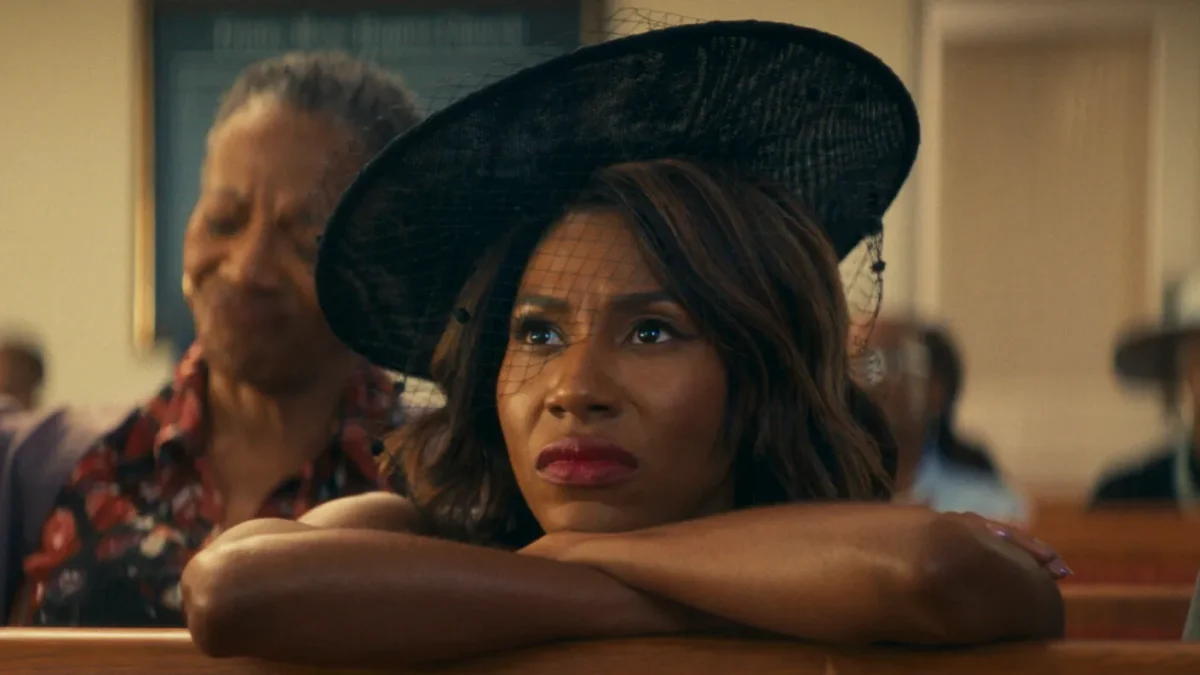
Spoiler alert: This story discusses plot details from the Season 2 finale of “Diarra From Detroit,” now streaming on Paramount+.
“Diarra From Detroit” has wrapped its second season on Paramount+, closing out a run that creator, star and executive producer Diarra Kilpatrick says arrived after a long wait, a reduced budget and a platform shift that changed the show’s reach.
The mystery-drama-romance series, which debuted in 2024 on BET+ to strong reviews, returned for Season 2 this past July on Paramount+ after a two-year hiatus. BET+ was shuttered last spring, with its programming folded into Paramount+, putting “Diarra From Detroit” in front of a potentially broader streaming audience just as Black-led series have faced a difficult landscape across TV.
In a new interview tied to the finale, Kilpatrick described the second season’s path to air as both creatively energizing and logistically challenging. She said the decision to bring the show back took “a very long time,” and that the series ultimately returned with less money than it had in Season 1.
“They decided that it would come back, but on a lower budget than Season 1,” Kilpatrick said. “That impacted where we shot; we moved to Atlanta. It impacted a lot of things, cutting down some regular cast, that kind of thing.”
She also said the writers’ room was picked up before the show itself had been fully greenlit, leaving the production in limbo after the room ended.
A Hotter Season, Onscreen and Off
Season 2 shifts from the winter atmosphere of the first season into what Kilpatrick called a “classic boiling-hot Detroit summer.” The new episodes find Diarra navigating her relationship with Chris, played by Shannon Wallace, while he continues dealing with trauma from his past. With no summer school assignment, Diarra uses the downtime to formally launch her private investigation business.
That business quickly pulls her into another sprawling case. A request to locate Chris’ uncle’s armoire — which turns out to be a desk — sends Diarra, Chris and her best friends Tea and Aja, played by Bryan Terell Clark and Dominique Perry, into a dangerous Detroit mystery involving a treasure trove and gangsters, all while the group’s personal conflicts keep boiling over.
Kilpatrick said the move from winter to summer had been part of the larger creative idea, but it also made sense under the show’s financial realities. While Season 1’s snow helped express Diarra’s emotional state after her divorce from Swa, played by Morris Chestnut, Season 2’s warmer setting also meant fewer production expenses tied to coats and visual effects snow.
“I didn’t really know exactly where we would end up, but I knew we were going to come out of that season for her, and it felt fitting to do it in a literal sense as well,” she said.
Romance, Mystery and Black Womanhood
Season 2 deepens the romantic complications around Diarra, who is pulled between Chris, Royce, played by Clifford “Method Man” Smith, and Danger, played by John Chafin. Kilpatrick said the show is built around two impulses she loves: “the emotional truths of Black womanhood and the fantasy.”
For Kilpatrick, centering Diarra as a woman desired by multiple men is part of the point. She said she loves seeing a Black woman at the center of a story, particularly as “the object of desire,” and described that image as both “healing” and “expansive.”
The season also threads in Diarra’s questions around motherhood, a subject Kilpatrick said reflects conversations she and friends have had while “struggling with that, talking about it or figuring it out.” Those grounded emotional questions, she said, give the show room to push into larger set pieces, bigger laughs and heightened fantasy.
That tonal mix is central to how Kilpatrick thinks about the series. “We love a gumbo; I love complexity,” she said, adding that she wants work centered on Black women to be treated with craft and care. “I don’t want Black female work to be synonymous with low craftsmanship or low budgets or bad lighting. I want us to be honored.”
Why the Show’s History Is Part of the Mission
“Diarra From Detroit” also uses Season 2 to weave historical material into its mystery, including references to bootlegging during Prohibition, the Underground Railroad, quilting, the Black community and the Black church.
Asked whether the series is political, Kilpatrick said, “Anytime you put a Black woman in the center of something, it is inherently political in a lot of ways, simply because we just haven’t seen it enough for it to be old hat.”
She pointed to adventure and conspiracy-driven films such as “National Treasure,” “The Da Vinci Code” and “Indiana Jones” as genre touchstones, while noting that Black women are rarely centered in those kinds of stories. Kilpatrick said she wanted to place a Black woman “in the very center of that genre” and use researched facts to bring legitimacy and truths about Detroit into the fiction.
Guest Stars and a Finale Fracture
Despite the budget pressure, Season 2 features a long list of guest stars, including Nicco Annan, Lovie Simone, Bokeem Woodbine, Lil Rel Howery, Amber Riley, Phylicia Rashad and Morris Chestnut. Kilpatrick said the support from Black Hollywood moved her, noting that Lil Rel Howery reached out to say he loved the show and was ready to join when an offer came.
The finale, titled “A Cold Ass Wedding,” also brings a major emotional break between Diarra and Aja. Kilpatrick said Tea and Aja have functioned as Diarra’s chosen family, but Diarra and Aja’s opposing instincts — Aja as the voice of reason, Diarra pushing ahead — made a rupture feel inevitable.
She added that the storyline gave Dominique Perry room to show more dramatic range, and that the show wanted to explore how friendship conflict can be harder to navigate than romantic conflict.
What Happens Next?
A third season has not been confirmed in the supplied material, but Kilpatrick has ideas if “Diarra From Detroit” continues. She said every season is designed around a different mystery, while Diarra must still face consequences from the chaos she creates.
Kilpatrick said the “biggest mystery” remains Diarra herself, particularly because the character struggles to investigate her own feelings. She also indicated that Diarra would answer the question Chris asks at the very end of Season 2 if the show gets to move forward.
As for the move to Paramount+, Kilpatrick called it “exciting” and “complicated,” noting that BET+ going away meant job losses while also giving the series the chance to reach more viewers. Whether that wider audience finds the show, she said, is now part of the challenge.