
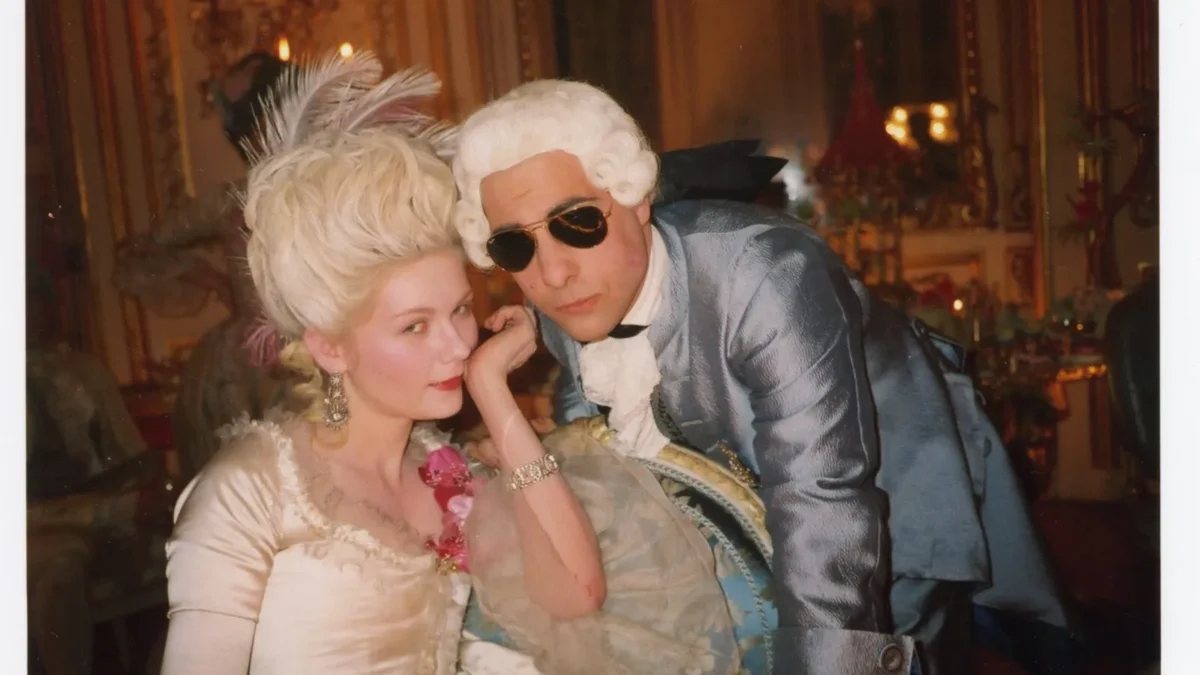
The late Eleanor Coppola’s documentary Making Marie Antoinette offers a maternal look at Sofia Coppola’s 2006 film Marie Antoinette, revisiting the making of the director’s third feature through a lens defined, according to the review, by visual richness and affection.
The documentary is centered on Sofia Coppola’s film, a work described in the source material as a major aughts phenomenon, known for its lush costumes, elaborate food displays and playfully anachronistic soundtrack. The 2006 movie is also framed as more than a feast of surfaces: it is characterized as a kaleidoscopic but emotionally dark exploration of youthful isolation.
That tension — between beauty and melancholy — is central to how Marie Antoinette is presented here. The film is described as part of Sofia Coppola’s broader interest in privilege, celebrity and enclosed worlds, with the story unfolding inside the kind of bubble that has marked much of the filmmaker’s work.
Making Marie Antoinette, as identified in the review headline, turns that production into the subject of its own documentary. Its significance comes partly from the personal relationship at its center: Eleanor Coppola is not only documenting a film, but a film made by her daughter. The review’s emphasis on “maternal affection” suggests that the documentary’s perspective is shaped by that intimate proximity.
The source material also highlights the documentary’s attention to “gorgeous details,” a quality that naturally connects it to the film it examines. Sofia Coppola’s Marie Antoinette is described through its textures — costume, food, music and style — while the documentary is positioned as a companion piece attentive to the craft and atmosphere surrounding that 2006 production.
For viewers interested in Sofia Coppola’s work, Making Marie Antoinette appears to offer a focused look at a key moment in her filmmaking: the creation of her third feature, one that balanced opulent design with darker emotional undercurrents. For those interested in Eleanor Coppola, the documentary also carries added poignancy, arriving in the context of her being described as late and foregrounding her relationship to her daughter’s art.
The result, based on the supplied review material, is a film about a film — but also about perspective: a mother observing a daughter’s creative process, and a documentary attentive to the striking surfaces and emotional atmosphere that helped define Marie Antoinette.