
CBS
These days, film and television share a unique (if not symbiotic) relationship. In our streaming era, television has become the new gold standard that Hollywood’s biggest performers seem to flock to. Of course, television has always been influenced by the big screen. Plenty of sitcoms have been adapted from hit movies, and there are some notable sci-fi shows that were directly inspired by classic movies too. The question is, how often is the TV remake or reboot better than the original film?
We’ve rounded up five solid examples of television shows that proved better than the films that inspired them. Some are complete re-imaginings, while others are direct sequels, but the common thread here is that they’ve surpassed the original work. Even if the movie itself was good, sometimes TV is just better.
From sports dramas, action comedies, and war programs to the best that ’90s sci-fi and fantasy had to offer, these are some of the most notable television shows that run circles around their big-screen counterparts. Each program was quite prominent when it aired and maintains some sort of fanbase or cult following all these years later.
Buffy the Vampire Slayer
Getty Images/Getty Images
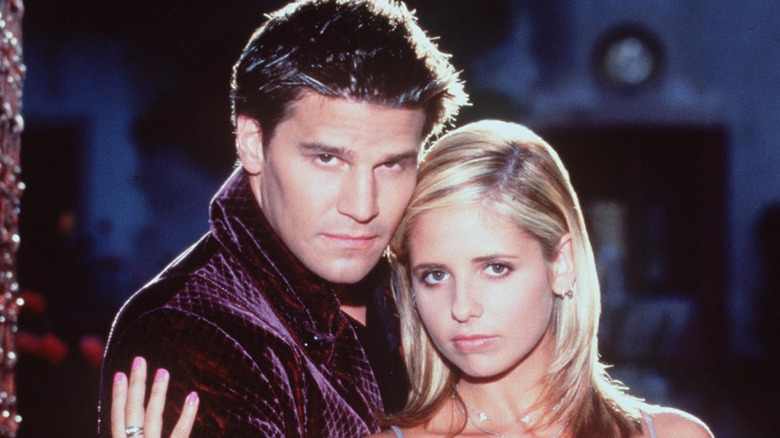
When Joss Whedon originally came up with “Buffy the Vampire Slayer,” it was as a movie rather than a television show. Yet, when the Kristy Swanson-led film hit theaters in 1992, Whedon was famously disappointed by the results. Instead, he reworked the idea into a successful television series of the same name, which hit The WB only five years later. “Buffy” ended up running for seven seasons total (the last two airing on UPN) and spawning a five-season spin-off: “Angel.”
As Buffy Summers, Sarah Michelle Gellar defined the role as initially intended, and she made the character a fantasy-horror icon that paved the way for some of television’s strongest female leads going forward. “Buffy the Vampire Slayer” separated itself from the shackles of the original feature by relocating Buffy to Sunnydale, introducing a new supporting cast, and being unashamed of its status as a “high school as a horror movie” teen drama.
All you have to do is revisit the best “Buffy” episodes to see just how much of an improvement the series was over the film. The movie leaned a bit too heavily into its poor attempts at comedy, while the series knew how to expertly balance humor and drama — often in the same breath. While a “Buffy” reboot was canceled over at Hulu, we’ll always have the original to keep us company when things go bump in the night.
Stargate SG-1
Showcase
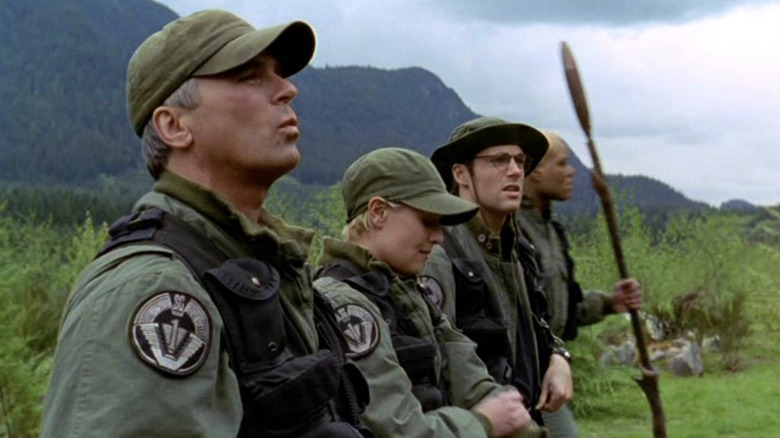
Stargate technically began as a feature film starring Kurt Russell and James Spader, but it was the television series, “Stargate SG-1,” that effectively launched the franchise. Despite plans for a trilogy of theatrical films, MGM pivoted the concept to the small screen under the direction of creators Brad Wright and Jonathan Glassner, who used the film as a jumping point for a wider universe. It wasn’t long before “SG-1” became one of the best TV shows set in space.
Characters from the films were reinvented — with Russell and Spader’s protagonists now played by Richard Dean Anderson and Michael Shanks, respectively — and newcomers were introduced. “SG-1” further expanded on the ancient astronaut mythology by exploring a pantheon of alien “gods” (embodied by the Goa’uld and the Asgard) rather than a single Egyptian-inspired antagonist. In short, the series offered way more than the film ever could.
Across ten seasons and several spin-offs (“Stargate Atlantis,” “Stargate Universe,” and the prequel web-series “Stargate Origins”), “Stargate SG-1” reworked the look and tone of “Stargate” and infused this world with more depth than anyone imagined back in 1994. While the series shares a common history with the film prior to the events of “SG-1,” there are several continuity changes that make it clear that the television franchise is essentially a soft reboot.
M*A*S*H
Archive Photos/Getty Images
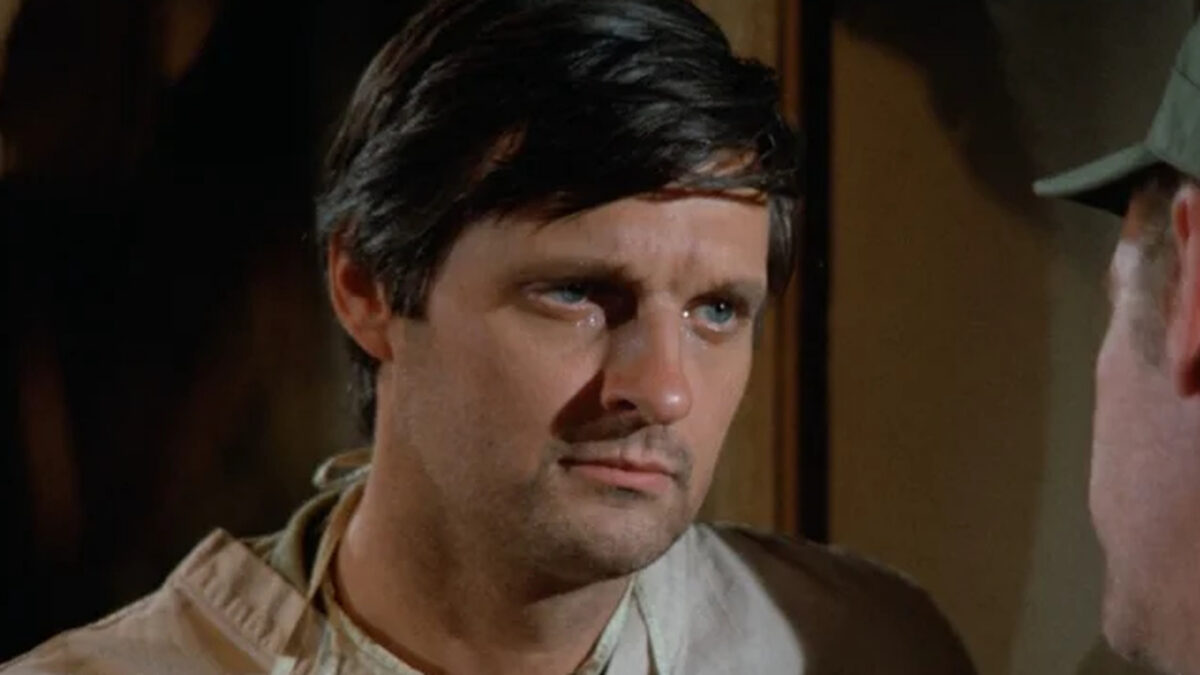
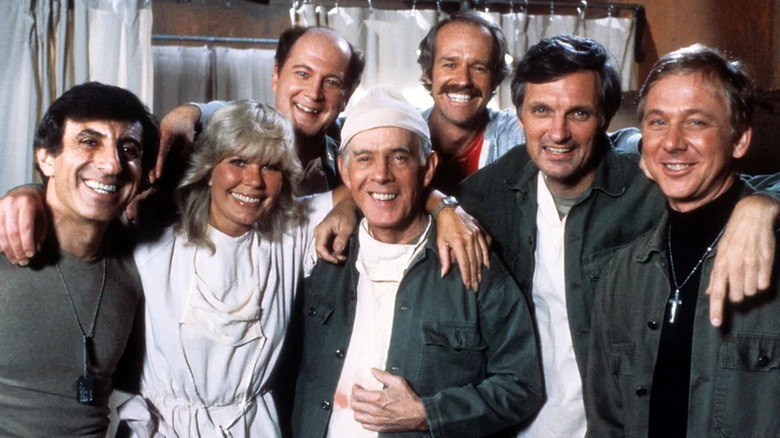
Few movie-to-television adaptations go through such a distinct tonal shift as “M*A*S*H.” Robert Altman’s 1970 black comedy was a dark, cynical, and unashamedly R-rated take on the Korean War that was clearly a parallel to the Vietnam War. On the other hand, the 1972 television series developed in part by Larry Gelbart — who quit “M*A*S*H” after just four seasons — was meant to appeal to broader audiences, comedically dealing with deeply human issues surrounding the war.
“M*A*S*H,” the series, was widely popular, even by the end of its impressive 11-season run. The dramedy allowed for character growth and development that simply wasn’t possible in a two-hour feature and tackled intimate character dramas and complex moral dilemmas that could not have fit with the film’s irreverent nature. Gary Burghoff was the only actor to reprise his role (Walter “Radar” O’Reilly) in both adaptations of the Richard Hooker novel on which the concept is based.
Altman famously hated the CBS drama, which he considered the very opposite of his creative intent with the film. Nevertheless, “M*A*S*H” not only soared in the ratings, but to this day “Goodbye, Farewell and Amen” remains the most-watch series finale ever broadcast on American television. Folks just couldn’t get enough of these more likable interpretations of the characters. “M*A*S*H” may have lasted significantly longer than the Korean War itself, but nobody complained.
The Dukes of Hazzard
CBS
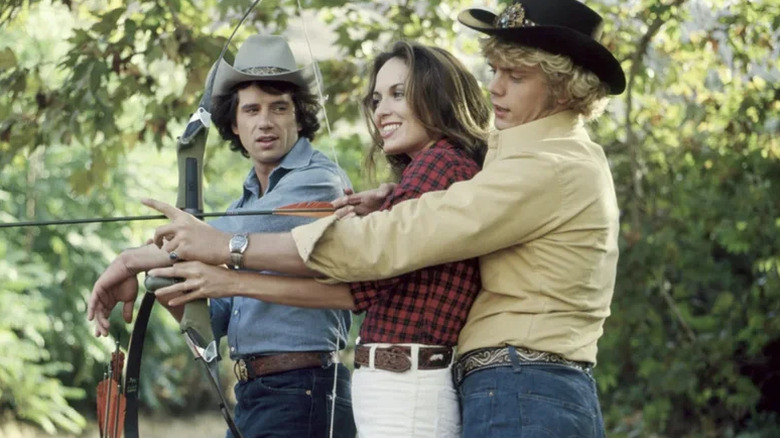
If you had no idea that “The Dukes of Hazzard” was based on a movie, then you’ve probably never seen “Moonrunners.” The Gy Waldron-directed feature was to “Dukes” what the original “Buffy” film was to the television show. Waldron believed in the idea so much that he reworked it again for television, transforming bootlegging cousins Grady (James Mitchum) and Bobby Lee Hagg (Kiel Martin) into “good ol’ boys” Bo (John Schneider) and Luke Duke (Tom Wopat).
There were several similarities between “Moonrunners” and its television re-imagining, including that the boys had an “Uncle Jesse” (played by Denver Pyle on TV) and had to deal with a “Sheriff Rosco P. Coltrane” (James Best on “Dukes”). But where Waldron got it right the second time around was in switching gears from the B-movie grit and grim of “Moonrunners” to the primetime appeal that made “Dukes of Hazzard” a pop culture phenomenon. Plus, Schneider and Wopat had a bit more charisma.
“The Dukes of Hazzard” ran for seven seasons on CBS, with the Dukes riding about in The General Lee — one of the best ’80s TV cars — causing a ruckus wherever they went. The stakes may not be as high as anything we saw in “Moonrunners,” but the concept (and the characters) were far more polished, defined, and interesting. There’s a reason folks followed the derelict Dukes for all those years.
Friday Night Lights
NBC
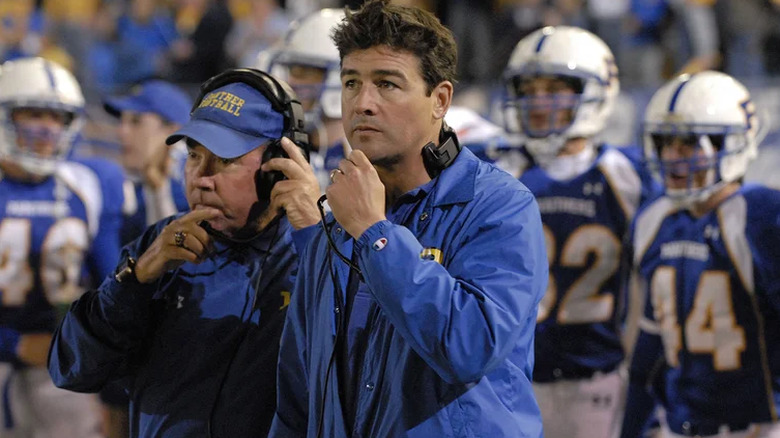
Based on the nonfiction book of the same name by H. G. Bissinger, both versions of “Friday Night Lights” have their merits. The Peter Berg-directed film adapts the actual events surrounding the 1988 football season in Odessa, Texas. The 2006 series, on the other hand, is a fictional drama concerning diverse family dynamics, class issues, and the overall communal obsession with football in West Texas. In short, the movie is more focused on the game, while the series zeroes in on the people.
When Berg translated the idea to TV, it had the chance to explore all the socio-economic facets of Bissinger’s book that the filmmaker had been unable to on the big screen. From Matt Saracen’s (Zach Gilford) complicated home life to Lyla Garrity’s (Minka Kelly) journey of self-discovery to the way that football comes between coach Eric Taylor (Kyle Chandler) and his wife Tami (Connie Britton), “Friday Night Lights” never missed a dramatic beat. No wonder it’s one of the best football shows of all time.
The series was an elaborate picture of rural America that spoke to the trials, challenges, and successes of those in the nation’s heartland. With Berg reworking “Friday Night Lights” yet again for Peacock, it’s clear that there are still more stories to be told in West Texas — and that would have been impossible without the jump from the big screen to the small.