
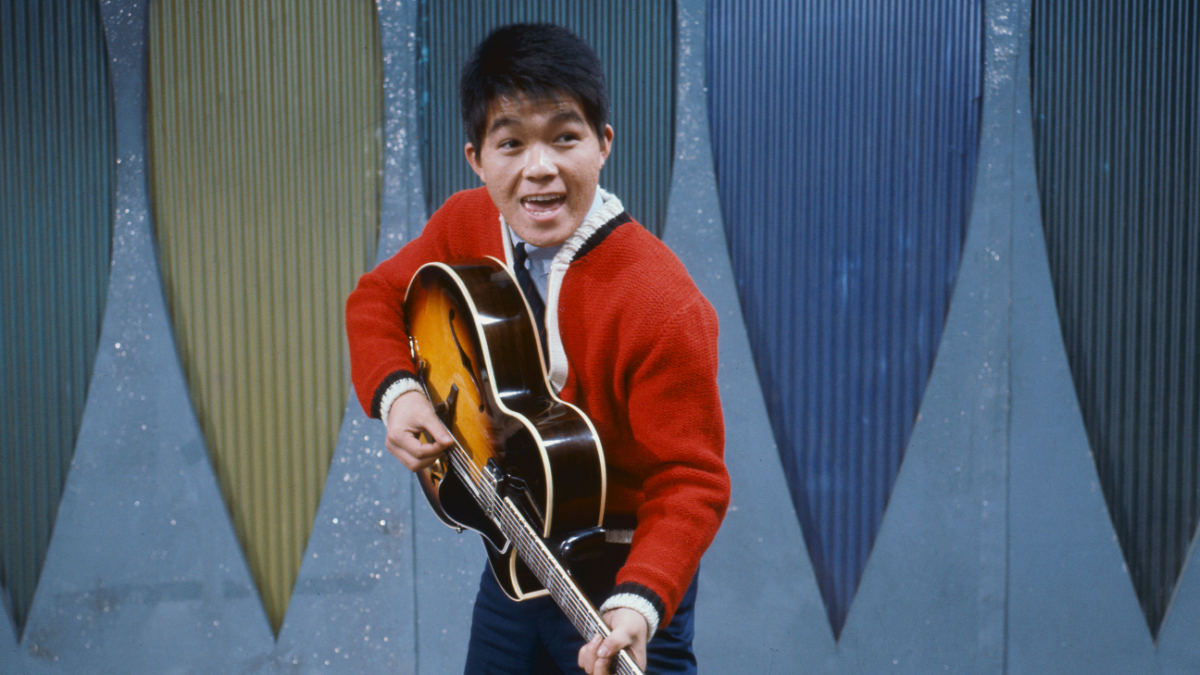
Sukiyaki, director Takahisa Zeze’s drama about the creation and extraordinary international journey of one of Japan’s defining pop songs, is opening the 2026 Tokyo International Film Festival.
Junichi Okada stars as composer and jazz pianist Hachidai Nakamura, with Tori Matsuzaka portraying lyricist Rokusuke Ei and Taiga Nakano playing singer Kyu Sakamoto. The film follows the partnership that transformed a bright melody and deeply sorrowful words into a worldwide phenomenon associated with Japan’s emergence from the devastation and humiliation of the postwar period.
Zeze and stars Okada, Matsuzaka and Nana Seino attended the film’s world premiere at the festival. Toho, which figures in the history dramatized on screen, is also distributing the 2026 release.
The story behind the song
Nakamura’s path to the hit began during a difficult period in which an unsuccessful recital left him contending with debt and addiction while rockabilly displaced jazz in popularity. His fortunes changed through an unexpected collaboration with Ei, then a radio writer who had not previously written song lyrics. The pair worked on a rockabilly score for a 1959 Toho movie.
In 1961, they created “Ue o Muite Aruko,” a title translated as “I look upwards as I walk.” Nakamura blended traditional Japanese scales with jazz chords and American pop influences. Ei’s melancholy words drew inspiration from the failure of the mass Anpo protests to prevent a Tokyo-Washington security treaty that maintained a large American military presence in Japan. The act of looking upward referred to holding back tears.
Sakamoto entered the story at short notice. He received the sheet music only two hours before the song’s July 21, 1961 premiere at Tokyo’s Sankei Hall. Without rehearsal, he shifted into a minor key during an ad lib, approached the four-beat composition as an eight-beat song and entered a beat late, echoing Japanese balladeers he had heard while growing up. Those unplanned choices became part of the recording’s distinctive character.
The single sold 300,000 copies and was named Music Life’s best domestic song from November 1961 through January 1962. Its international breakthrough began after Louis Benjamin of British label Pye Records heard it during a 1962 visit to Japan. Kenny Ball and his Jazzmen recorded an instrumental adaptation called “Sukiyaki,” which reached the British top 10 in February 1963.
The precise origin of that new title has competing accounts. One says Benjamin chose it after eating the hotpot dish in Tokyo. Another credits Ball with selecting one of the few Japanese words he knew because he believed the original title would be too difficult for listeners.
From Japan to the top of the U.S. charts
After Ball’s version and a separate Billy Vaughn instrumental failed to attract attention in the United States, Capitol US released Sakamoto’s original Japanese recording under the “Sukiyaki” name. It arrived in record stores on May 3, 1963, then spent three weeks at No. 1 on the Billboard Hot 100 that June.
The achievement made Sakamoto the only Japanese artist to have a U.S. No. 1 and made the recording the first song from Asia to reach that position. Another Asian artist did not repeat the feat until BTS topped the chart with “Dynamite” in 2020.
“Sukiyaki” also led rankings in countries including Australia and Norway, eventually selling more than 13 million copies worldwide. Toshiba reissued the single as Japanese listeners recognized the scale of its international success, adding “Sukiyaki” in katakana to the 1963 cover alongside the words “global hit!”
The song arrived as Japan’s economy was recording double-digit growth and companies including Sony and Toyota were becoming global brands. Its success offered another point of national pride as the country continued to reckon with wartime defeat and occupation.
Versions followed in Spanish, German, French and numerous Chinese languages, while scores of Japanese performers also recorded the song. A Taste of Honey co-founder Janice-Marie Johnson, who first heard Sakamoto’s release at age nine, later developed her own interpretation using a rough English translation supplied by Ei. Despite opposition from her label and producer, the group’s 1981 recording topped Billboard’s R&B chart and reached No. 3 on the Hot 100. The band subsequently appeared with Sakamoto on Japanese television. Johnson’s lyrics were later used in Doug E. Fresh & Slick Rick’s 1985 track “La Di Da Di.”
Sakamoto died on August 12, 1985, aboard Japan Air Lines flight 123 from Tokyo to Osaka. The Boeing 747 suffered catastrophic mechanical failure 12 minutes after takeoff and crashed into a mountainside in central Japan after pilots kept it airborne for approximately half an hour. Of the 524 people aboard, 520 were killed. The crash remains the deadliest single-aircraft disaster in aviation history, and Sakamoto’s song is played at the annual memorial service.
ShowBiz Take
Sukiyaki gives the Tokyo festival an opening film rooted in both entertainment history and national memory. The song’s story extends far beyond its chart statistics: it connects political disappointment, musical experimentation, postwar recovery, international crossover and enduring remembrance through the work of Nakamura, Ei and Sakamoto.
Its later appearances underline that lasting role. In 2011, 71 celebrities sang it in a television commercial following Japan’s earthquake, tsunami and nuclear disaster. It also appeared that year in From Up on Poppy Hill, prompting another reissue. Tokyo Ska Paradise Orchestra performed it at the closing ceremony of the pandemic-delayed Tokyo Olympics in August 2021.
What Happens Next?
Following its Tokyo International Film Festival world premiere, Sukiyaki opens in Japan on Christmas Day. The film brings Nakamura, Ei and Sakamoto together on screen, fulfilling a reunion Sakamoto had said he wanted only days before his death.