
Apple TV+
We may receive a commission on purchases made from links.
Apple TV has built a distinct identity around its limited-series catalog. Like other streamers, they draw on popular contemporary literature for inspiration, turning best-selling page-turners into must-watch television. The divergence, represented in their best work, lies in the execution.
Where one streaming service might produce projects as quick, over-scripted pieces of ephemeral second-screen entertainment, Apple TV strives for an ambitious, extended cinematic experience. In some cases, Emmy and Academy Award-winning directors are brought in to create, executive produce, and direct every single episode, maintaining a sprawling creative vision throughout. The cinematography, pacing, and dramatic action feel richer and more unpredictable, as a result.
Even when a series isn’t able to secure A-list talent behind the camera, the cast makes up for it in sheer star power. Apple’s miniseries have been proving grounds for a range of skilled actors, from acclaimed TV actors trying to step into larger roles, to blockbuster movie stars looking to subvert audience expectations. When they’re at their best, an Apple TV miniseries delivers the most effective drama and powerful performances you’ll find on the small screen.
10. WeCrashed
Apple TV+
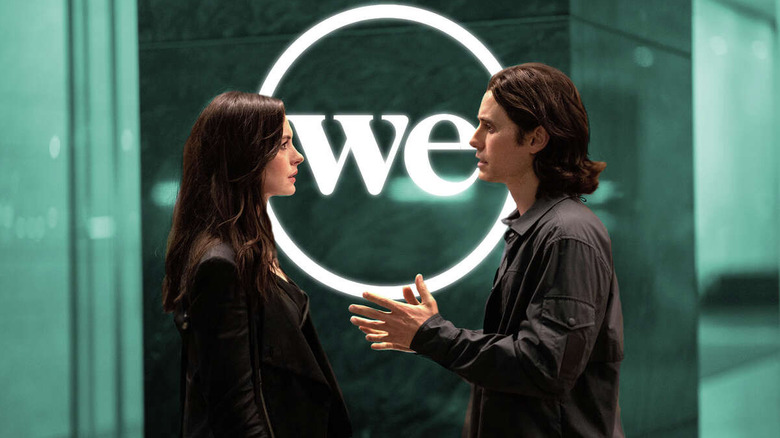
Most people start watching a show like “WeCrashed” knowing full well where it’s headed. The downfall of countless corporate grifters can make for entertaining, if repetitive streaming, fodder. Apple TV created something different by betting on the relationship at the heart of the story, casting Jared Leto and Anne Hathaway as the husband-and-wife entrepreneurs behind WeWork.
Fittingly, “WeCrashed” wouldn’t work without the full, matched commitment of its stars. Hathaway plays Rebekah Neumann with tragic nuance — her desperation for success reads as earnest self-belief until she starts to unravel. Her seeming clarity, and psychological need for her delusions to pay off, prevents her from being reduced to a simple conwoman. It also earns the show’s tragicomic tone. Meanwhile, Leto completely transforms into Adam Neumann, nailing his accent and disarming swagger. The performance makes a genuinely convincing case that he’s still one of the more talented actors of his generation, somewhere beneath the “Morbius” and “Tron” of it all.
One area where “WeCrashed” falters compared to other shows on this list is a lack of a unified, cinematic vision. “Babylon” director, Damien Chazelle, was originally tapped to helm the series — in the absence of the distinct visual style he might’ve brought to the project, the boilerplate “corporate biopic” vibe feels especially underwhelming. That said, its clean, workman-like execution keeps the story going despite the fact that it’s largely eight hours of people talking around one another. The scripting and performances build a credible yet toxic relationship worth investing in. That unique folie à deux element is key to justifying the series as a novel entry in this subgenre.
9. Defending Jacob
Apple TV+
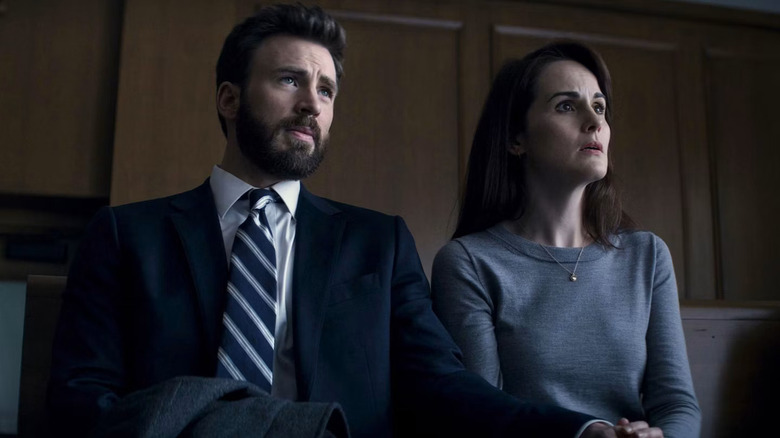
After taking on a handful of smaller television roles in the early 2000s, including a TV reboot of “The Fugitive,” Chris Evans avoided the small screen for two decades. “Defending Jacob” is the show that lured him back. In the 2020 series (based on William Landay’s novel), Evans plays an attorney whose teenage son (“It” star Jaeden Martell) becomes the prime suspect of grisly crime.
Joining an Apple TV project like this, even in the platform’s infancy — their first slate of scripted dramas had premiered just six months prior — was a shrewd, if obvious, career move for Evans. His effort to work against a decade of Marvel typecasting is largely successful. That expected All-American charm is used as a facade for a man who has carefully constructed an outwardly “perfect” life to protect a deeper shame regarding his father (J.K. Simmons). When the facade cracks, Evans feels dangerous and excitingly unpredictable.
The real surprise, however, is Michelle Dockery. More than any other character, hers is wholly supported by every element of the series, from scripting to performance. Where Evans’ storyline wades in and out of plausibility, Dockery’s is razor-focused on a mother’s defiant belief in her son’s innocence — and what happens when that belief is gradually taken from her bit by bit. And yet, pointedly (and in direct opposition to the novel), “Defending Jacob” never awards her or the audience the certainty they’ve craved since the first episode. That choice was polarizing among viewers. To the show’s credit, it’s that twist that makes this series distinct, allowing it to focus on the psychological cost of a parent’s blind faith.
8. The Essex Serpent
Apple TV+
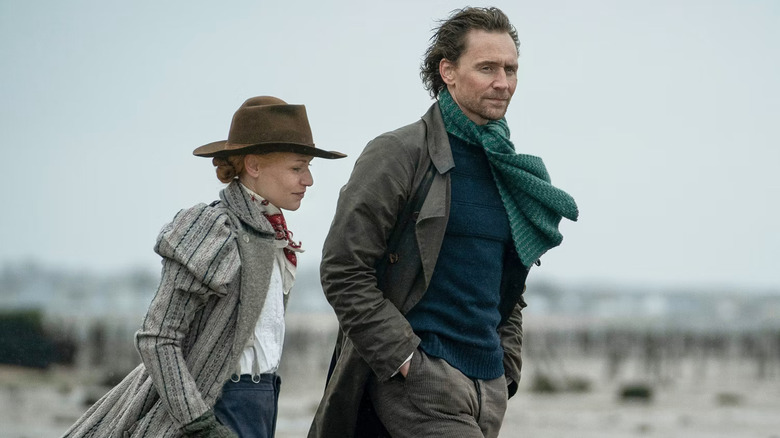
As much as Apple TV is clearly comfortable turning books into miniseries, they should be credited for taking a shot at something as strange as “The Essex Serpent.” The 2022 miniseries is a gothic romantic period drama that deals with heavy themes of faith, temptation, and suspicion, set against the gloomy gray skies of the Essex Marshes.
“Homeland” star Claire Danes takes on the role of Cora Seaborne, a 19th-century naturalist whose presence disrupts the naturally superstitious Essex village. That conflict itself reveals why Cora is a deceptively simple character. Though her dedication to reason feels forward-thinking for the time, the series doesn’t saddle her with certain moral or intellectual superiority. In fact, both Danes and the script undercut this read of the character throughout. She is deliberately as flawed, irrational, and in search of faith as anyone else in the village. Cora forms a yearning friendship with a married pastor played by Tom Hiddleston, who convincingly establishes himself as the town’s repressed moral anchor. The two are united in trying to make sense of seemingly inexplicable events brought on by sightings of a mythical serpent believed to be haunting Essex.
Under the direction of Clio Barnard, “The Essex Serpent” achieves real atmospheric dread without letting it overshadow the romantic tension. What familiar beats it retreads feel fresh, as a result.
7. Manhunt
Apple TV+
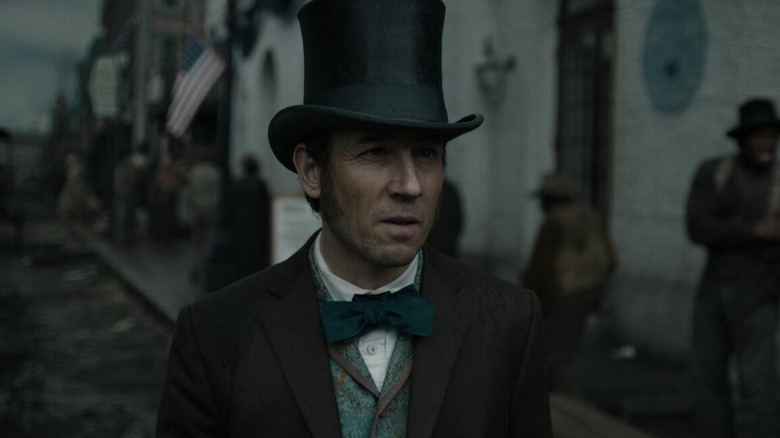
The assassination of Abraham Lincoln is perhaps the most famous crime in American history. “Manhunt” is a retelling worthy of that legacy, focusing on the tireless, 12-day investigation by the president’s friend and Secretary of War, Edwin Stanton. “The Crown” alum, Tobias Menzies, stars in the role, bringing his Emmy Award-winning ability to breathe life into potentially static historical figures. Stanton is not a stoic politician acting out known history, but a raw, grieving man struggling to process the loss of an unlikely friendship that changed his life.
Menzies’ performance vividly evokes the pain of a nation, despite over a century of distance. Just as compelling and revelatory is Anthony Boyle in the role of John Wilkes Booth. As Boyle himself noted in an interview with TVLine, he emphasizes the character’s historically documented charisma, as useful on the stage as it is on the run from the law. He comes alive the moment he shoots President Lincoln (portrayed by Hamish Linklater), revelling in the attention his act of violence garners. It’s a strikingly modern approach to the psychology of this infamous historical villain. Unsettlingly, it feels not only plausible, but insightful about the enduring motivations for such crimes.
“Manhunt” also deserves praise for explicitly confronting the greater impact of Lincoln’s assassination with regard to Reconstruction. While most accounts focus on the crime and the tragedy of the president’s death, the subplot of Lovie Simone’s Mary Simms shows how his death paved the way for his opponents to revoke reparations promised to formerly enslaved Black Americans after the Civil War.
6. Masters of the Air
Apple TV+
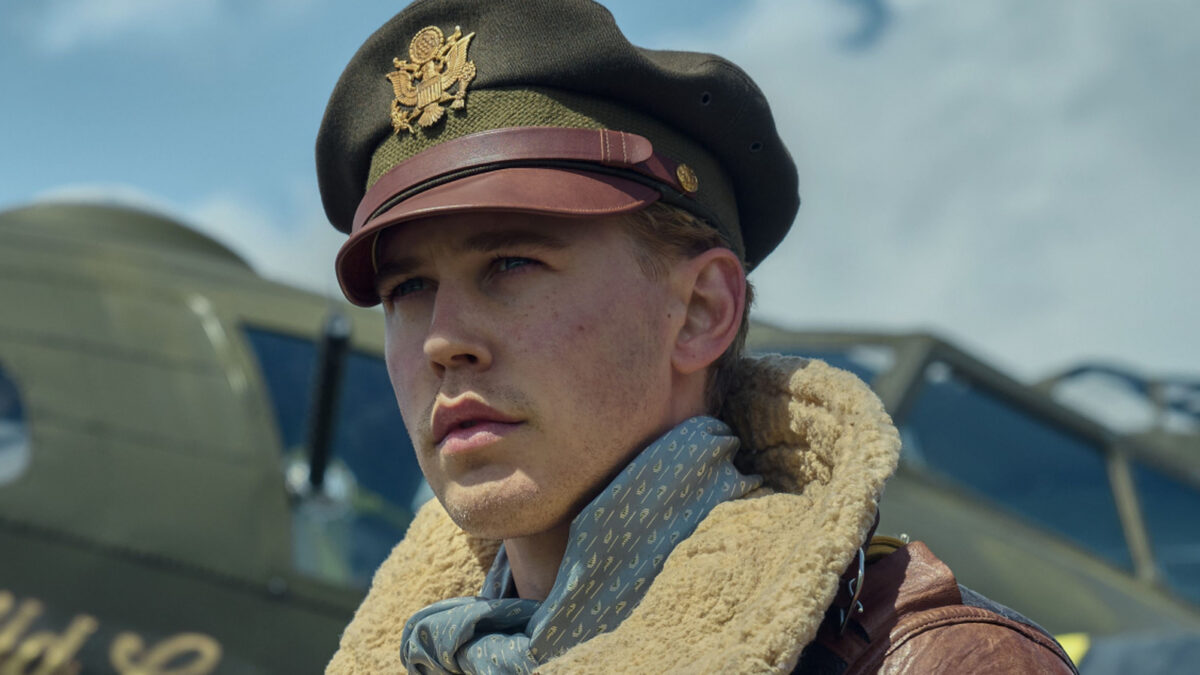
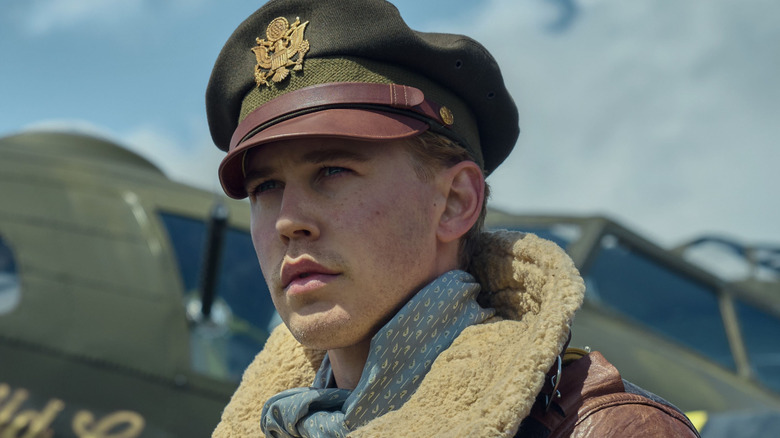
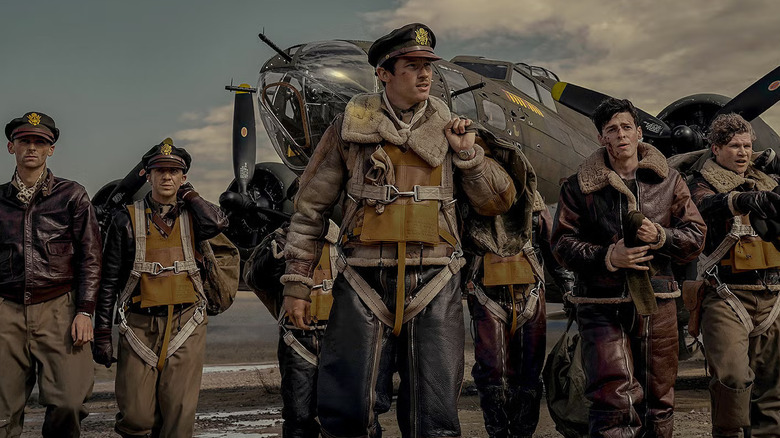
It’s hard for TV to get more ambitious than “Masters of the Air.” Putting aside the fact that the Steven Spielberg and Tom Hanks produced World War II drama follows in the footsteps of their peerless “Band of Brothers,” it had to capture aerial combat with a sense of scale exclusive to cinema. At a time when genre fare broadly accounts for what we think of as spectacle on TV, it’s easy to forget how insane it is that a period war drama with the scope of “Masters of the Air” even exists. Like “Band of Brothers” and “The Pacific” before it, the 2024 miniseries mostly follows a single military unit in the Second World War — in this case, the 100th Bomb Group.
Austin Butler is the marquee name most fans will recognize, and he’s appropriately fitted into an ensemble that draws equal focus across the board. The friendship between his Major Cleven and Callum Turner’s Major Egan serves as a consistent, moving emotional throughline for the entire series. At the same time, characters like Lieutenant Crosby (another exceptional performance from Anthony Boyle) and Barry Keoghan’s Lieutenant Biddick stand out. Later episodes also prominently feature the Tuskegee Airmen. The combat in “Masters of the Air” is chaotic and breathless, and the production design is totally immersive, but the scope of its ensemble is what matters most.
5. Lessons in Chemistry
Apple TV+
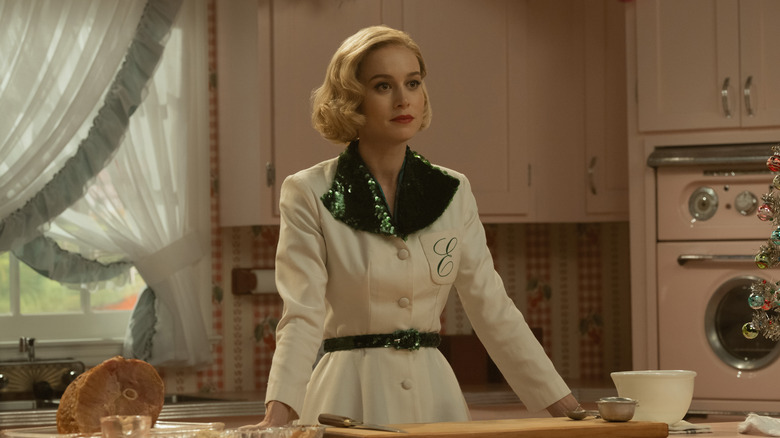
The biggest compliment one can give “Lessons in Chemistry” is that it’s easy to mistake for a historical drama. The series’ characters are given such depth, one wishes they had actually existed. Based on Bonnie Garmus’ novel, the 2023 miniseries follows Elizabeth Zott (Brie Larson), a fictional chemist-turned-television personality who hosts a science-based cooking show in the ’60s. The obvious main draw of the series is Larson’s amazing performance, which feels refreshingly restrained for the subject matter she’s working with.
The commitment to the character is distinct but not distracting — small choices in her physical mannerisms and vocal affect paint Elizabeth as direct and in control, yet not always comfortable with the spaces she inhabits. These public and professional tensions are what make the moments when she fully comes into herself so rich. This is especially true with regard to her relationship with Lewis Pullman’s Calvin Evans, a dynamic which works both in contrast to Zott’s other relationships and because of Pullman’s own stellar work. Both were nominated for Emmys, though neither won. Elizabeth’s story is undeniably traumatic and heartbreaking at several points –- by letting her values take the spotlight, “Lessons in Chemistry” finds the perfect antidote to hopelessness.
4. Disclaimer
Apple TV+
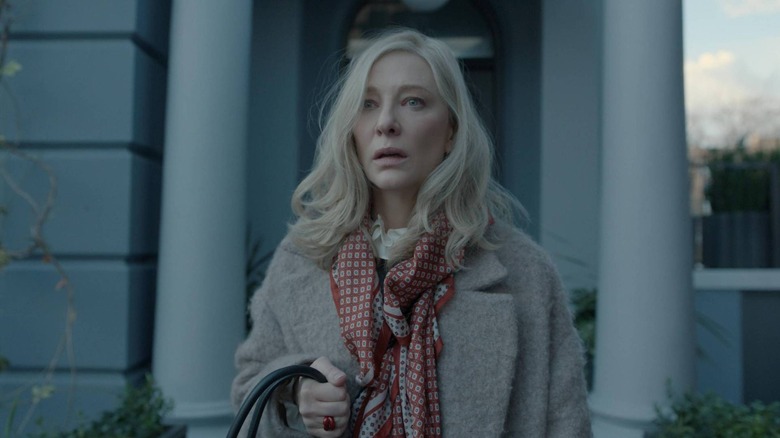
Of all Apple’s impressive auteur-driven miniseries, “Disclaimer” gives the most control to the visionary helming it. Four-time Academy Award-winner Alfonso Cuarón created the series (based on the novel by Renée Knight), wrote, directed, and helped edited all seven of its episodes, and served as an executive producer alongside star Cate Blanchett. The result of that level of total creative involvement on a series of this length is something that similar producers often talk about but rarely if ever achieve – a miniseries that genuinely, positively feels like a long movie.
The clearest ways it earns this distinction are through its non-linear presentation and its cinematography. Cuarón worked with two different co-directors of photography to capture different timelines, adding another layer to the show’s pervading theme of subjectivity. Blanchett anchors the cast as Catherine Ravenscroft, an acclaimed documentarian whose own story is about to be exposed. A vengeful widower (Kevin Kline) aims to expose her true nature to the world through a book written by his late wife, which claims to reveal a crime she committed against his family 20 years in the past. Cuarón captures the present and the past from multiple points of view, turning the camera into a vessel for the character’s unreliable testimonies.
Blanchett is expectedly great, (even if the experience hits close to “Tár” at times), and Sacha Baron Cohen proves once again that broad comedic actors can dial in the drama remarkably well. But it’s Kline in the role of the grieving father who feels most surprising and impressive. His dark downward spiral is the turn that threatens to sink the series, and a performance even a hair less careful would’ve done just that.
3. The Last Days of Ptolemy Grey
Apple TV+
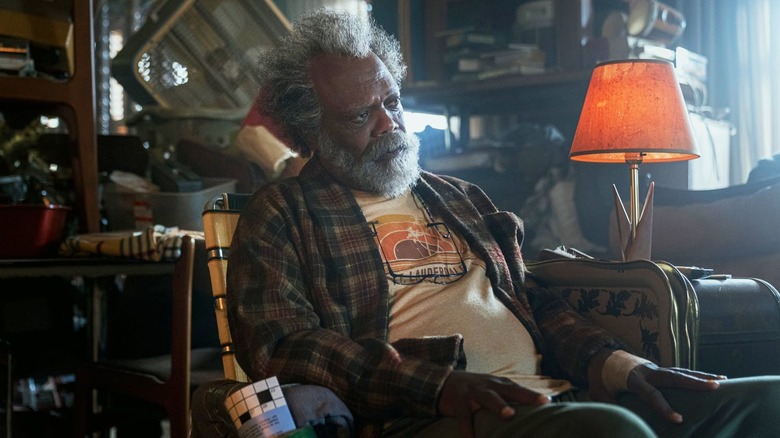
For the past decade or so, Samuel L. Jackson had seemingly settled into an admittedly enviable professional twilight within the superhero subgenre. Little did we know that the entire time, he was holding the key to one of the greatest dramatic performances of his career yet to come. Released on Apple TV in 2022 — over ten years after Jackson purchased the filming rights to Walter Mosley’s novel — “The Last Days of Ptolemy Grey” sees Jackson revive his creative vitality through a story about a man recovering his own memory.
The titular character Jackson plays undergoes an experimental, one-time procedure to completely reverse his dementia, allowing him to tie up the loose ends of his long life while investigating the death of his nephew. You can tell how much this project means to Jackson with the energy and unpredictability he brings to each scene. As he told TVLine ahead of the show’s premiere, the actor has watched several people in his immediate family live with dementia. That experience clearly makes it into his deeply embodied performance of Grey before the procedure, marked by watchful confusion and shifting lucidity.
The beauty of this miniseries is that it also lets Jackson play Grey in multiple different mental states. It simultaneously pulls together his ability to play soft wisdom, eccentricity, and vulnerable terror. “The Last Days of Ptolemy Grey” doesn’t just prove that Jackson’s still got it — it’s a showcase of the range that makes him one of the greatest actors alive.
2. Dope Thief
Apple TV+
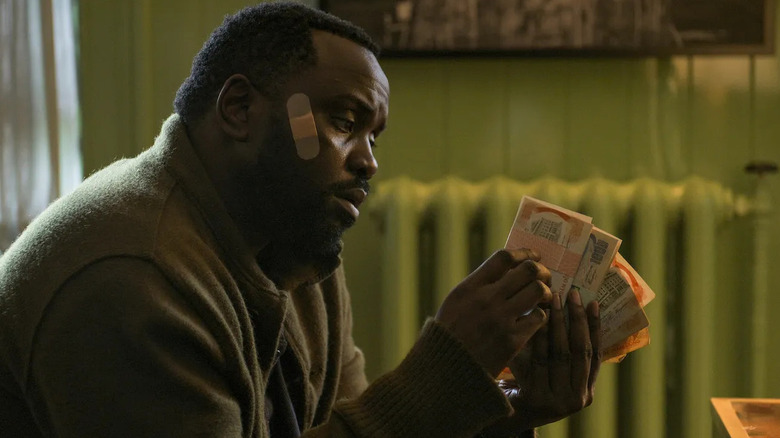
“Dope Thief” is easily one of the most ingenious crime series we’ve seen in years. From the moment the Ridley Scott-directed pilot goes off the rails, the viewer is taken down every wrong turn at a dizzying pace. This explosive dramatic construction is the work of writer-creator, Peter Craig (adapting Dennis Tafoya’s novel), the acclaimed screenwriter multiplying the unbearable tension of “The Town” through this serialized format. Brian Tyree Henry and Wagner Moura star as best friends and grifters who rob drug dealers by disguising themselves as DEA agents. After a score turns deadly, their operation is exposed to both the real DEA and the powerful criminal underworld they’ve exploited.
Henry and Moura are brilliantly cast opposite one another. They immediately create a sense of brotherhood that feels natural and worth rooting for, in spite of how they drag each other down. Henry shines in particular, carrying the series’ balance of desperation and levity. Speaking to TVLine about their relationship, Henry emphasized that their shared upbringing in juvenile detention is part of what connects them. The lack of support after getting out effectively built a low ceiling over their lives from the moment forward — all they have is each other, and all they know is survival. Craig uses this trajectory to not only complicate the morality of their characters, but explore how these unchosen circumstances impacts two men who otherwise aspire to be good people. It’s a rare crime drama that feels like a genuine tragedy, rather than a simple anti-heroic thriller.
1. Black Bird
Apple TV+
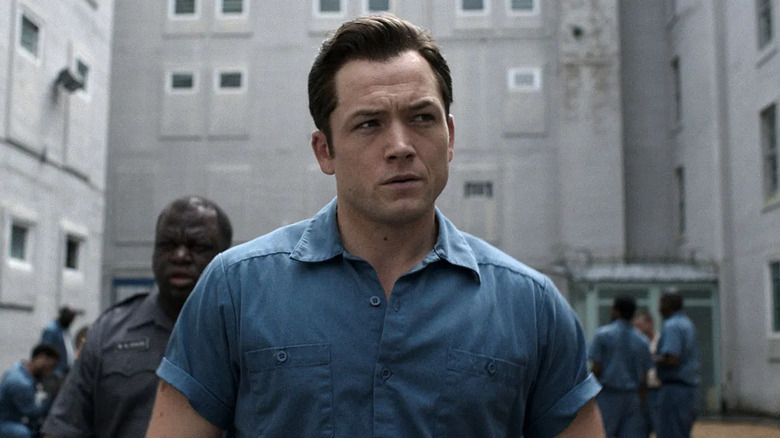
Based on the autobiographical book, “In with the Devil: a Fallen Hero, a Serial Killer, and a Dangerous Bargain for Redemption”, by James Keene and Hillel Levin, “Black Bird” stars Taron Egerton as an incarcerated man offered the chance to walk on a brutal 10-year sentence. The cost of his freedom? Infiltrating a facility for the criminally insane in order to deceive its most terrifying inmate. “Black Bird” easily boasts the most commanding supporting performance of any show on this list. Paul Walter Hauser’s Larry Hall (an alleged serial killer said to targets young girls) is unpredictable and disturbing in a way most crime thriller villains aren’t. At first, Hauser’s meek mannerisms and soft-spoken tone convincingly sell him as a pathetic, sick man who might be capable of garnering sympathy.
Once Egerton’s Jimmy finally gains his trust, you start to see how comfortable and confident Hauser is remembering some of the most vile stories you could imagine on TV. Writer-creator, Dennis Lehane, (the author of the original “Shutter Island” novel), spares no detail, which is as much a mark of courageous authenticity for the show as it is a potential barrier for new viewers. The series shines when Egerton and Hauser are paired together, the former subtly playing Jimmy’s concealed terror and disgust as he tries to befriend the monster in front of him. Hauser won his first Emmy Award for his work. Their dynamic makes “Black Bird” not only the best miniseries on Apple TV, but one of the best miniseries of all time. It’s a deeply upsetting, tight crime drama that couldn’t have lasted a single episode longer than it did.