
Prospects for a swift settlement of the antitrust lawsuit complicating Paramount’s $111 billion acquisition of Warner Bros. Discovery have weakened, with four members of the 12-state coalition resisting terms they consider overly favorable to Paramount.
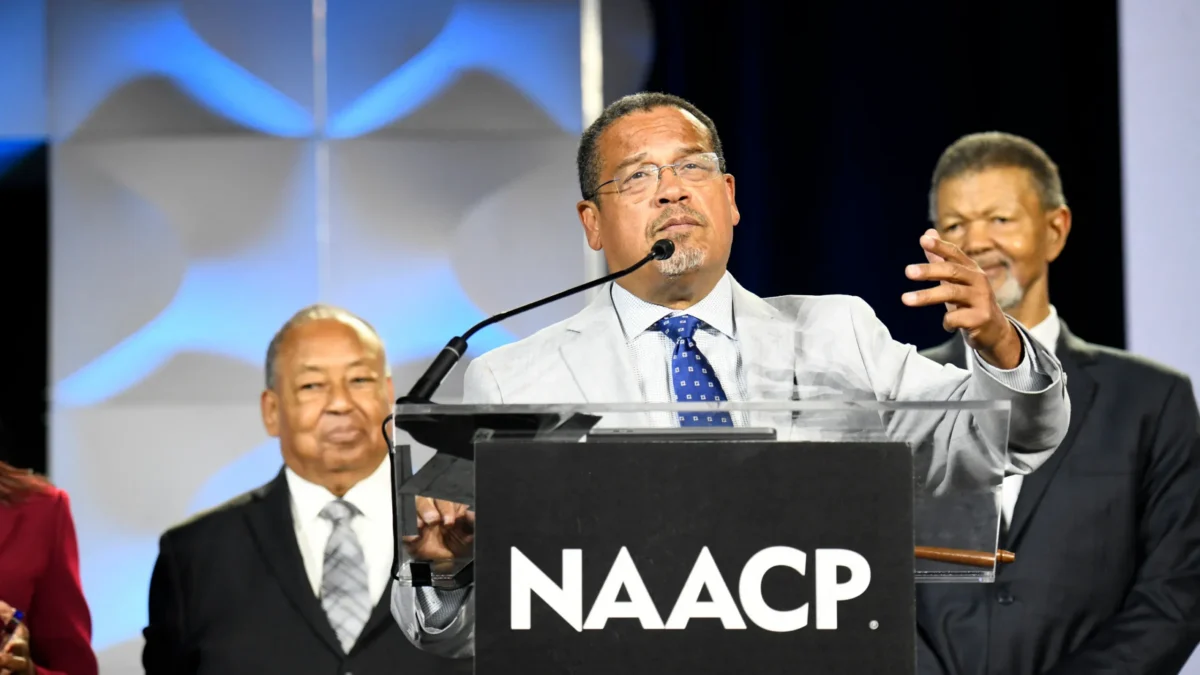
Minnesota Attorney General Keith Ellison — who is not related to Paramount CEO David Ellison — has emerged as a leading opponent of a rapid agreement. New York Attorney General Letitia James and Connecticut Attorney General William Tong are aligned with him, while indications point to Washington Attorney General Nick Brown joining the bloc.
Their position puts them at odds with a group led by California Attorney General Rob Bonta, which wants to resolve the high-stakes dispute, at least for now. The states filed their long-anticipated federal lawsuit against Paramount and WBD on July 13. Along with California, the coalition includes Arizona, Colorado, Connecticut, Massachusetts, Minnesota, Nevada, New Jersey, New Mexico, New York, Oregon and Washington.
A March 2, 2027 trial date has been scheduled, a timeline Paramount opposes.
A Split Over Settlement Terms
The four holdouts are concerned that the proposed settlement framework is “too lenient to Paramount,” according to people familiar with the discussions. They want Bonta to move more slowly and avoid responding too quickly to warnings that Paramount could leave California or to other outside pressure.
One major point of contention is a proposed CNN Editorial Board. An individual close to the talks dismissed the idea, saying, “It has no teeth.” The resistant states fear that changes surrounding CNN, combined with some cable asset sales, could give Bonta enough reason to exit the broader legal fight without securing stronger concessions.
Remote negotiations over the weekend covered several possible compromises as an October 1 deadline approaches. At that point, a fee of $7 million per day to WBD shareholders is set to begin. Court-ordered settlement talks are also scheduled for mid-October.
Ideas raised in the discussions include substantial financial penalties if theatrical-release commitments are not honored. Another possible temporary remedy would keep the two studios completely separate for at least two years.
A broader hold-separate arrangement is also under consideration. Such a structure could allow the antitrust litigation to continue while easing the financial pressure created by the ticking fee. That could help Paramount’s expense position, although continued uncertainty could weigh on Paramount and WBD shares. The industry has also grown increasingly restless over the merger delay, while opponents argue that continued stasis would be preferable to allowing the transaction to proceed.
Hold-separate agreements have been used in other major transactions. One was put in place in connection with the $85 billion Time Warner-AT&T merger in 2018. A similar mechanism also became part of Nexstar’s acquisition of Tegna, although that occurred after the deal had closed and amid a lawsuit that remains pending.
Hollywood and Political Pressure Intensifies
The Writers Guild of America, which has been aligned with the attorneys general, has remained outside the current settlement negotiations. However, guild leaders have heard from members amid protests organized by the star-filled Block the Merger group. Actions included Oakland, New York on Monday and a planned demonstration outside Paramount in Los Angeles on September 22.
WGA leadership and representatives from other Hollywood guilds have also contacted James’ office to assess the outlook for a settlement, according to union insiders.
Meanwhile, reports that Paramount could leave California if the transaction does not close — or if a settlement is not reached soon — have added to the political pressure. Bonta previously canceled settlement talks and characterized the Ellison team’s tactics as “blackmail.” Gavin Newsom, Xavier Becerra, Los Angeles Mayor Karen Bass and IATSE have been among those urging that the dispute be settled “in the boardroom, not the courtroom.”
Competing employment claims have further complicated the debate. Reports presented to the Los Angeles Board of Supervisors have predicted major job losses if the combination goes forward. Paramount-commissioned reports, by contrast, have warned of even larger employment losses if the Melrose lot leaves and have forecast job and production gains if the acquisition proceeds.
Signs of a possible thaw surfaced at the September 19 opening of the Lucas Museum of Narrative Arts. One guest described as close to the negotiations told attendees that an agreement was not completely finished but that the stalemate between Bonta and David Ellison had become “unstuck.” Bass was also said to have told attendees that a deal was “close.” Neither Ellison nor WBD chief David Zaslav attended the event.
Congressional Democrats are pressing in the opposite direction. Connecticut Sen. Chris Murphy urged the state attorneys general to continue fighting the transaction, while New Jersey Sen. Cory Booker wrote on September 20: “State attorneys general: Don’t settle. Hold the line. Block this merger.”
What Happens Next?
The immediate court calendar could shape the negotiations. On September 24, U.S. District Judge Araceli Martínez-Olguín is scheduled to hear Paramount’s request for a $1.88 billion bond from the attorneys general and the WGA. Paramount says the bond should cover the “extraordinary losses” it expects while waiting for the two-week trial to begin next spring.
On September 25, the attorneys general and the WGA must respond to a motion from Iowa and Montana seeking to take the matter to the Supreme Court.
The settlement discussions are effectively paused until next week during the Yom Kippur break. One mergers-and-acquisitions veteran said the pause could “make or break” the negotiations. Offices for Keith Ellison and James did not respond to requests for comment, while Paramount and Bonta’s office also declined to address the status of the talks.