
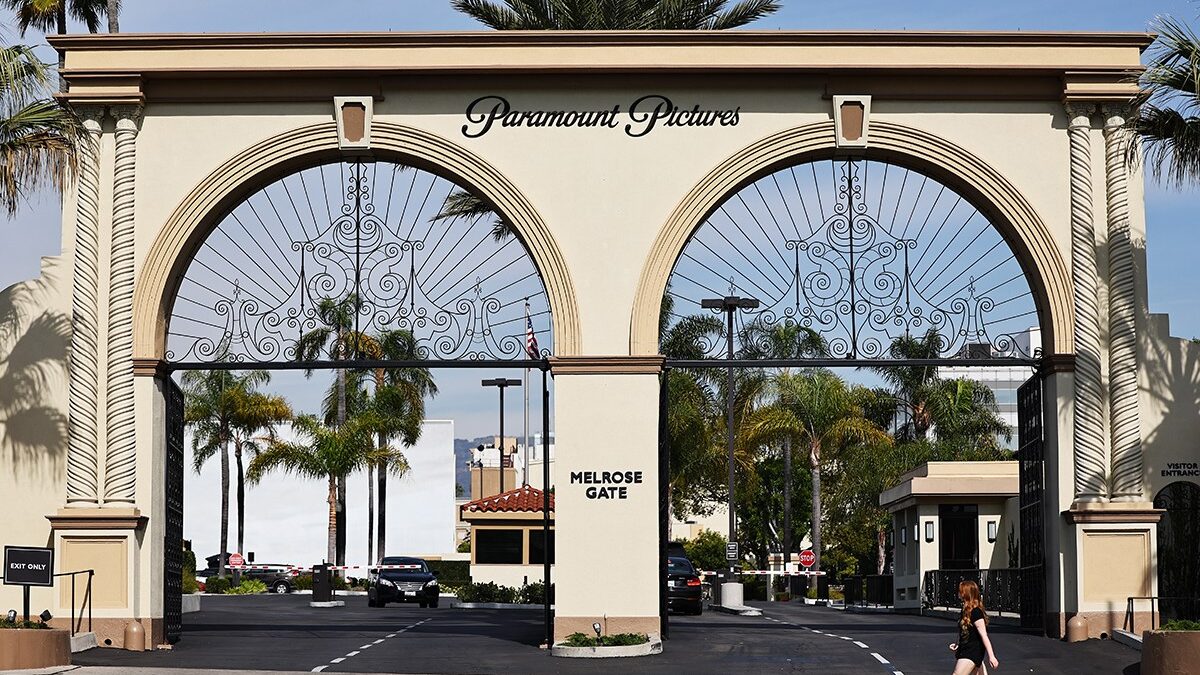
Paramount’s threat to leave California is no longer being treated as background noise at Los Angeles City Hall.
Since July, the company has been warning that it could relocate after California sued to block its proposed merger with Warner Bros. Discovery. California Attorney General Rob Bonta has characterized the threat as “blackmail” aimed at stopping him from enforcing antitrust law, but Los Angeles Mayor Karen Bass is responding as though the possibility is real enough to demand attention.
Steve Kang, the mayor’s film czar, said Wednesday that the Bass administration is preparing for multiple outcomes while trying to keep Paramount in California.
“We’ve heard the same information that everybody has,” Kang said. “We need to be prepared for every option to be available — whether it’s true or not.”
The stakes are rising because Paramount is facing an Oct. 1 deadline to close its transaction or begin accruing a $7-million-a-day “ticking fee” owed to WBD shareholders. In recent days, reports in Politico and TMZ have intensified discussion around whether the company is taking affirmative steps toward a move.
Paramount declined to comment.
City Hall pushes for talks
Bass has already made one of the most direct moves available to her: last month, she urged Bonta to come to the table and reach a deal. Bonta’s office has said repeatedly that it remains open to good-faith talks, but only if any resolution includes “robust structural remedies.”
A court-supervised settlement conference is scheduled for Oct. 14-15.
In a Wednesday statement, Bonta’s office said Paramount’s relocation threat is not new and reiterated that the attorney general’s office will continue pursuing the case on legal grounds.
“We cannot comment on a company’s plans,” the A.G.’s office said. “It’s no secret that Paramount has been making this threat, despite its alleged commitment to California and Hollywood. What Paramount decides to do is Paramount’s choice alone. We’ll continue to apply the law without fear or favor and continue to be open to coming to the table for good faith discussions.”
The statement underscores the divide now facing Los Angeles officials: Bass wants the company to remain in California, while the attorney general is maintaining that any settlement must satisfy antitrust concerns.
What Bass can do now
Kang, who was appointed in 2025 to serve as Bass’ liaison to the film community, said the mayor’s office is focused on making Los Angeles and California more attractive for production. Asked what steps Bass could take beyond pressing Bonta, Kang pointed to her support for increased production subsidies in California and in Washington, D.C.
“Creating a film-friendly environment is our first and foremost priority,” Kang said. “We’re hoping they don’t leave. We’re hoping all sides are speaking to one another. This is an issue between the attorney general and Paramount. All we can do is encourage discussions among all parties.”
For now, the public positions remain unchanged: Paramount has not commented, Bonta’s office says it will apply the law “without fear or favor,” and Bass’ team is trying to keep lines of communication open as the Oct. 1 deadline approaches.
What happens next?
The immediate pressure point is Paramount’s Oct. 1 transaction deadline and the potential $7-million-a-day fee if the deal does not close. After that, the next confirmed date is the Oct. 14-15 court-supervised settlement conference, where the dispute could move into a more formal round of talks.
Until then, Los Angeles officials are treating Paramount’s threat as consequential, even as the attorney general’s office frames the decision to stay or leave as Paramount’s choice alone.