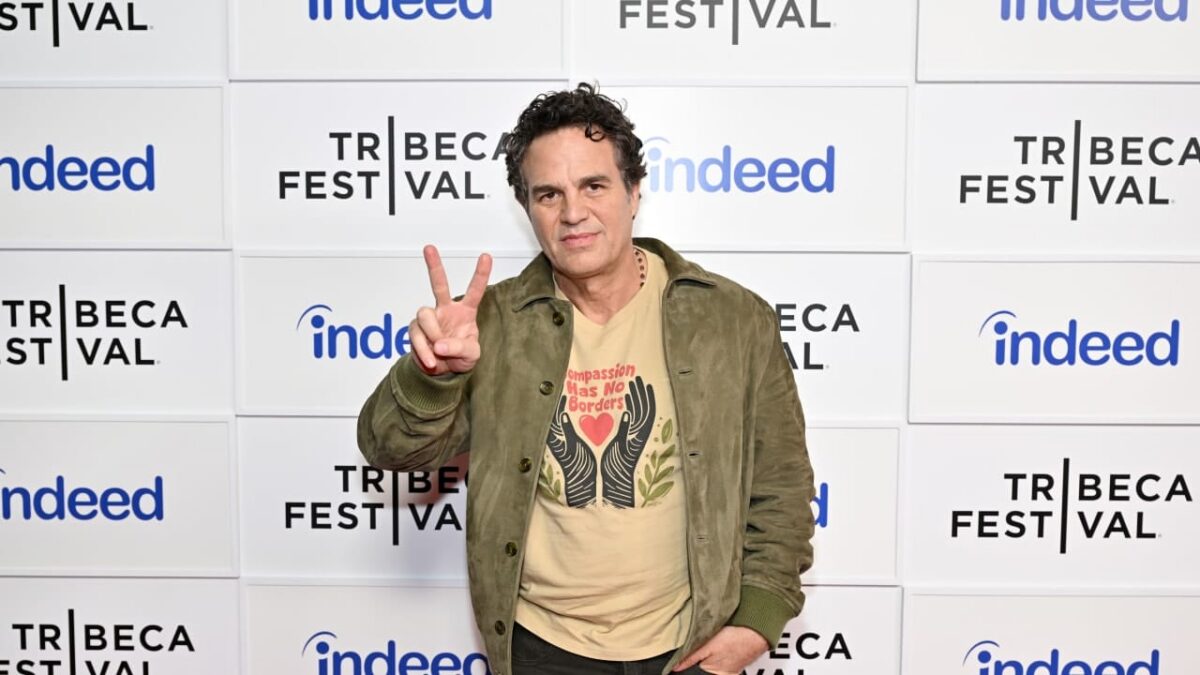
Mark Ruffalo ignited a new flashpoint in Hollywood’s already fraught debate over media consolidation and the war in Gaza on Friday night, sharply criticizing the Ellison family’s role in a planned Paramount-Warner Bros. transaction and connecting the deal to Oracle’s technology work with Israel.
The actor, best known globally for playing Bruce Banner and the Hulk in Marvel’s “Avengers” films, posted on Instagram about the proposed merger and shared a video featuring Oracle vice chair Safra Catz discussing the company’s technological assistance in Israel. Ruffalo used the post to question the political and ethical implications of a major studio deal involving the Ellison family, whose fortune is tied to Oracle co-founder Larry Ellison and whose entertainment ambitions have become increasingly central to Hollywood’s future.
The post quickly circulated across entertainment and political circles, drawing praise from some pro-Palestinian activists and criticism from others who argued that Ruffalo was unfairly linking a corporate media transaction to the actions of a technology company operating in a wartime context. The reaction escalated further after Paramount issued an unusually pointed response, accusing Ruffalo’s criticism of invoking “antisemitic imagery.”
Paramount’s decision to respond publicly was notable. Studios often avoid direct engagement with celebrity political commentary unless it threatens a campaign, a release or a corporate relationship. In this case, the company’s statement signaled how sensitive the merger discussion has become, particularly as it intersects with the Gaza war, rising antisemitism concerns and intense scrutiny of corporate power in entertainment.
A Hollywood deal enters a geopolitical argument
Ruffalo has long been one of Hollywood’s most outspoken progressive figures, frequently using his platform to comment on climate policy, labor rights, elections and international conflicts. His remarks about Gaza have previously drawn both support and backlash, placing him among a group of actors and artists whose activism has become inseparable from their public profile.
What made Friday’s post different was its direct connection of a pending studio combination to the Ellison family’s technology interests. Larry Ellison remains one of the world’s richest technology executives through Oracle, while his son David Ellison has emerged as a major entertainment player through Skydance, the production company behind films including “Top Gun: Maverick” and entries in the “Mission: Impossible” franchise. Any transaction involving Paramount and Warner Bros. Discovery would have sweeping implications for film, television, streaming and news assets.
By tying that potential consolidation to Oracle’s work in Israel, Ruffalo pushed the conversation beyond antitrust, streaming economics and library value. His post framed the issue as one of moral accountability: who controls cultural infrastructure, what other industries shape that control and whether audiences should consider a media owner’s broader business relationships when evaluating a studio deal.
Paramount, however, objected to the framing. The studio’s response did not simply defend the transaction or the Ellison family; it challenged the rhetoric of Ruffalo’s post, saying it relied on imagery and associations the company characterized as antisemitic. That language is especially charged at a moment when Jewish groups, Palestinian advocates, artists, studio executives and advocacy organizations are all intensely debating the boundaries between criticism of Israel, criticism of corporate support for Israel and antisemitism.
Why the clash matters
The controversy arrives as Hollywood is navigating one of the most consequential periods of corporate reshaping in decades. Streaming has weakened the old studio economics, cable television is in decline, theatrical box office remains uneven and Wall Street continues to pressure entertainment companies to cut costs, combine assets or sell divisions. A Paramount-Warner Bros. deal would be among the most dramatic consolidations in modern media, potentially altering the balance of power among legacy studios and reshaping negotiations with talent, unions, distributors and streaming competitors.
That is why Ruffalo’s post landed with unusual force. The debate is not only about one actor’s political views. It is about whether major entertainment mergers can still be discussed as purely financial events when the people financing or controlling them come from industries tied to defense, data, artificial intelligence, government contracting or global conflict.
For talent, the issue is particularly complicated. Actors, writers and directors increasingly work across companies whose parent corporations have interests far beyond film and television. The same studio releasing prestige dramas may also be connected to telecommunications, technology infrastructure, military-adjacent contracts or international partnerships. In that environment, public figures are more likely to scrutinize ownership structures — and companies are more likely to push back when criticism veers into territory they believe is inflammatory or discriminatory.
The dispute also reflects how quickly social media can transform a corporate transaction into a reputational crisis. Ruffalo’s Instagram post did not come through a press conference or formal campaign. Yet within hours, it had prompted a studio response and inserted Gaza, Oracle and the Ellison family into the entertainment industry’s merger conversation.
Hollywood executives are acutely aware that the politics of the Gaza war have become especially volatile inside the industry. Statements about Israel and Palestinians have affected awards campaigns, festival appearances, representation relationships and workplace dynamics. Studios have tried to balance employee safety, public pressure, shareholder concerns and talent relationships while avoiding the perception that they are silencing political speech.
What Happens Next
The immediate question is whether Ruffalo responds to Paramount’s accusation or clarifies his remarks. Any follow-up could either de-escalate the dispute or extend it into a larger industry debate about corporate ownership, antisemitism, anti-Palestinian bias and the responsibilities of artists with major platforms.
For Paramount and the Ellison camp, the priority will be keeping the merger conversation focused on business fundamentals: regulatory hurdles, financing, leadership structure, content strategy and shareholder value. But Ruffalo’s post shows how difficult that may be. As entertainment companies become larger and more entangled with technology, the politics surrounding their owners may become part of the deal narrative, whether studios want that or not.
The proposed merger already faced scrutiny over competition and consolidation. Now it also faces a cultural argument over who gets to shape Hollywood’s future — and what values come with that power.